What if you could expand your pharmaceutical business without investing heavily in manufacturing facilities? In today’s competitive healthcare market, growth is no longer limited to companies with large production units. Many successful pharma brands are scaling faster by partnering with trusted manufacturing experts. This approach allows businesses to focus on marketing, distribution, and customer relationships while ensuring high-quality product production. That’s where Third Party Manufacturing Pharma comes into the picture. It offers a practical and cost-effective way to increase product offerings and enter new markets. In this blog, we’ll explore how it can drive sustainable business growth.
Why Businesses Are Turning to Outsourced Pharmaceutical Manufacturing
Success in the pharmaceutical sector is no longer determined by the size of a company’s manufacturing facility. Today, many businesses are discovering that strategic partnerships can create growth opportunities without the need for heavy investments in production infrastructure. This changing mindset has made Third Party Manufacturing Pharma an increasingly popular choice for companies aiming to expand efficiently while staying competitive.
Growing Demand Without Expanding Infrastructure
As the demand for medicines and healthcare products continues to rise, pharmaceutical businesses need reliable ways to increase supply. However, setting up new manufacturing units requires substantial capital, skilled manpower, and ongoing maintenance. Outsourcing production offers a practical alternative. It allows companies to increase their product availability while avoiding the costs and challenges associated with building and operating their own facilities.
How Manufacturing Partnerships Reduce Operational Pressure
Running a pharmaceutical business involves much more than manufacturing products. Companies must also focus on market growth, customer engagement, and distribution management. By outsourcing production to experienced manufacturers, businesses can reduce operational complexity and dedicate more attention to strategic activities, such as:
- Strengthening brand visibility
- Expanding distribution networks
- Building customer trust
- Launching new products
- Exploring new market opportunities
This approach helps businesses use their resources more effectively and improve overall productivity.
The Rising Popularity of Third Party Pharma Models
The pharmaceutical industry is becoming more dynamic, encouraging companies to adopt flexible business models. One reason behind the growing demand for Third Party Manufacturing Pharma services is the ability to access high-quality production without long-term manufacturing commitments. In addition, pcd third party manufacturing has gained attention among pharma marketers and franchise businesses looking to expand their product portfolios quickly and efficiently.
As competition increases, outsourcing production has become a smart business strategy. Companies can respond faster to market demands, introduce new products with confidence, and focus on long-term growth while trusted manufacturing partners handle the production process.
Understanding Third Party Manufacturing Pharma
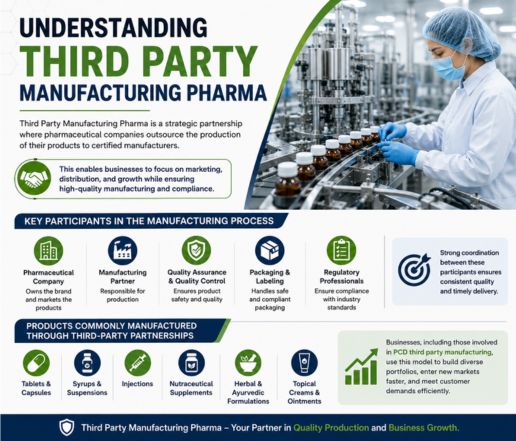
In the modern pharmaceutical industry, businesses are constantly looking for efficient ways to expand their product offerings while maintaining quality and controlling costs. This is where Third Party Manufacturing Pharma plays an important role. Instead of producing medicines in their own facilities, companies collaborate with specialized manufacturers who handle production on their behalf. This arrangement helps businesses focus on marketing, distribution, and growth while ensuring that products are manufactured according to industry standards.
Understanding Third-Party Manufacturing in the Pharmaceutical Industry
Third-party manufacturing is a business model in which a pharmaceutical company outsources the production of its products to a certified manufacturing partner. The products are manufactured under the hiring company’s brand name, while the manufacturer manages the production process. This model allows businesses to enter the market quickly without making large investments in manufacturing infrastructure.
Key Participants in the Manufacturing Process
A successful manufacturing partnership involves several important stakeholders working together to ensure smooth operations and product quality. These typically include:
- The pharmaceutical company that owns and markets the brand
- The manufacturing partner responsible for production
- Quality assurance and quality control teams
- Packaging and labeling specialists
- Regulatory professionals ensuring compliance with industry standards
Strong coordination between these participants helps maintain consistency and timely product delivery.
Products Commonly Manufactured Through Third-Party Partnerships
One of the biggest advantages of Third Party Manufacturing Pharma is its versatility. Manufacturers can produce a wide range of pharmaceutical and healthcare products based on business requirements. Common product categories include:
- Tablets and capsules
- Syrups and suspensions
- Injections
- Nutraceutical supplements
- Herbal and Ayurvedic formulations
- Topical creams and ointments
Many businesses involved in pcd third party manufacturing use this model to build diverse product portfolios and meet varying customer demands. By leveraging experienced manufacturing partners, companies can introduce new products more efficiently and strengthen their position in a competitive pharmaceutical market.
How Third-Party Pharma Manufacturing Drives Business Growth
Building a successful pharmaceutical business requires more than developing quality products. Companies must manage production, marketing, distribution, and compliance while adapting to changing market demands. Third Party Manufacturing Pharma helps businesses overcome these challenges by providing reliable manufacturing support. This model allows companies to expand operations, increase product availability, and focus on growth-oriented activities without the burden of running their own production facilities.
Faster Market Expansion Opportunities
Launching new products often requires significant manufacturing resources and infrastructure. With third-party manufacturing, businesses can introduce products more quickly because production facilities, equipment, and expertise are already in place. This enables companies to enter new regions, respond to market demand faster, and strengthen their competitive position without lengthy setup processes.
Lower Capital Investment and Reduced Risk
Establishing a pharmaceutical manufacturing unit involves substantial costs, including machinery, facility maintenance, staffing, and regulatory compliance. Outsourcing production reduces these financial commitments and minimizes operational risks. Businesses can allocate their budgets more effectively toward activities that directly support growth, such as:
- Product promotion
- Market research
- Sales team expansion
- Distribution network development
- Brand building initiatives
This approach creates greater financial flexibility and supports long-term business stability.
Improved Focus on Branding, Sales, and Distribution
When manufacturing responsibilities are handled by a trusted partner, businesses gain more time to focus on strengthening their market presence. Instead of managing production-related challenges, companies can concentrate on building customer relationships, improving brand visibility, and expanding sales channels. This often leads to better customer engagement and stronger market performance.
Access to Advanced Manufacturing Facilities
One major advantage of Third Party Manufacturing Pharma is access to modern production technologies and experienced manufacturing teams. Businesses can benefit from high-quality production standards without investing in expensive infrastructure. Additionally, companies involved in pcd third party manufacturing often use these partnerships to expand their product range efficiently while maintaining quality and consistency.
By combining cost efficiency, scalability, and operational support, third-party manufacturing creates a strong foundation for sustainable pharmaceutical business growth.
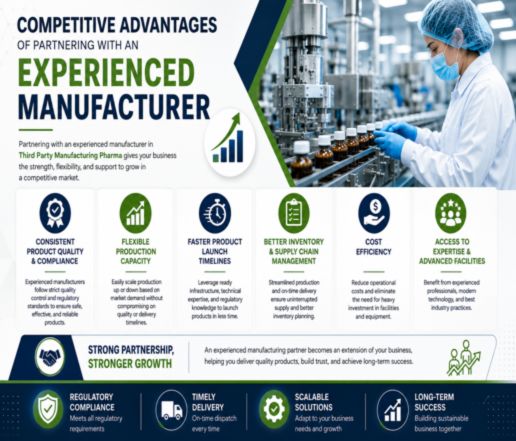
Competitive Advantages of Partnering with an Experienced Manufacturer
Choosing the right manufacturing partner can significantly influence the success of a pharmaceutical business. While product quality remains important, factors such as reliability, scalability, and operational efficiency also play a major role in long-term growth. In the Third Party Manufacturing Pharma model, experienced manufacturers provide businesses with the resources and expertise needed to compete effectively in a fast-moving market.
Consistent Product Quality and Compliance
Maintaining quality standards is essential in the pharmaceutical industry. Established manufacturers operate under strict quality control systems and follow regulatory requirements throughout the production process. This helps ensure that every batch meets the required specifications and safety standards. Businesses can confidently market their products knowing that quality and compliance are being managed by experienced professionals.
Flexible Production Capacity
Market demand can change quickly, especially when new products gain popularity or seasonal demand increases. An experienced manufacturing partner can adjust production volumes according to business needs. This flexibility helps companies avoid inventory shortages or excess stock while maintaining a steady supply of products.
Some key benefits include:
- Faster response to changing market demand
- Reduced production bottlenecks
- Better inventory planning
- Improved resource utilization
Faster Product Launch Timelines
Bringing a product to market often requires extensive preparation. Manufacturers with established production systems, trained personnel, and regulatory knowledge can help accelerate this process. Businesses can launch new products more efficiently without spending months setting up production infrastructure. This speed can provide a valuable competitive advantage in growing pharmaceutical markets.
Better Inventory and Supply Chain Management
A reliable manufacturing partner contributes to smoother supply chain operations by ensuring timely production and delivery schedules. This reduces disruptions and helps businesses maintain product availability across their distribution networks. Companies involved in pcd third party manufacturing particularly benefit from dependable supply chains, as franchise partners rely on consistent product availability to serve customers effectively.
For businesses pursuing growth, Third Party Manufacturing Pharma offers more than production support. It provides access to industry expertise, operational flexibility, and reliable systems that help companies strengthen their market position while focusing on expansion opportunities.
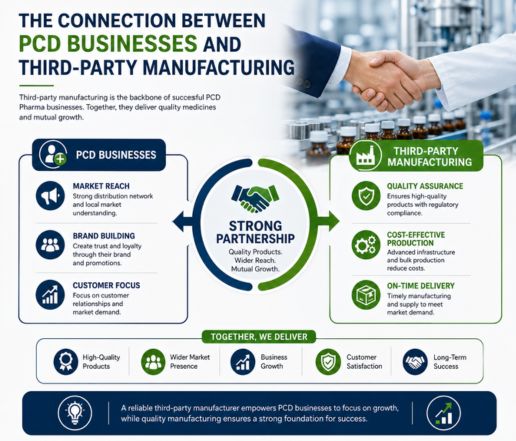
The Connection Between PCD Businesses and Third-Party Manufacturing
The growth of the pharmaceutical sector has created new opportunities for businesses that want to market medicines without investing in manufacturing facilities. This is where the relationship between PCD companies and Third Party Manufacturing Pharma becomes important. Many PCD businesses rely on manufacturing partners to produce high-quality products under their brand name, allowing them to focus on sales, distribution, and market expansion.
What Is PCD Third Party Manufacturing?
PCD third party manufacturing is a business arrangement in which a PCD pharma company collaborates with a pharmaceutical manufacturer to produce medicines and healthcare products. The manufacturer handles production, packaging, and quality control, while the PCD company manages branding and marketing activities.
This model helps businesses:
- Launch products with lower investment
- Expand their product range quickly
- Reduce manufacturing-related responsibilities
- Focus on customer acquisition and market growth
As a result, many emerging pharma companies choose this approach to establish a strong presence in competitive markets.
Why PCD Pharma Companies Choose Manufacturing Partnerships
Managing a manufacturing unit requires substantial resources, technical expertise, and regulatory compliance. For many PCD businesses, outsourcing production is a more practical and cost-effective option. Through Third Party Manufacturing Pharma, companies gain access to certified manufacturing facilities and experienced production teams without bearing the operational burden themselves.
This partnership also allows businesses to respond more efficiently to market demand and maintain a consistent supply of products for distributors and franchise partners.
How PCD Third-Party Manufacturing Strengthens Product Portfolios
A diverse product portfolio is often a key factor in pharmaceutical business growth. With the support of pcd third party manufacturing, companies can introduce a wide range of products, including tablets, capsules, syrups, injections, and nutraceutical formulations.
An experienced manufacturing partner can help businesses:
- Add new products faster
- Maintain consistent product quality
- Meet changing customer requirements
- Strengthen brand credibility
By combining effective marketing with reliable manufacturing support, PCD businesses can expand their reach, improve customer satisfaction, and create long-term growth opportunities in the pharmaceutical industry.
Conclusion
In today’s competitive pharmaceutical landscape, Third Party Manufacturing Pharma has become a practical solution for businesses seeking growth without the challenges of managing production facilities. From reducing operational costs and accelerating product launches to ensuring quality standards and expanding product portfolios, this model offers multiple advantages for pharma companies of all sizes. It is especially valuable for businesses involved in pcd third party manufacturing, as it enables them to focus on marketing, distribution, and customer relationships while relying on experienced manufacturers for production. By choosing the right manufacturing partner, pharmaceutical businesses can improve efficiency, strengthen their market presence, and build a sustainable foundation for long-term success.