
Why Protein Powder Ended Up in Everyone’s Kitchen Cabinet
Not so long ago, a tub of protein powder was gym equipment. It lived in a locker next to wrist wraps and belonged to people who counted their reps out loud. Somewhere along the way, that changed. Now whey protein sits on kitchen shelves between the oats and the coffee, getting blitzed into morning smoothies, stirred into yoghurt, and spooned into pancake batter by people who haven’t touched a barbell in years.
The reason is simple: life got busier and cooking a proper high-protein breakfast got harder. A scoop in a shaker takes thirty seconds and delivers what a small meal would. But that convenience created a new problem — the shelves are now crowded with hundreds of tubs, each shouting louder than the last, and it’s genuinely hard to tell the honest ones from the marketing. This guide is here to cut through that noise. By the end, you’ll understand what whey actually is, what it does, how to choose between the confusing options, and which formula deserves your money.
What Whey Protein Really Is (Beyond the Buzzword)
Here’s a fact that surprises most people: whey started life as a waste product. When milk is turned into cheese, it splits into two parts — the thick curds that become cheese, and a thin, watery liquid that drains off. That liquid is whey. For centuries cheesemakers simply threw it away or fed it to pigs. Then someone realised this “leftover” was packed with high-quality protein, and an entire industry was born.
What makes whey special isn’t just the quantity of protein but the quality. It contains all nine essential amino acids your body can’t make on its own, and it’s especially rich in leucine — the amino acid that acts like an ignition switch for building muscle. That complete profile is why whey protein is considered a gold standard against which other proteins get measured.
From Milk to Scoop — The Short Version of How It’s Made
Turning watery whey into the powder in your tub is straightforward in principle. The liquid is filtered to concentrate the protein and strip away most of the water, fat, and milk sugar. It’s then dried into a fine powder and flavoured. How aggressively that filtering is done determines what you end up with — a lightly filtered version keeps more of the natural milk components, while a heavily filtered one is almost pure protein. That single difference is the heart of the whey isolate vs concentrate debate we’ll get to shortly.
The Ayurvedic Twist — When Whey Meets Herbs Like Ashwagandha and Shatavari
A newer wave of formulas blends classic whey with Ayurvedic herbs, and it’s more than a marketing gimmick. Adding ashwagandha brings an adaptogen traditionally used to help the body handle stress and support recovery — a natural pairing with post-workout nutrition. Shatavari is often included for its soothing reputation on digestion, which quietly tackles the bloating some people blame on protein powder. Herbs like ginger or black pepper (piperine) sometimes join in to aid absorption. The idea is a supplement that feeds your muscles and sits easier on your system — whey’s amino power with Ayurveda’s focus on balance and digestion.
The Whey Protein Benefits People Actually Feel
Forget the transformation photos for a moment. The real whey protein benefits show up in ordinary, day-to-day ways — and those are the ones worth paying for.
Building and Holding On to Muscle
This is the headline act. When you train, you create tiny tears in muscle fibres, and protein is the raw material that repairs and strengthens them. Whey delivers that material fast and in a form the body uses efficiently. Just as importantly, protein helps you keep the muscle you already have — which matters more with every passing decade, since muscle naturally slips away as we age unless we give it a reason to stay.
Staying Full and Curbing Snack Attacks
Protein is the most filling of the three macronutrients, and it’s not close. A protein-rich shake or snack keeps hunger quiet for hours, which is why so many people trying to manage their weight find whey helpful — not as a magic fat-burner, but as a genuinely effective way to stop the 4 p.m. biscuit raid before it starts.
Faster Recovery After Training
Ever felt so sore two days after a workout that stairs became your enemy? Getting quality protein in soon after exercise helps blunt that. It won’t erase soreness entirely, but consistent protein intake noticeably shortens how long your body takes to bounce back and feel ready for the next session.
A Convenient Protein Fix for Non-Meat-Eaters and Busy People
Hitting a solid protein target through food alone is harder than it sounds, especially for vegetarians or anyone eating on the run. This is one of the most underrated whey protein benefits: it fills the gap. A scoop turns a carb-heavy breakfast into a balanced one and rescues a day when cooking simply wasn’t going to happen.
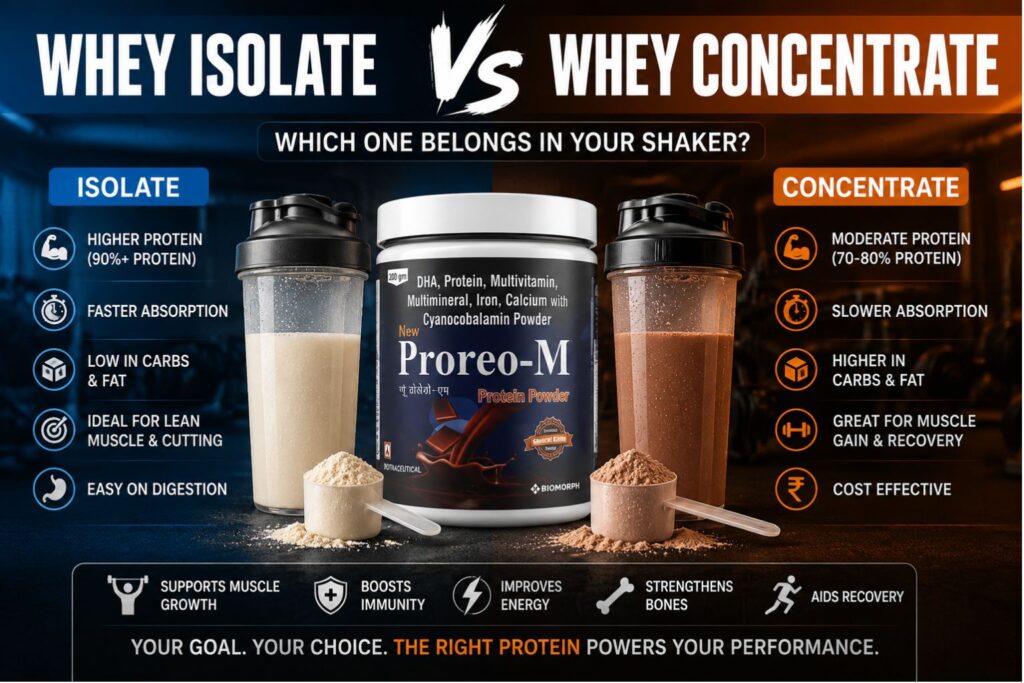
Whey Isolate vs Concentrate — Which One Belongs in Your Shaker?
Stand in front of the shelf and you’ll see the same brand offering two versions at different prices, and the labels won’t really explain the difference. This is the question that stalls almost every first-time buyer, so let’s settle the whey isolate vs concentrate question in plain terms.
What Sets Concentrate Apart (and Why It’s Cheaper)
Concentrate is the lightly filtered version. It’s typically around 70–80% protein, keeping a little more of the natural fats and milk sugars from the original whey. Those leftover components aren’t bad — they carry some beneficial compounds and give concentrate a fuller, creamier taste. Because it takes less processing, it costs less, which makes it the sensible default for most everyday users.
Where Isolate Wins — Purity, Lactose, and Lean Goals
Isolate is put through extra filtering that strips out nearly all the fat and lactose, pushing it to 90% protein or higher. That extra purity matters in two situations: if milk sugar upsets your stomach, isolate’s low lactose is far gentler; and if you’re chasing very lean goals where every gram of fat and carb is counted, isolate gives you more protein per calorie. The catch is simply the higher price.
A Simple Way to Decide Between the Two
Don’t overthink it. Here’s the shortcut:
- Pick concentrate if you’re a general user, you’re on a budget, and dairy doesn’t trouble your digestion. For most people, it’s all you need.
- Pick isolate if lactose gives you grief, or you’re dieting hard and want maximum protein with minimal extras.
Ultimately the whey isolate vs concentrate choice comes down to your gut and your goals, not which one sounds fancier on the tub.
How to Read a Label Without Getting Fooled
The front of the tub is advertising. The back is where the truth lives. Learning to read it is the single best skill for finding honest value.
The Numbers That Matter Most
Flip to the nutrition panel and check the protein per serving against the serving size. A brand can claim “80% protein” while quietly using a tiny scoop. What you want is a healthy amount of protein — often 20–25 grams — from a reasonable serving without a mountain of added sugar. Also glance at the ingredient list length: a genuinely good formula is usually short and readable.
Sneaky Ingredients Worth Skipping
A few things should make you pause:
- “Proprietary blend” with no breakdown. This vague term lets a brand hide how little actual protein is in the mix — a classic red flag.
- Amino spiking, where cheap free amino acids are added to inflate the protein number on paper without delivering real muscle-building value.
- A long parade of fillers, gums, and artificial sweeteners. A little is normal; a list dominated by them is a warning.
The best whey protein tubs tend to be transparent — they tell you exactly what’s inside because they’ve got nothing to hide.
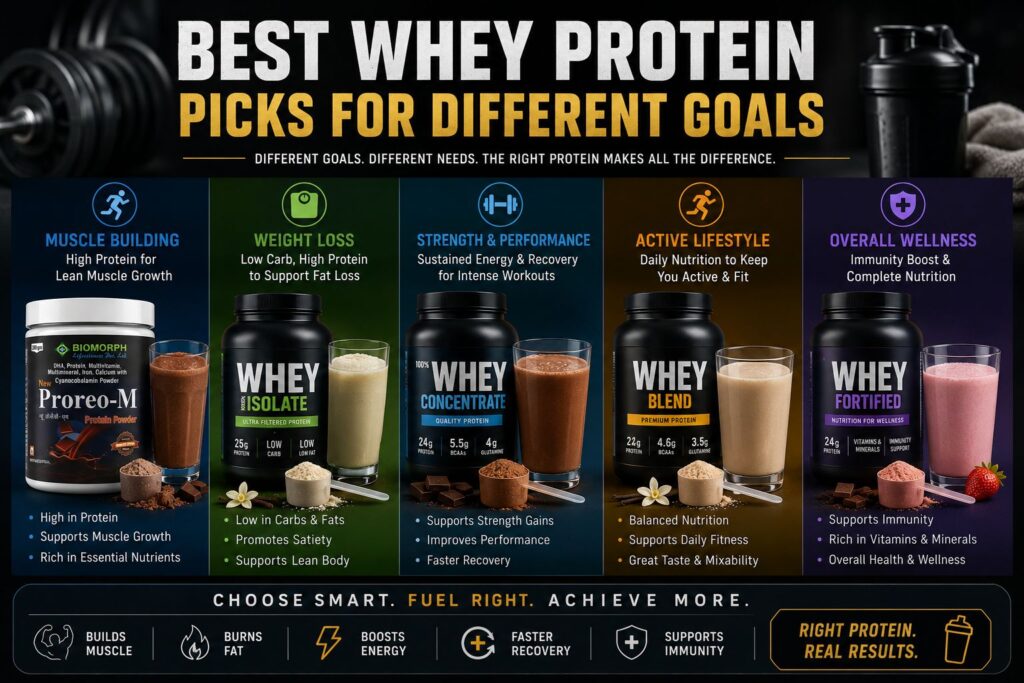
Best Whey Protein Picks for Different Goals
There’s no single “best” powder, because the best whey protein for a bodybuilder isn’t the best for someone easing into fitness. Match the formula to your goal instead.
Best Whey Protein for Muscle Gain
If growth is the aim, look for a formula high in protein per scoop with a strong leucine content, and don’t shy away from concentrate or a concentrate-isolate blend — the slightly richer profile suits a muscle-building phase well. Consistency and total daily protein matter far more than the brand name.
Best Pick for Weight Management and Leaner Days
When you’re watching calories, isolate usually earns its keep. The higher protein-to-calorie ratio keeps you full while leaving room in your budget, making it a smart choice for leaner days.
Gentlest Option for Sensitive Stomachs (and Herbal-Blended Formulas)
If protein powder has left you bloated before, two routes help: a low-lactose isolate, or an Ayurvedic herbal-blended whey with digestive aids like shatavari, ginger, or added enzymes. For many sensitive stomachs, these gentler formulas are quietly the best whey protein they’ve tried, simply because they can actually finish the shake in comfort.
Best Value for Everyday Users
For the person who just wants a reliable daily scoop without overpaying, a well-reviewed concentrate from a transparent brand is the sweet spot. Chase honesty and a fair price-per-serving rather than the flashiest label.
Getting the Timing and Dosage Right
Gym forums make protein timing sound like defusing a bomb. It’s far more relaxed than that.
Pre-Workout, Post-Workout, or Anytime?
The famous “anabolic window” — the belief that you must slam a shake within thirty minutes of your last rep or waste the session — has been massively overstated. Research points to something reassuring: your total protein across the whole day matters far more than the exact minute you drink it. Post-workout is a convenient, effective time, sure. But a shake in the morning or as an afternoon snack works nearly as well. As for amount, one scoop (around 20–30 grams of protein) per serving suits most people, taken once or twice a day depending on how much protein your meals already provide.
Easy Ways to Work It Into Meals and Snacks
Whey doesn’t have to be a bland shake. A few painless ways to use it:
- Blend it into a fruit-and-oat smoothie for a fast breakfast.
- Stir a scoop into porridge, yoghurt, or overnight oats.
- Mix it into pancake or muffin batter for a protein boost.
- Whisk it into warm (not boiling) milk with a pinch of cinnamon for an evening drink.
Whey Protein Side Effects and How to Sidestep Them
Whey is safe for the vast majority of healthy people, but pretending it’s flawless helps no one. Knowing the common whey protein side effects lets you avoid nearly all of them.
Lactose, Gas, and the Bloating Question
The most frequent complaint is digestive — bloating, gas, or a heavy stomach. Usually the culprit is lactose, the milk sugar that concentrate retains more of. If that’s you, the fix is easy: switch to a low-lactose isolate or a herbal-blended formula with digestive support. These whey protein side effects are almost always about the type you chose, not protein powder itself.
When “More Protein” Stops Helping — Kidney and Overuse Myths vs Facts
You’ve probably heard that whey “damages your kidneys.” For healthy people, that fear isn’t supported by the evidence — normal kidneys handle protein just fine. The real caveat is for those with an existing kidney condition, who genuinely should check with a doctor first. Beyond that, the honest truth is that more protein isn’t automatically better. Past what your body can use, extra scoops just add cost and calories, so piling on serving after serving brings diminishing returns rather than faster gains.
Signs You Should Switch Formulas or Ask a Doctor
Listen to your body. Persistent bloating, cramps, or skin flare-ups after every shake are signs to change formula — try isolate, a herbal blend, or a plant option. But anything more serious — hives, swelling, trouble breathing, or ongoing digestive distress — means stop and see a doctor, as it could point to a genuine dairy allergy rather than mild whey protein side effects.
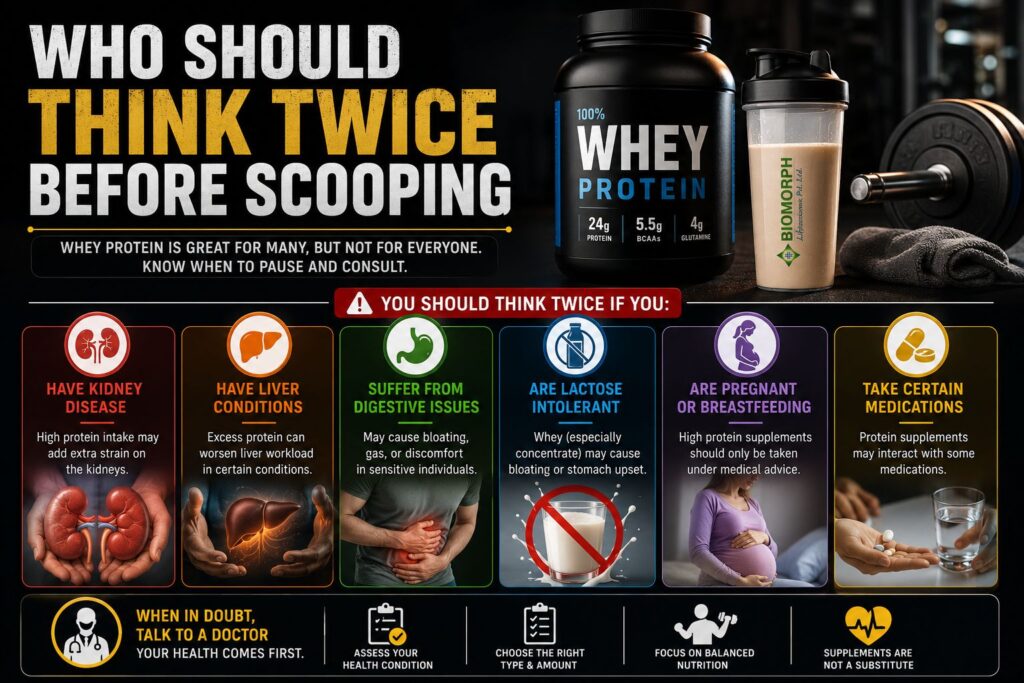
Who Should Think Twice Before Scooping
Whey isn’t right for everyone, and that’s worth saying plainly. Skip it, or get medical advice first, if you have a diagnosed dairy or milk allergy — this is different from lactose intolerance and can be serious. Those with existing kidney or liver conditions should treat protein supplements as a doctor’s conversation, not a casual purchase. If you’re pregnant or breastfeeding, check with your healthcare provider before adding any supplement. And honestly, if you can comfortably hit your protein needs through whole foods like eggs, dairy, lentils, and meat, there’s no rule saying you must supplement at all — powder is a convenience, not an obligation.
Whey vs Plant and Ayurvedic Protein Alternatives
Whey is excellent, but it isn’t the only route. For anyone avoiding dairy, plant proteins — pea, rice, soy, or blends — have come a long way and can match whey’s benefits when combined well to cover all essential amino acids. They’re naturally lactose-free, which sidesteps the most common whey protein side effects entirely.
Then there are Ayurvedic and traditional protein sources — think sprouted moong, sattu (roasted gram flour), or plant blends fortified with ashwagandha and shatavari — that appeal to people wanting a more holistic, food-first approach. The honest verdict: whey still edges ahead on pure muscle-building efficiency and amino quality, but if dairy doesn’t suit you or you prefer a herbal philosophy, these alternatives are far from a compromise. The best whey protein for you might not be whey at all.
Frequently Asked Questions
Can I take whey protein without working out?
Yes. Whey is just a high-quality protein source, so it’s perfectly fine for hitting daily protein targets, staying full, or supplementing a light-protein diet — no gym required. You simply won’t get the muscle-building payoff without some form of resistance activity to put that protein to work.
Is whey protein safe for daily long-term use?
For healthy people, yes. Used sensibly as part of a balanced diet, daily whey is well tolerated over the long term. The key is treating it as a supplement to real food, not a replacement for it, and keeping servings reasonable rather than excessive.
Does whey protein cause acne or weight gain?
Neither is guaranteed. Some individuals notice more breakouts with dairy-based whey and do better on isolate or plant options. As for weight, whey doesn’t cause gain on its own — only a consistent calorie surplus does. Used to replace snacks rather than pile on top of them, it usually supports weight control instead.
Can beginners start with whey right away?
Absolutely. A standard concentrate from a transparent, well-reviewed brand is a beginner-friendly place to start. Begin with a single daily scoop, see how your digestion responds, and adjust from there.
The Takeaway — Making Whey Work for You
Strip away the hype and whey protein is a genuinely useful tool: a fast, complete, affordable way to get quality protein into a busy life. The real whey protein benefits — steadier muscle, fewer snack cravings, quicker recovery, and one less thing to stress about at breakfast — are the kind you feel week to week, not just in a mirror.
Get three things right and you’re sorted. Settle the whey isolate vs concentrate question based on your gut and your goals. Read the label so you’re buying protein, not marketing. And use it sensibly to sidestep the mild whey protein side effects that trip people up. Do that, and the best whey protein isn’t the priciest tub on the shelf — it’s the honest one that fits your body, your budget, and the way you actually live.
Start Your Pcd Pharma Franchise Journey Today
Website: Visit Us
Call: 82838 57755
Contact Us: Click Here