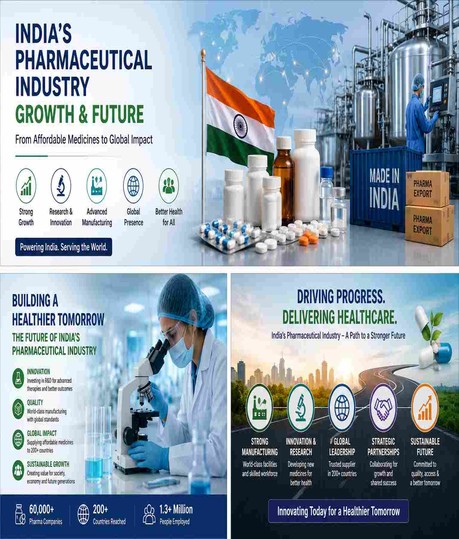
What if the medicines we rely on today could reveal India’s next major economic opportunity? From affordable generic drugs to advanced therapies and growing global exports, India’s pharmaceutical industry has evolved significantly. Once focused largely on meeting domestic healthcare needs, the industry now plays a vital role in global healthcare. Its growth is being driven by innovation, strong manufacturing capabilities, increasing demand, and expanding international markets. But the journey is far from over. In this guide, we’ll explore the key factors shaping India’s pharmaceutical industry, emerging opportunities, major trends, and the future prospects of this rapidly growing sector.
How India’s Pharmaceutical Industry Became a Global Force
India’s pharmaceutical story is a good example of how steady progress can create worldwide impact. What started with the need to strengthen domestic medicine production has gradually developed into a powerful and internationally connected industry. Today, India’s pharmaceutical industry plays an important role in supplying affordable medicines to people across different markets.
From Domestic Production to Global Recognition
India’s early pharmaceutical growth was closely linked to making essential medicines more accessible within the country. As manufacturers gained experience, they began improving production facilities, quality systems, and technical capabilities. This helped Indian companies enter international markets with competitive products.
Over the years, the industry expanded from basic medicine manufacturing to a broader portfolio that includes generic drugs, vaccines, formulations, and specialized therapies. Stronger quality practices and growing export capabilities further improved the reputation of Indian manufacturers.
India’s Growing Role in Global Medicine Supply
The Indian pharmaceutical sector has become an important part of the international healthcare supply chain. Indian manufacturers supply medicines to numerous markets, helping healthcare providers access cost-effective treatment options.
This role is supported by a large manufacturing network and expertise in producing medicines at competitive prices. For many businesses and healthcare systems, Indian suppliers offer a practical combination of affordability, production capacity, and product variety.
The Indian pharma industry is also adapting to changing global expectations. Companies are increasingly focusing on quality management, regulatory compliance, technology, and reliable supply systems.
Key Factors Behind India’s Pharma Growth
Several elements have contributed to the development of the drug industry in India. The country has a large pool of skilled professionals, established manufacturing capabilities, and growing interest in pharmaceutical research and innovation.
Key growth drivers include:
- Strong domestic demand for medicines
- Competitive manufacturing costs
- Expanding pharmaceutical exports
- Improved production technology
- Increasing investment in research and development
- Growing focus on international quality standards
Together, these factors have created a stronger foundation for long-term progress. As healthcare needs continue to evolve, India’s pharmaceutical sector has an opportunity to move further into advanced medicines, research-led products, and high-value healthcare solutions.
India’s Pharmaceutical Sector in the Global Market
India’s position in the global medicine market has grown through years of manufacturing experience, expanding exports, and a strong focus on affordable healthcare. India’s pharmaceutical industry now connects domestic manufacturers with healthcare markets across the world. Its growing international presence has also created opportunities for businesses looking for reliable production and supply partners.
Pharmaceutical Exports and International Reach
Indian pharmaceutical manufacturers serve a wide range of international markets with generic medicines, formulations, vaccines, and other healthcare products. Competitive pricing, established manufacturing facilities, and technical expertise have helped Indian companies build relationships with global buyers.
The Indian pharma industry continues to strengthen its export capabilities by improving quality systems and adapting to different regulatory requirements. This international reach has made India an important source of medicines for several healthcare markets.
Contract Manufacturing and Outsourcing Opportunities
Pharmaceutical outsourcing has opened another valuable path for manufacturers and businesses. Companies that do not want to establish their own production facilities can work with experienced manufacturers to develop and produce medicines according to specific requirements.
For businesses, contract manufacturing can reduce infrastructure costs while providing access to established production capabilities. The Indian pharmaceutical sector offers opportunities across formulations, packaging, product development, and other manufacturing services.
Before selecting a manufacturing partner, businesses should carefully evaluate quality certifications, production capacity, regulatory compliance, product range, and delivery reliability. A suitable partner can make the supply process more efficient and predictable.
India’s Contribution to Affordable Healthcare
One of India’s most visible contributions to global healthcare is its ability to produce medicines at competitive prices. Large-scale manufacturing and experience with generic formulations have helped improve access to essential treatments.
The drug industry in India supports this affordability by serving both domestic and international demand. Consistent quality, dependable supply, and compliance with applicable standards are equally important for building trust.
As demand for accessible healthcare continues to rise, India’s manufacturing strength can support broader medicine availability while creating new opportunities for innovation and international collaboration.
Government Support for the Indian Pharmaceutical Sector
Government initiatives have become an important part of the growth story of India’s pharmaceutical industry. Over the years, policies have focused on increasing domestic production, attracting investment, improving research capabilities, and making the medicine supply network more reliable. This support is helping pharmaceutical businesses build stronger operations while creating better opportunities for long-term expansion.
Policies Supporting Domestic Manufacturing
India has introduced several measures to encourage companies to manufacture more pharmaceutical products within the country. Stronger infrastructure, investment-friendly policies, and support for local production have helped manufacturers improve their capabilities and reduce dependence on overseas sources.
For the Indian pharma industry, these policies can create benefits across the wider business network, including manufacturers, suppliers, packaging companies, distributors, and logistics providers. A stronger domestic base also helps maintain the availability of important medicines.
Production-Linked Incentives for Pharma
Production-linked incentive schemes have encouraged eligible pharmaceutical manufacturers to increase production and invest in selected products. Instead of focusing only on investment, these programs connect incentives with actual production and performance.
The Indian pharmaceutical sector can benefit from this approach through:
- Expansion of modern manufacturing facilities
- Increased production capacity
- Greater investment in selected pharmaceutical products
- Improved manufacturing technology
- Stronger domestic supply capabilities
- Better opportunities for large-scale production
Such initiatives can help Indian manufacturers compete more effectively while supporting the development of a more self-reliant pharmaceutical ecosystem.
Support for Research and Innovation
Research is becoming increasingly important as healthcare needs become more complex. Government support for research programs, technology development, and innovation can encourage pharmaceutical companies to explore improved formulations, advanced therapies, and new treatment solutions.
For the Indian pharma industry, stronger research capabilities can open doors to higher-value products and reduce dependence on conventional manufacturing models. Collaboration between companies, research institutions, and technical experts can further accelerate innovation.
Strengthening India’s Pharmaceutical Supply Chain
A dependable supply chain is essential for keeping medicines available when and where they are needed. The drug industry in India relies on raw-material suppliers, manufacturers, packaging units, warehouses, distributors, and transportation networks working together efficiently.
Government efforts to strengthen domestic production and supply-chain resilience can help businesses handle disruptions more effectively. Better infrastructure, diversified sourcing, improved storage, and efficient logistics can make medicine distribution more dependable.
Overall, these initiatives are helping create a stronger foundation for future growth while supporting the competitiveness and resilience of India’s pharmaceutical sector.
What Makes India’s Pharmaceutical Industry Ready for the Future?
The future of India’s pharmaceutical industry will depend on how effectively the sector responds to changing healthcare needs, technological developments, global competition, and rising quality expectations. India already has strong manufacturing capabilities and a growing presence in international markets. Building on these strengths can create new opportunities for pharmaceutical companies, manufacturers, exporters, and healthcare businesses.
Strong Manufacturing Base and Skilled Workforce
A well-developed manufacturing ecosystem gives the Indian pharma industry an important advantage. Companies are involved in generic medicines, formulations, active pharmaceutical ingredients, vaccines, and several other healthcare segments. India also has a large workforce of pharmacists, scientists, researchers, engineers, and technical professionals.
Some major strengths include:
- Established pharmaceutical manufacturing facilities
- Availability of skilled technical professionals
- Experience in generic medicine production
- Growing manufacturing capacity
- Expanding pharmaceutical infrastructure
Together, these factors provide a strong foundation for future industry development.
Growing Demand for Quality and Advanced Medicines
Healthcare markets are becoming increasingly focused on quality, safety, and advanced treatment options. This shift is encouraging the Indian pharmaceutical sector to explore more specialized areas while maintaining strong third party manufacturing standards.
Key areas with growing potential include:
- Specialty and complex medicines
- Biologics and biosimilars
- Advanced drug-delivery systems
- Improved generic formulations
- Patient-focused healthcare products
Companies that combine product quality with efficient manufacturing can build stronger positions in both domestic and international markets.
Digital Technology and Modern Pharmaceutical Operations
Technology is becoming an important part of modern pharmaceutical operations. Automation, digital quality systems, data management, and advanced analytical tools can help businesses improve efficiency and maintain better control over production processes.
For the drug industry in India, useful technology applications include:
- Automated manufacturing processes
- Digital inventory management
- Electronic quality monitoring
- Data-based production planning
- Improved supply-chain tracking
- Advanced laboratory technologies
Adopting the right technology can help pharmaceutical businesses reduce operational inefficiencies and respond more quickly to changing market requirements.
Building a Stronger Global Pharmaceutical Presence
International expansion offers significant opportunities for Indian pharma companies. However, entering new markets requires more than competitive pricing. Businesses must understand regulatory requirements, maintain consistent product quality, and develop dependable supply and distribution systems.
Companies planning global expansion should focus on:
- Understanding target-market regulations
- Maintaining required quality standards
- Building reliable distribution networks
- Developing suitable product portfolios
- Strengthening export documentation
- Establishing long-term international partnerships
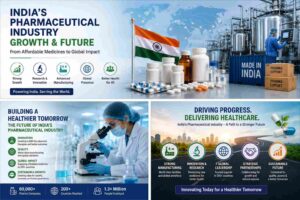
With manufacturing expertise, skilled talent, innovation, and growing global demand working together, India’s pharmaceutical industry has the potential to strengthen its role in the international healthcare market and create sustainable opportunities for future growth.
Future Growth Opportunities in Indian Pharma
The next phase of India’s pharmaceutical industry is likely to be shaped by changing healthcare needs, new technologies, and stronger demand from international markets. Pharmaceutical businesses are gradually moving beyond traditional medicines and exploring areas that offer greater value and innovation. This shift can create fresh opportunities for manufacturers, researchers, investors, and healthcare companies.
Expansion of Specialty and Complex Drugs
Demand for specialty and complex medicines is increasing as healthcare providers look for more targeted treatment options. These products often require advanced manufacturing processes, specialized expertise, and strict quality controls.
For the Indian pharma industry, developing capabilities in complex formulations can create opportunities to enter higher-value segments. Companies investing in modern facilities and technical skills may be better positioned to meet these changing requirements.
Rising Potential of Biopharmaceuticals
Biopharmaceuticals are becoming an important area of pharmaceutical development. Products such as biologics, biosimilars, and other advanced therapies are attracting greater attention because of their potential in treating complex health conditions.
The Indian pharmaceutical sector has an opportunity to strengthen its position in this field by improving biotechnology capabilities, developing skilled talent, and increasing collaboration between manufacturers and research organizations.
Growth in Pharmaceutical Exports
International demand remains a major opportunity for Indian manufacturers. Established production capabilities and experience with affordable medicines provide a strong base for expanding into new markets.
The drug industry in India can benefit from growing healthcare requirements across developing and emerging economies. Companies that understand local regulations, maintain consistent quality, and build reliable distribution networks can strengthen their global presence.
Increasing Investment in Research and Development
Research and development will play a central role in determining how successfully the industry moves into advanced pharmaceutical segments. Greater investment can support new formulations, improved drug-delivery systems, and innovative treatment approaches.
Important areas for future investment include:
- Advanced pharmaceutical technologies
- Biotechnology and biologics
- Complex generic medicines
- Drug-development research
- Digital tools for pharmaceutical operations
- Skilled scientific and technical talent
As innovation becomes more important, businesses that combine manufacturing experience with strong research capabilities may find new avenues for growth. This evolving landscape gives India’s pharmaceutical industry a valuable opportunity to strengthen its domestic position while becoming an even more competitive player in global healthcare.
Business Opportunities in Indian Pharma
The expanding India’s pharmaceutical industry is creating opportunities not only for established manufacturers but also for entrepreneurs, distributors, and new healthcare businesses. Growing medicine demand, wider market access, and changing consumer needs have opened several business models that can be explored with the right planning, product selection, and regulatory approach.

Third-Party Pharmaceutical Manufacturing
Third-party manufacturing is a practical option for businesses that want to enter pharmaceutical production without setting up their own manufacturing plant. In this model, a company partners with an established manufacturer to produce medicines according to agreed specifications.
For the Indian pharma industry, this model can reduce infrastructure requirements and allow businesses to concentrate on branding, marketing, sales, and distribution. Before choosing a manufacturing partner, businesses should assess product quality, manufacturing capacity, certifications, minimum order requirements, and delivery timelines.
PCD Pharma and Distribution Opportunities
PCD pharma and distribution models can offer attractive opportunities for entrepreneurs who want to build a medicine distribution business. A PCD franchise generally allows a business partner to market pharmaceutical products within an assigned area.
The Indian pharmaceutical sector provides a broad product base for such businesses, but success depends on factors such as product demand, pricing, promotional support, territory potential, and dependable supply. Strong relationships with healthcare professionals and retailers can also help build a stable customer network.
Pharmaceutical Export Business
International markets offer another promising avenue for businesses involved in pharmaceutical products. Indian manufacturers already serve numerous countries, creating opportunities for companies that can meet export requirements and identify suitable markets.
Businesses entering this field should understand import regulations, documentation, product registration, packaging requirements, and market-specific quality standards before beginning exports.
Opportunities for Emerging Indian Pharma Companies
New companies can find room to grow by focusing on specialized products, underserved markets, efficient distribution, or innovative healthcare solutions. Instead of competing only on price, emerging businesses can build a stronger position through product quality, customer service, and reliable supply.
Potential areas include:
- Specialty and complex formulations
- Nutraceutical and wellness products
- Contract manufacturing services
- Regional distribution networks
- International pharmaceutical markets
- Technology-driven healthcare solutions
As the drug industry in India continues to evolve, businesses that understand market demand and maintain strong compliance practices can discover meaningful opportunities for sustainable growth.
Conclusion
The journey of India’s pharmaceutical industry reflects a steady shift from domestic medicine production to a stronger global healthcare presence. With expanding exports, advanced manufacturing, research opportunities, and supportive policies, the future looks promising. The Indian pharma industry can continue creating value by focusing on quality, innovation, technology, and reliable supply. Businesses exploring opportunities in this sector can also consider established partners such as Biomorph Lifesciences, particularly for pharmaceutical manufacturing and related business solutions. As the Indian pharmaceutical sector continues to evolve, companies that understand market needs and maintain strong quality practices can build sustainable growth. The progress of the drug industry in India will remain an important part of the country’s healthcare and economic development.
Frequently Asked Questions
Q. Why is India’s pharmaceutical industry important globally?
India’s pharmaceutical industry is important because it has developed strong manufacturing capabilities and supplies affordable medicines to various international markets.
Q. What is driving the growth of the Indian pharma industry?
Major factors include rising healthcare demand, pharmaceutical exports, manufacturing capabilities, technological development, research, and increasing investment.
Q. What opportunities are available in the Indian pharmaceutical sector?
Businesses can explore third-party manufacturing, PCD pharma, distribution, pharmaceutical exports, specialty medicines, and research-based products.
Q. How is the drug industry in India adopting new technology?
The drug industry in India is increasingly using automation, digital quality systems, advanced analytical tools, data management, and modern production technologies.
Q. What role can Biomorph Lifesciences play in pharma business?
Biomorph Lifesciences can be considered by businesses looking for pharmaceutical manufacturing and related opportunities, depending on their product and business requirements.