Lycopene is a naturally occurring carotenoid that gives tomatoes, watermelon, pink grapefruit, and several other fruits and vegetables their characteristic red color. It has attracted considerable interest because of its antioxidant properties and its place in modern nutritional formulations. For people looking for a convenient way to include lycopene in their daily supplement routine, a lycopene softgel capsule is one of the commonly used dosage forms. Softgels are particularly suitable for formulations containing oil-soluble ingredients. Their smooth outer shell makes them easy to swallow, while the formulation inside can be designed to deliver a measured quantity of the active ingredient. However, choosing or developing a quality supplement involves more than simply selecting a lycopene ingredient and putting it into a capsule.The source of lycopene, concentration, supporting ingredients, stability, manufacturing standards, testing, and packaging can all influence the final product. This becomes especially important for businesses sourcing supplements for private-label, contract manufacturing, or wholesale distribution.
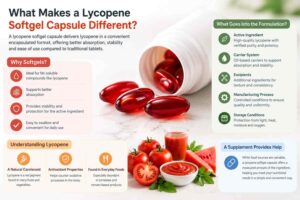
What Makes a Lycopene Softgel Capsule Different?
A lycopene softgel capsule is a dosage form that delivers lycopene in a convenient encapsulated format. Unlike conventional tablets, softgels generally contain a liquid, semi-liquid, or oil-based fill surrounded by a gelatin or suitable vegetarian shell.
This format can be useful for compounds with poor water solubility. Lycopene is fat-soluble, which makes the choice of delivery system an important consideration when developing a supplement.
The purpose of a good formulation is not simply to place an ingredient inside a capsule. The ingredients need to remain stable, compatible, and consistent throughout manufacturing and the intended shelf life. A properly developed lycopene softgel capsule therefore requires attention to the active ingredient, carrier system, excipients, manufacturing process, and storage conditions.
Understanding Lycopene in Simple Terms
Lycopene belongs to a group of naturally occurring pigments known as carotenoids. It is found in a variety of plant foods, with tomatoes and tomato-based foods being particularly well-known dietary sources.
Its antioxidant activity is one of the main reasons it is included in nutritional supplements. Antioxidants help counter oxidative processes in the body, although the effects of any individual nutrient should not be viewed as a substitute for a balanced diet or appropriate medical care.
The amount of lycopene obtained through food can vary depending on the type of food, serving size, preparation method, and overall dietary pattern. A supplement provides another way of obtaining a defined amount of the ingredient.
Why Softgels Are Used for Lycopene Supplements
The physical characteristics of lycopene make a softgel format particularly relevant. Because lycopene is oil-soluble, manufacturers can develop formulations in which it is dispersed or dissolved in an appropriate oil-based carrier.
A softgel can also provide several practical advantages:
- Convenient measured dosing
- Smooth and easy-to-swallow capsule shells
- Suitable format for oil-based formulations
- Consistent presentation across batches
- Flexible options for consumer and wholesale products
For manufacturers, the softgel format also provides room for formulation customization. Depending on the product concept, lycopene may be offered alone or combined with other nutritional ingredients.
What Can Influence the Final Product?
Several factors determine how a finished lycopene softgel capsule performs from a manufacturing and quality perspective.
The quality of the raw material is an obvious starting point. Manufacturers need reliable specifications for identity, potency, purity, and other relevant quality characteristics. The carrier oil and other formulation components must also be compatible with the active ingredient.
Processing conditions matter as well. Excessive exposure to heat, oxygen, light, or unsuitable storage conditions can affect sensitive ingredients. This is why formulation development and packaging should be considered together rather than as separate decisions.
Potential Benefits of Lycopene Softgel Capsules
The interest in lycopene supplements largely comes from the compound’s antioxidant characteristics. A lycopene softgelcapsule can provide a convenient source of a measured quantity of lycopene for people who want to complement their regular dietary intake.
It is important, however, to distinguish between nutritional support and medical treatment. Supplements should not be presented as cures for diseases, and individual responses can differ.
Antioxidant Support
Lycopene is widely studied for its antioxidant properties. Oxidative stress occurs when the production of reactive molecules exceeds the body’s ability to manage them effectively.
A diet containing a variety of fruits and vegetables naturally provides numerous antioxidant compounds. Lycopene supplements can be used as an additional source of this particular carotenoid.
The value of a lycopene softgel capsule is therefore often associated with convenient antioxidant supplementation rather than with a single guaranteed health outcome.
Support for Cardiovascular Wellness
Lycopene has been investigated in nutritional and scientific research relating to cardiovascular health. Researchers have explored associations between lycopene intake, oxidative stress, and several markers connected with cardiovascular wellness.
These findings should be interpreted carefully. Taking a supplement does not eliminate the importance of regular physical activity, a balanced diet, adequate sleep, and other healthy lifestyle choices.
For consumers, a sensible approach is to view lycopene as one component of overall nutrition rather than as a standalone solution.
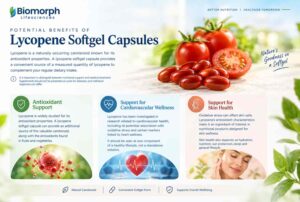
Support for Skin Health
Oxidative stress can also affect skin cells. Lycopene’s antioxidant characteristics have made it an ingredient of interest in nutritional products designed around skin wellness.
A lycopene softgel capsule may therefore appeal to consumers who are interested in nutritional approaches to maintaining healthy skin. However, supplement claims should remain evidence-based and should avoid promising specific cosmetic or therapeutic results without appropriate supporting evidence.
Skin health also depends on factors such as hydration, nutrition, sun protection, sleep, and general lifestyle.
Everyday Nutritional Support
One of the simplest reasons consumers choose supplements is convenience. A standardized capsule provides a defined serving without requiring the consumer to plan meals around a particular food source.
This does not mean supplements should replace whole foods. Tomatoes, fruits, vegetables, legumes, whole grains, and other nutrient-rich foods provide a broader range of nutrients and beneficial compounds.
Instead, a lycopene softgel capsule can fit into a broader nutritional routine when supplementation is appropriate.
Common Uses of Lycopene Softgel Capsules
Lycopene softgels are used in different types of nutritional and wellness products. Some formulations focus exclusively on lycopene, while others combine it with vitamins, minerals, or additional botanical ingredients.
The intended market often determines the final composition. A product designed for general nutritional supplementation may have different specifications from one developed for a specialized wellness category.
General Nutritional Supplementation
The most straightforward use is providing lycopene as part of a dietary supplement. Consumers may select a lycopene softgel capsule because it offers a simple and standardized format.
For manufacturers, this category requires careful attention to ingredient specifications, dosage, capsule size, labeling, and packaging. The product should communicate clearly what it contains and how it should be used.
Combination Wellness Formulations
Lycopene can also appear alongside other nutritional ingredients. The objective of a combination product is to create a formulation that addresses a broader nutritional concept while maintaining appropriate quantities and compatibility among the ingredients.
This is where a clear lycopene softgel combination specification becomes valuable. A specification should identify the active ingredients, their quantities, dosage recommendations, excipients, capsule characteristics, and relevant quality requirements.
Who May Consider Lycopene Supplementation?
Adults interested in increasing their intake of lycopene may consider a supplement depending on their dietary habits and individual nutritional needs.
However, supplementation is not automatically necessary for everyone. People taking medication, managing a medical condition, pregnant or breastfeeding individuals, or anyone with concerns about supplement interactions should seek appropriate professional advice before starting a new product.
When a Supplement May Not Be the Right Choice
A supplement cannot compensate for an overall poor diet. If someone has a broader nutritional deficiency, the appropriate response may involve dietary changes or professional assessment rather than simply adding lycopene.
Consumers should also avoid assuming that a higher dose is always better. Nutritional products should be used according to their label directions and appropriate professional guidance.
What Goes Into a Well-Designed Lycopene Softgel?
Developing a quality lycopene softgel capsule starts with a clear product specification. Manufacturers need to know the intended dose, target market, capsule format, supporting ingredients, packaging requirements, and expected shelf life before production begins.
A well-designed product balances ingredient performance with manufacturing practicality. A formulation that looks attractive on paper may still create problems if its ingredients are incompatible or difficult to process consistently.
Active Ingredient Selection
The first consideration is the lycopene source itself. Raw materials should come with appropriate specifications covering identity, strength, purity, and other quality parameters relevant to the product.
The source and concentration can influence the formulation, cost, stability, and final label declaration. Reliable documentation helps manufacturers verify that the ingredient entering production matches the agreed specification.
Supporting Ingredients
Lycopene does not necessarily work alone in a softgel formulation. Depending on the product design, manufacturers may use suitable carrier oils, antioxidants, stabilizers, or other formulation aids.
Each supporting ingredient should have a clear purpose. Using unnecessary components can complicate manufacturing and increase the number of variables that need to be controlled.
Lycopene Softgel Combination Specification
A detailed lycopene softgel combination specification should make the intended formulation easy for both the manufacturer and buyer to understand.
Important details may include:
- Lycopene source and specification
- Quantity per softgel
- Other active ingredients
- Carrier or excipient requirements
- Capsule shell composition
- Recommended serving size
- Appearance requirements
- Testing parameters
- Storage conditions
- Expected shelf life
For combination products, ingredient compatibility deserves particular attention. Different active compounds can behave differently during processing and storage, so formulation development should consider the complete blend rather than examining each ingredient separately.
Capsule Shell Selection
The shell is another important part of the final product. Traditional softgels commonly use gelatin, while vegetarian or vegan-friendly alternatives may be considered depending on the target market and formulation requirements.
The shell needs to provide appropriate physical integrity while remaining suitable for the fill material. Its appearance, size, color, and finish can also influence the product’s presentation.
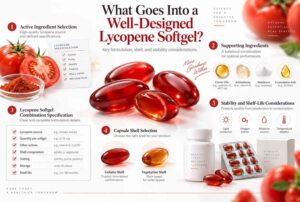
Stability and Shelf-Life Considerations
Lycopene-containing products should be protected from environmental conditions that may compromise ingredient stability. Light, oxygen, moisture, and temperature can all be relevant depending on the formulation.
This is why stability should be considered during product development rather than after manufacturing is complete.
Suitable packaging can provide an additional layer of protection. Manufacturers may evaluate container materials, closures, blister structures, desiccant requirements, and storage instructions according to the product’s needs.
Lycopene Softgel Formulation Sourcing Checklist
Businesses sourcing a lycopene softgel capsule should evaluate much more than the quoted manufacturing price. A structured lycopene softgel formulation sourcing checklist can make supplier comparisons easier and reduce the chance of overlooking important technical details.
Before placing an order, review:
- Ingredient specifications – Confirm the source, potency, identity, and quality requirements for lycopene.
- Formulation details – Verify the exact quantity of lycopene and any additional active ingredients.
- Testing documentation – Ask what quality and analytical documents are supplied for raw materials and finished products.
- Manufacturing standards – Review the manufacturer’s applicable quality systems, certifications, and production capabilities.
- Minimum order quantity – Make sure the supplier’s minimum batch size fits your business requirements.
- Lead time – Clarify development, production, testing, and dispatch timelines.
- Customization – Determine whether the supplier can modify dosage, ingredients, capsule appearance, or packaging.
- Shelf life – Establish the expected shelf life and recommended storage conditions.
- Packaging – Compare available formats and their suitability for the product.
- Label requirements – Confirm that artwork, declarations, directions, and other labeling requirements can be accommodated.
Questions to Ask a Softgel Manufacturer Before Ordering
A supplier should be able to answer practical questions clearly. Ask whether they can provide samples, technical specifications, testing documents, and information about their manufacturing process.
It is also useful to ask about formulation development. If you require a customized lycopene softgel combination specification, determine whether the manufacturer has the necessary formulation expertise or works with a dedicated development team.
Supply continuity matters too. A supplier may offer an attractive initial price but become difficult to work with if raw-material availability, communication, or production schedules are inconsistent.
Choosing Lycopene Softgel Wholesale Packaging Options
Packaging is not simply about making a product look professional. It protects the capsules during storage and transportation while also influencing how customers interact with the product.
Common lycopene softgel wholesale packaging options include bottles, jars, blister packs, and other formats selected according to market requirements.
Bottles
Bottles are widely used for nutritional supplements because they can accommodate different capsule counts and are convenient for repeated use.
The selected container should provide suitable protection against environmental exposure and should be paired with an appropriate closure.
Blister Packs
Blister packaging can provide individual capsule separation and may be useful where portability, controlled dispensing, or unit-level presentation is important.
For businesses comparing lycopene softgel wholesale packaging options, blister packs may be particularly worth considering for markets where consumers prefer individually protected doses.
Packaging Factors That Matter
When reviewing lycopene softgel wholesale packaging options, consider:
- Protection from light
- Moisture resistance
- Product shelf life
- Transportation conditions
- Capsule count
- Labeling space
- Ease of use
- Target-market preferences
- Packaging cost
The right packaging depends on the formulation, distribution model, and intended customer. A premium retail product may require a different presentation from a high-volume wholesale product.
How to Compare Lycopene Softgel Suppliers
Supplier selection should involve both commercial and technical evaluation. Price is important, but it should not be the only deciding factor.
Look at the supplier’s manufacturing capabilities, quality systems, documentation, formulation flexibility, communication, production capacity, and ability to maintain consistent specifications.
A manufacturer that understands your product requirements can also help identify practical improvements. For example, they may recommend a different capsule size, packaging format, or supporting ingredient based on manufacturing experience.
If you are working from a lycopene softgel formulation sourcing checklist, keep the same criteria for every supplier. This creates a fairer comparison and makes it easier to identify differences in quality, service, and overall value.
Smart Buying Decisions for Lycopene Softgel Products
A successful sourcing decision begins with a clear product brief. Define the intended dosage, ingredient combination, capsule type, packaging, target market, order quantity, and quality expectations before approaching manufacturers.
Samples can also be useful during supplier evaluation. They allow buyers to review physical characteristics such as capsule appearance, size, fill consistency, packaging presentation, and labeling before committing to a larger production run.
For businesses developing a private-label product, documentation should receive the same attention as presentation. A professional-looking bottle cannot compensate for unclear specifications or inconsistent quality control.
A strong lycopene softgel capsule project is therefore built around three fundamentals: a suitable formulation, dependable manufacturing, and packaging that protects the finished product.
Frequently Asked Questions
Q What is a lycopene softgel capsule used for?
Ans. A lycopene softgel capsule is generally used as a dietary supplement to provide a measured amount of lycopene. Lycopene is known for its antioxidant properties and is also naturally present in foods such as tomatoes.
Q Why is lycopene commonly offered in softgel form?
Ans. Lycopene is fat-soluble, making an oil-based softgel format a practical option for many supplement formulations. The final dosage form depends on the formulation strategy and manufacturing requirements.
Q What should be included in a lycopene softgel formulation?
Ans. A formulation may include lycopene, a suitable carrier, supporting ingredients, and a capsule shell. The exact composition depends on the desired dosage, product concept, stability requirements, and target market.
Q What is important in a lycopene softgel combination specification?
Ans. A lycopene softgel combination specification should clearly state the amount of each active ingredient, supporting ingredients, dosage, capsule requirements, testing parameters, storage conditions, and other agreed product characteristics.
Website: Visit our official website to learn more.
Call Us: 82838 57755
Instagram: Follow us for the latest updates and industry insights.
Facebook: Join our community and stay connected.