A great nutraceutical brand can start with one simple idea, but turning that idea into a reliable product takes the right manufacturing support. As demand for wellness-focused products continues to grow, businesses are looking for practical ways to expand their range without building a manufacturing facility from scratch. This is where nutraceutical third party manufacturing can make a real difference. From formulation and production to packaging and scale-up, the right manufacturing partner can help transform a product concept into something ready for the market. But choosing a partner involves more than comparing prices. Let’s explore what growing brands should consider before getting started.
Why More Brands Are Exploring Nutraceutical Manufacturing Partnerships
Launching a wellness product is exciting, but producing it consistently can become a very different challenge. Building a dedicated manufacturing facility requires investment in equipment, trained teams, quality systems, storage, and production management. For many growing businesses, that is a major commitment before the product has even found its market.
This is why nutraceutical third party manufacturing is becoming a practical route for brands that want to focus on product development, marketing, and customer growth while working with an experienced production partner. Instead of handling every manufacturing task internally, a brand can collaborate with a manufacturer that already has the required infrastructure and production capabilities.
Growing Beyond a Single Product
Consumer preferences are changing quickly. A brand that begins with one supplement may later want to introduce capsules, tablets, powders, gummies, or other nutraceutical products. Working with an established manufacturing partner can make this expansion more manageable.
It can also be useful when a business wants to explore herbal products alongside nutritional supplements. Different formulations may require different ingredients, production processes, packaging formats, and quality checks, so choosing a manufacturer with suitable capabilities matters.

More Than Just Production
A manufacturing partnership should not be viewed simply as a way to get products made. The right partner can contribute to formulation discussions, production planning, packaging choices, quality checks, and order coordination. This can help a growing brand avoid unnecessary delays and make better decisions before committing to large quantities.
Before selecting a partner, businesses should look beyond the quoted manufacturing cost. Production capacity, formulation options, documentation, minimum order quantities, quality practices, and communication can all affect the experience. A careful evaluation at the beginning can create a stronger foundation for future growth.
What Can You Develop Through Nutraceutical Third Party Manufacturing?
A product idea becomes much more valuable when it can be turned into something practical, consistent, and suitable for the intended customer. Nutraceutical third party manufacturing gives brands the flexibility to explore different product formats without setting up their own production facility. Depending on the manufacturer’s capabilities, businesses can develop products around specific nutritional goals, ingredients, formats, and market requirements.
Capsules, Tablets and Softgels
Capsules and tablets remain practical choices for products containing vitamins, minerals, plant extracts, amino acids, and other nutritional ingredients. Softgels can be useful when the formulation requires oils or fat-soluble ingredients. The choice of format should consider the ingredients, serving size, stability, customer preference, and intended positioning of the product.
Powders, Gummies and Convenient Formats
Some customers prefer supplements that are easier to consume than traditional tablets. Powders, sachets, and gummies can offer a different experience while allowing brands to target specific consumer groups. For example, a powder may suit sports nutrition, while a convenient sachet can work well for customers who want something easy to carry and use.
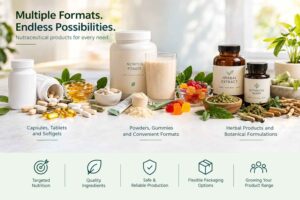
When selecting a format, brands should consider more than appearance. Taste, texture, packaging, shelf life, storage conditions, and production requirements can all influence the final product.
Herbal Products and Botanical Formulations
There is also growing interest in formulations built around plant-based ingredients. Herbal products can include botanical extracts and traditional ingredients designed for different wellness categories. However, the formulation needs careful consideration of ingredient quality, dosage, compatibility, and applicable requirements.
A good manufacturing discussion should begin with the product’s purpose rather than simply asking what products are available. Brands should clearly define their target customer, preferred format, ingredients, serving size, packaging, and expected order quantity. This allows the manufacturer to understand the project properly and determine whether its nutraceutical manufacturing capabilities match the requirement.
For growing businesses, having access to several formats can make it easier to test new ideas, build a broader portfolio, and respond to changing customer preferences without taking on the full burden of establishing an in-house production setup.
A Practical Roadmap for Starting With a Manufacturing Partner
Moving from a product idea to a finished supplement becomes easier when each stage is planned before production begins. Nutraceutical third party manufacturing allows brands to work with established manufacturers, but a clear brief and realistic expectations can make the process much smoother. Instead of discussing everything at once, break the project into a few practical steps.
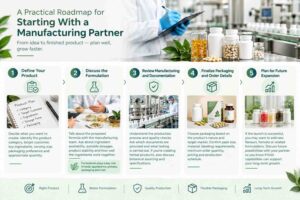
Step 1 — Define Your Product
Start by deciding what you want to create. Identify the product category, intended customer, dosage form, key ingredients, serving size, packaging preference, and approximate quantity. A clear product brief gives the manufacturer enough information to understand what you actually need.
Step 2 — Discuss the Formulation
Once the concept is clear, discuss the proposed formula with the manufacturing team. You may already have a formulation, or you may need help developing one. Ask about ingredient availability, suitable dosages, product stability, and whether the proposed ingredients work well together.
This stage is particularly important for nutraceutical products, because the formulation can influence taste, appearance, production method, packaging, and overall cost.
Step 3 — Review Manufacturing and Documentation
Before placing an order, understand how the manufacturer handles production and quality checks. Ask which documents are provided with the finished batch and what testing is carried out. If you are developing herbal products, also discuss the specifications and sourcing requirements for botanical ingredients.
Step 4 — Finalize Packaging and Order Details
Packaging should be decided according to the product’s characteristics and intended market. Confirm the pack size, material, labelling requirements, minimum order quantity, pricing, and expected production schedule before approving the order.
Step 5 — Plan for Future Expansion
If the initial launch performs well, you may want to add new flavours, formats, or related formulations. Discuss future possibilities with the manufacturer so you understand whether its nutraceutical manufacturing capabilities can support your brand as the product range grows.
Final Thoughts
Building a nutraceutical brand involves more than finding a manufacturer with an attractive quotation. The right partnership starts with a clear product idea, suitable formulation, reliable production, appropriate packaging, and realistic order planning. Nutraceutical third party manufacturing can give growing brands access to established production capabilities without requiring them to build and manage their own manufacturing setup.Before choosing a partner, take time to understand its capabilities, quality processes, documentation, minimum order quantities, and ability to support future products. A thoughtful decision at the beginning can make production easier as your brand develops and your product range expands.
Frequently Asked Questions
Q What is nutraceutical third party manufacturing?
It is a manufacturing arrangement where a brand works with an external manufacturer to produce its nutraceutical products according to agreed specifications, formulation, packaging, and quantity requirements.
Q What types of products can be manufactured?
Depending on the manufacturer’s capabilities, brands may develop tablets, capsules, softgels, powders, sachets, gummies, and other nutritional or wellness formulations.
Q Can I develop customized nutraceutical products?
Yes, some manufacturers offer customized formulation and product development support. Requirements can vary depending on the ingredients, dosage form, production process, and quantity.
Q Can herbal products be manufactured through a third-party partner?
Yes. Manufacturers with suitable capabilities may produce herbal products using selected botanical ingredients and agreed formulation specifications.
Website: Visit our official website to learn more.
Call Us: 82838 57755
Instagram: Follow us for the latest updates and industry insights.
Facebook: Join our community and stay connected.