
A good pharmaceutical supplier can make international sourcing simple—or turn it into a costly headache. When businesses export from India, the real challenge is not finding a company willing to supply medicines; it is finding one that can consistently deliver the right products, quality, documentation, and support. India has a large and diverse pharmaceutical manufacturing base, giving overseas buyers plenty of options to explore. But every supplier is different, and a professional-looking website alone cannot tell you what happens after an order is placed. So, how do you separate a dependable pharma supplier from an uncertain choice? This guide explains the practical points buyers should check before selecting a pharmaceutical supplier in India.
Why Indian Pharma Suppliers Attract International Buyers
India has become an important sourcing destination for businesses looking for pharmaceutical products at competitive prices without overlooking manufacturing capabilities. For overseas buyers, the attraction is not simply about cost. Indian suppliers can offer a broad product range, flexible manufacturing options, established production facilities, and experience serving different international markets.
Another advantage is the variety available across the Indian pharmaceutical sector. Buyers can explore tablets, capsules, syrups, injections, softgels, drops, ointments, and other healthcare formulations from different manufacturers. This makes it easier to identify a supplier that matches specific product requirements, packaging preferences, and order volumes.
A Wide Manufacturing Base
India has a large network of pharmaceutical manufacturers and exporters. This gives international companies more choices when they want to export from India and build a dependable supply chain. Depending on their requirements, buyers may work directly with manufacturers, contract manufacturers, or companies specializing in international distribution.
Competitive Pricing With Product Variety
Cost remains an important consideration when purchasing medicines internationally. Indian manufacturers often operate at production scales that can support competitive pricing. However, buyers should look beyond the quotation and consider quality systems, documentation, packaging, minimum order quantities, and shipping costs before making a decision.
The range of export products from India also allows buyers to source multiple formulations through suitable suppliers rather than searching separately for every product.
Growing Interest in International Supply
The pharma export from India sector serves buyers across various regions, but requirements can differ significantly from one destination to another. Product registration, labelling, documentation, packaging, and import regulations may all need attention before an order is shipped.
For this reason, international buyers should treat supplier selection as more than a price comparison. A supplier’s manufacturing capabilities, quality documentation, communication, production capacity, and ability to meet agreed timelines can have a direct impact on the success of an overseas order.
Before committing to a supplier, buyers should request relevant documents, clarify product specifications, discuss minimum order quantities, and understand the expected production and shipping process. Taking these steps early can help avoid misunderstandings later and create a stronger foundation for long-term pharmaceutical sourcing from India.
Start With the Product, Not the Supplier
Choosing a pharmaceutical supplier becomes much easier when you first define exactly what you need. Many buyers begin by comparing companies and quotations, but this can create confusion when each supplier offers different formulations, strengths, packaging, and minimum order quantities. A better approach is to establish your product requirements first and then search for companies capable of meeting them consistently.
Identify the Medicines You Actually Need
Start by preparing a clear product list. Mention the medicine name, dosage form, strength, pack size, expected quantity, and preferred packaging wherever possible. For example, a buyer looking to export from India may need tablets in one strength, injections in another, or specific packaging designed for a particular market.
It is also useful to decide whether you need finished formulations, APIs, nutraceutical products, or another category. Having these details ready allows suppliers to provide more accurate quotations and prevents unnecessary back-and-forth during the enquiry process.
Consider Your Target Market
A product that is suitable for one country may require different documentation, labelling, packaging, or registration for another. Before approaching an Indian supplier, understand the basic import requirements of your destination market.
Ask potential suppliers whether they have experience supplying similar products internationally and whether they can provide the documentation required for your market. This becomes particularly important when planning pharma export from India, where regulatory expectations can vary between countries.
Look Beyond the Product Name
Two suppliers may offer the same medicine but differ in manufacturing arrangements, quality controls, packaging capabilities, and production capacity. Therefore, comparing only the product name and quoted price can leave important details unnoticed.
When reviewing export products from India, consider questions such as:
- Is the required strength and dosage form available?
- What is the minimum order quantity?
- Can the packaging be adapted to your requirements?
- What quality and product documents are available?
- How long will production take?
- Can the supplier handle repeat orders at the expected volume?
These questions help you move from simply finding a product to finding a supply arrangement that works commercially.
Match the Supplier to Your Requirements
Once your product specifications are clear, you can narrow your supplier search much more effectively. The more useful question is, “Which supplier can reliably provide these specific products under my required conditions?”
This product-first approach saves time, improves quotation comparisons, and gives you a clearer basis for evaluating potential suppliers. It also creates a stronger starting point for discussing pricing, documentation, production schedules, packaging, and shipping before placing an international order.
What to Verify Before You Export from India
Choosing a pharmaceutical supplier is only the beginning. Before you export from India, it is important to verify whether the company, products, documentation, and manufacturing arrangements actually match your requirements. A supplier may have an extensive catalogue, but that alone does not tell you whether it can support your market or maintain consistent supply.
For buyers planning pharma export from India, verification should happen before discussing a large commercial order. Taking a little time at this stage can help prevent documentation problems, unexpected delays, packaging issues, and misunderstandings later.
Check the Company’s Manufacturing and Quality Credentials
Start by understanding who is actually manufacturing the products. Some companies manufacture products themselves, while others work through third-party or contract manufacturing arrangements. Neither model automatically determines quality, but you should know exactly where your products will come from.
If you are evaluating export products from India, avoid accepting quality claims without supporting documentation. A professional supplier should be able to explain its manufacturing and quality-control process clearly.
Review Product Documentation
Depending on the product and market, documentation may include:
- Certificate of Analysis
- Product specifications
- Product composition details
- Manufacturing information
- Packaging and labelling details
- Certificates or regulatory documents where applicable
- Commercial and shipping documentation
The exact requirements can vary by country, so buyers should confirm what their local authorities or import partners require.
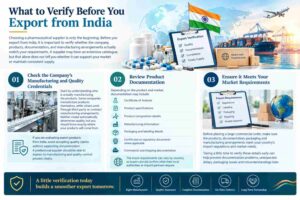
Understand Regulatory Requirements
A product being available for pharma export from India does not automatically mean it can be imported into every country without additional procedures. Your destination market may have its own requirements for product registration, labels, packaging, certificates, or importer responsibilities.
This step is especially important when dealing with export products from India intended for countries with specific pharmaceutical registration procedures.
Confirm Product Specifications
Never rely only on the product name when preparing to export from India. Confirm the exact formulation, strength, dosage form, pack size, composition, and packaging requirements.
For example, two products with similar names may have different strengths or compositions. A simple specification sheet can help both sides work from the same information and reduce mistakes during quotation and production.
Ask About Production Capacity
Your first order may be relatively small, but it is worth considering what happens if demand increases. A supplier that can fulfil an initial order should also have a realistic plan for handling repeat business.
Ask about minimum order quantities, estimated production timelines, available packaging options, and the process for repeat orders. This gives you a clearer picture of whether the supplier can become a long-term partner for pharma export from India.
Understanding Pharma Export from India Before Placing an Order
Once you have verified a supplier, the next step is understanding how the actual export process works. Several stages connect the initial enquiry with the final shipment.
A clear understanding of this process makes it easier to plan your purchase and communicate with the supplier.
From Enquiry to Commercial Shipment
A typical sourcing process begins when the buyer shares product requirements with the supplier. The supplier can then review availability, specifications, quantities, packaging needs, and other commercial details.
The process commonly moves through these stages:
- Product enquiry – Share the required medicines, strengths, quantities, and packaging preferences.
- Quotation – The supplier provides pricing, MOQ, lead time, and commercial terms.
- Specification review – Both parties confirm product details and documentation requirements.
- Order confirmation – Commercial terms and quantities are finalised.
- Production or allocation – Products are manufactured or prepared according to the agreed requirements.
- Quality checks – Relevant quality procedures and documentation are completed.
- Packaging and dispatch – Products are packed and prepared for international transportation.
- Shipping documentation – Required export and commercial documents are prepared for the shipment.
Understand the Documents Involved
Documentation is one of the areas buyers should discuss early when planning pharma export from India. Missing or incorrect paperwork can create unnecessary complications during customs clearance or import processing.
Commercial and shipping documentation may include items such as invoices, packing lists, certificates of origin, shipping documents, and product-specific paperwork.
If you plan to export from India regularly, keeping a standard documentation checklist can make future orders easier to manage.
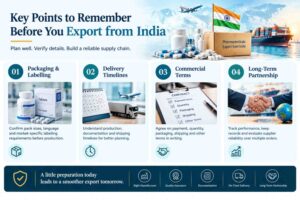
Clarify Packaging and Labelling
Packaging deserves attention before production begins. Buyers should communicate whether products require particular pack sizes, language requirements, artwork, labels, or market-specific information.
When sourcing export products from India, do not assume that the supplier will automatically know your country’s labelling requirements. Provide clear instructions and have the final artwork or specifications reviewed before production wherever necessary.
Discuss Delivery Timelines
A quotation is not complete without understanding when the goods can realistically be supplied. Ask about production time, documentation preparation, shipping arrangements, and any factors that could affect the schedule.
This becomes particularly useful when pharma export from India involves regular replenishment. If you know the approximate lead time, you can plan inventory instead of waiting until existing stock is nearly exhausted.
Understand the Commercial Terms
Before confirming an order, make sure both sides agree on payment terms, quantities, packaging, shipping responsibilities, and other commercial conditions. Put important points in writing rather than relying entirely on verbal conversations.
For businesses beginning to export from India, clear communication at this stage can prevent disagreements later. It also gives both the buyer and supplier a common reference point throughout production and shipment.
Think Beyond the First Shipment
The first successful shipment is useful, but long-term reliability is usually demonstrated through consistent performance over multiple orders. Keep records of product specifications, delivery times, documentation, communication, and any issues encountered.
This information can help you evaluate whether a supplier is suitable for continued pharma export from India.
Ultimately, sourcing export products from India should be approached as a structured business process rather than a simple price comparison. Verify the supplier, understand the product, confirm the documentation, clarify commercial terms, and establish realistic delivery expectations before committing to an order. With these points checked in advance, international buyers can approach pharma export from India with a much clearer understanding of what their supplier can actually provide.
Final Thoughts
Finding a reliable pharmaceutical supplier is about more than comparing quotations. Before you export from India, take time to verify the supplier’s manufacturing arrangements, product specifications, documentation, quality practices, packaging capabilities, and delivery commitments. A clear understanding of these factors can make international sourcing more predictable and reduce avoidable problems.For businesses exploring pharma export from India, the best starting point is a well-defined product requirement followed by careful supplier verification. Whether you are sourcing tablets, capsules, injections, syrups, or other export products from India, clear communication and proper documentation should remain priorities from the first enquiry to the final shipment.
Frequently Asked Questions
Q 1. Why do international buyers choose India for pharmaceutical sourcing?
India has a large pharmaceutical manufacturing sector and offers a wide range of formulations and manufacturing options. Buyers can explore different suppliers based on their product, quantity, packaging, quality, and market requirements.
Q 2. What should I check before choosing a pharmaceutical supplier in India?
Check the supplier’s company details, manufacturing arrangements, quality credentials, product documentation, MOQ, production capacity, packaging options, communication, and expected delivery timelines.
Q 3. What products can be exported from India?
Depending on applicable regulations and market requirements, export products from India can include tablets, capsules, syrups, injections, softgels, drops, ointments, and various other pharmaceutical and healthcare formulations.
Q 4. Is documentation important for pharma export from India?
Yes. Pharmaceutical shipments can require product, commercial, regulatory, and shipping documents. Requirements differ according to the product and destination country, so buyers should confirm the applicable requirements before placing an order.
Q 5. How can I verify a supplier before placing an order?
Request relevant company and product information, review available quality and manufacturing documentation, confirm product specifications, clarify commercial terms, and communicate your destination-market requirements before making a commitment.
Website: Visit our official website to learn more.
Call Us: 82838 57755
Instagram: Follow us for the latest updates and industry insights.
Facebook: Join our community and stay connected.