The pharmaceutical industry is constantly evolving, and businesses often need reliable manufacturing partners to meet growing market demand. Choosing the right third party manufacturing pharma company can help businesses access quality products without investing heavily in their own manufacturing facilities. A dependable third party medicine manufacturer can support everything from production and quality checks to packaging and timely supply. For businesses planning to expand their product range, working with a trusted pharma third party manufacturing company in India can offer a practical and flexible approach. But what should you consider before selecting a manufacturing partner? Let’s explore the key factors that can help you make an informed decision.
The Real Story Behind Third Party Pharma Manufacturing
Most people read a one-line definition and think they understand third party pharma manufacturing. But the real picture is far more layered than “one company makes, another sells.” There’s a whole ecosystem of coordination, compliance, and trust happening quietly in the background.
What Actually Happens at a Manufacturing Unit
Once you partner with a third party manufacturing pharma company, your product journey begins with raw material sourcing, followed by formulation, batch production, and multiple rounds of quality testing. Every stage is documented from temperature logs to machine calibration records. The manufacturer handles the technical heavy lifting, while you focus on branding, marketing, and distribution. It’s less like outsourcing and more like building a working partnership where both sides depend on precision.
Why This Model Continues to Attract New Entrepreneurs
The appeal isn’t hard to understand. Setting up your own manufacturing plant requires massive capital, regulatory approvals, and years of groundwork. A third party medicine manufacturer removes that burden entirely. New entrepreneurs get access to ready infrastructure, experienced staff, and established supply chains without spending crores upfront. This is exactly why the number of PCD franchise owners and small pharma brands keeps growing year after year.
Who Holds Rights to the Formula and Brand
This part often confuses first-timers. In most arrangements, your brand name, packaging, and marketing rights stay entirely yours. The manufacturer only owns the production process and facility. However, formula ownership can vary; some companies offer exclusive formulations, while others use shared ones across clients. If you’re evaluating a pharma third party manufacturing company in India, always clarify this in writing before signing any agreement, so there’s no ambiguity later.
The Indian Pharma Manufacturing Landscape Why It Stands Out Globally
India isn’t just another player in the pharma manufacturing space; it’s often called the backbone of affordable medicine production worldwide. That reputation didn’t happen overnight, and understanding why it holds up is worth a closer look.
What Makes a Pharma Third Party Manufacturing Company Different
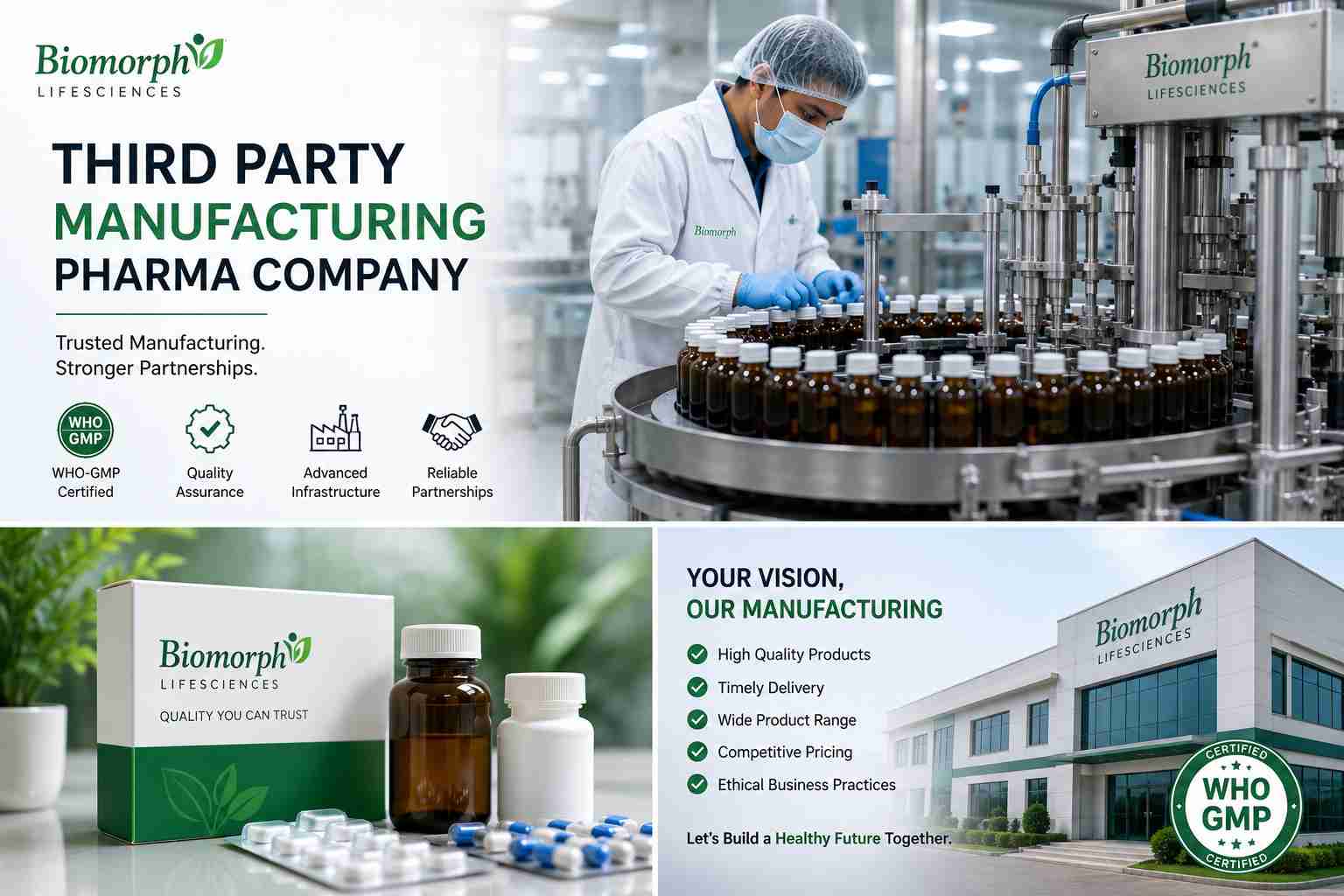
What sets a pharma third party manufacturing company in India apart is the sheer scale of infrastructure combined with cost efficiency. Labour costs remain comparatively lower, raw material sourcing is easier due to local availability, and the regulatory framework, while strict, is well-established enough that manufacturers know exactly what compliance looks like. This combination lets a third party manufacturing pharma company produce high-quality formulations at prices that simply aren’t achievable in many other countries, without compromising on safety standards.
Manufacturing Hubs Worth Knowing Baddi, Ahmedabad, and Beyond
Certain regions have quietly become pharma powerhouses. Baddi in Himachal Pradesh, for instance, offers tax incentives that have pulled in hundreds of manufacturing units over the years. Ahmedabad and its surrounding belt in Gujarat bring decades of pharmaceutical expertise and strong export infrastructure. Other emerging hubs include:
- Hyderabad :known for API (Active Pharmaceutical Ingredient) production
- Sikkim : smaller but growing rapidly due to similar incentives
- Indore : strengthening its presence in formulation manufacturing
Each hub brings its own strengths, so location often matters when selecting a manufacturer.
Export Potential and International Compliance Standards
A genuine third party medicine manufacturer operating in India typically follows WHO-GMP guidelines, and many facilities also hold certifications like USFDA or EU-GMP approval. This isn’t just a formality, it directly impacts whether your products can be exported to regulated markets like the US, Europe, or Africa. If international expansion is part of your long-term vision, partnering with a manufacturer that already meets these standards saves you significant time and regulatory hassle down the road.
How to Spot a Trustworthy Third Party Medicine Manufacturer
Anyone can put up a polished website and claim to be the best in the business. The real test lies in the details most people skip over. Here’s what separates a genuinely reliable partner from one that just talks a good game.
Documents That Should Never Be Missing From Their Profile
Before you trust any third party medicine manufacturer with your business, insist on seeing their paperwork. A legitimate operation should readily share:
- Manufacturing license issued by the state drug authority
- GMP and WHO-GMP certification
- Product-specific approvals for the formulations you need
- GST registration and company incorporation documents
If a manufacturer hesitates or delays providing these, treat it as a warning sign rather than a coincidence. Transparency at this stage usually reflects how they’ll operate throughout the partnership.
Plant Visits Why a Video Call Isn’t Always Enough
Photos and video calls can be curated to show only the best angles. Nothing replaces walking through the actual facility yourself. A physical visit lets you observe hygiene practices, machinery condition, storage arrangements, and how staff handle raw materials. For anyone serious about associating with a pharma third party manufacturing company in India, this step isn’t optional — it’s the closest thing to a reality check you’ll get before committing your brand’s reputation.
Batch Testing Records and What They Reveal About Consistency
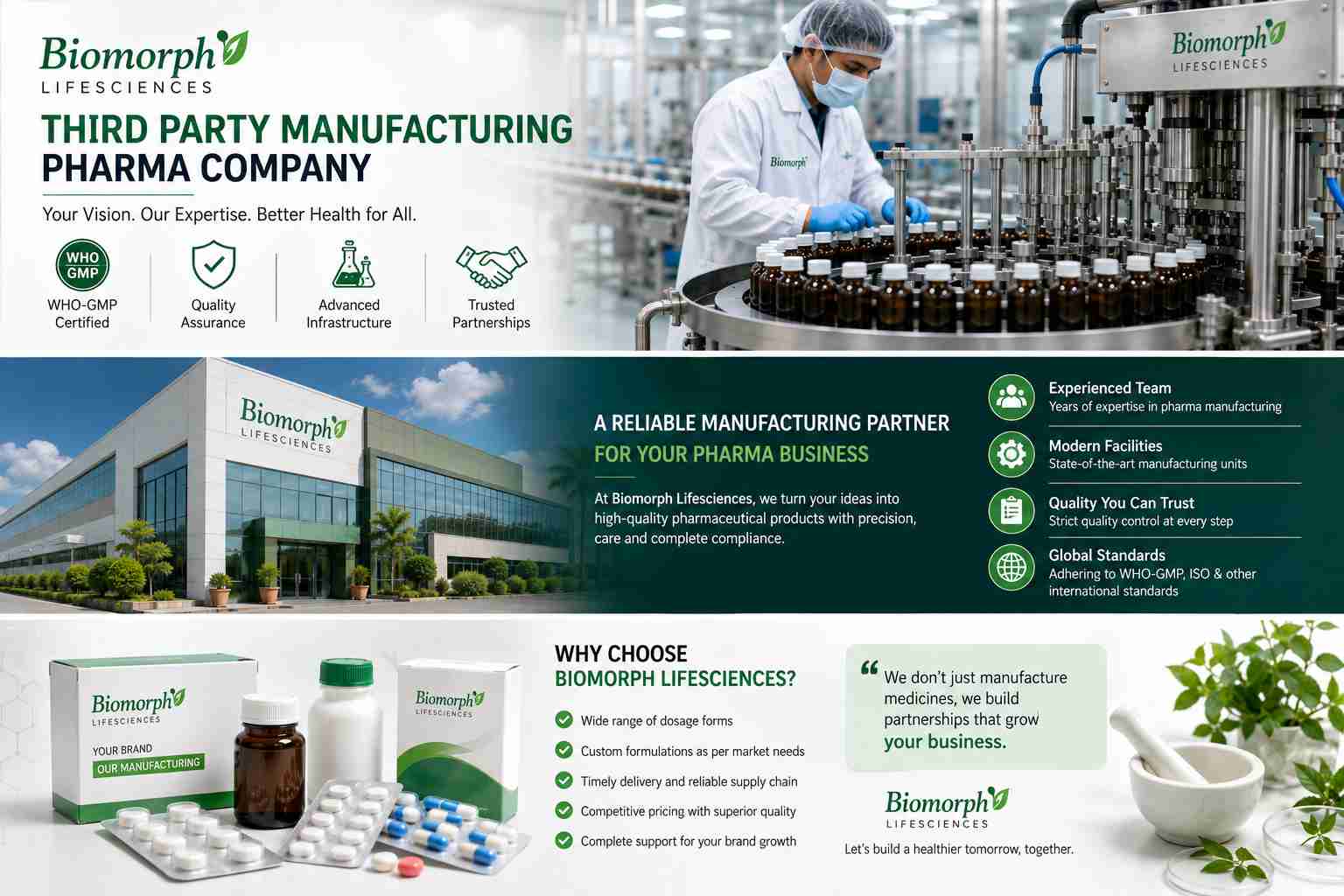
Every production batch should come with testing documentation covering purity, potency, and stability. These records aren’t just formalities; they tell you whether a third party manufacturing pharma company maintains consistency across batches or if quality fluctuates unpredictably. Ask for sample batch reports from previous clients before finalizing anything. A manufacturer confident in their process will never shy away from showing you the numbers behind their claims.
The 2026 Checklist What’s Changed and What Still Matters
The pharma manufacturing space doesn’t stay still for long. What worked as a safe bet a few years ago might not hold up today, so it’s worth taking stock of what’s actually shifted heading into 2026.
New Compliance Norms Businesses Can’t Afford to Ignore
Regulatory bodies have tightened their grip on quality benchmarks, and any third party manufacturing pharma company you consider needs to keep pace with these changes. Revised Schedule M guidelines now push for stricter documentation, better environmental monitoring, and tighter batch traceability. For businesses working with a pharma third party manufacturing company in India, this means asking direct questions about how recently their compliance protocols were updated, not assuming older certifications still tell the full story.
Technology Upgrades Reshaping Production Standards
Manual processes are gradually giving way to automated systems that reduce human error and improve batch-to-batch consistency. Manufacturers investing in upgraded equipment typically show it through:
- Automated filling and packaging lines
- Digital tracking systems for raw material movement
- AI-assisted quality checks during production
A third party medicine manufacturer that’s reinvesting in technology usually signals long-term seriousness about the business, not just short-term cost-cutting. It’s a detail worth noticing during facility visits.
Sustainability Practices Now Influencing Buyer Decisions
Environmental responsibility has moved from a nice-to-have to something buyers actively factor into their decision-making. Manufacturers are now expected to manage waste responsibly, reduce water consumption, and adopt eco-friendlier packaging materials. This shift isn’t just about optics; regulatory bodies are increasingly linking sustainability practices to licensing renewals. Choosing a manufacturer that takes this seriously isn’t just good ethics; it’s becoming a practical safeguard against future compliance disruptions, and it reflects positively on your own brand’s reputation too.
Comparing Options Without Getting Overwhelmed
With so many manufacturers claiming to be the best fit, narrowing down your choice can feel overwhelming fast. Breaking the comparison into a few practical categories makes the decision far more manageable.
Small-Scale vs. Large-Scale Manufacturers
Not every third party manufacturing pharma company operates at the same scale, and that’s actually a good thing. Smaller manufacturers often offer more flexibility with minimum order quantities and personalized attention, making them ideal for new brands testing the waters. Larger manufacturers, on the other hand, bring higher production capacity and faster turnaround for bulk orders, but may have rigid minimum order requirements. Matching your current business size with the manufacturer’s scale prevents both overpaying and outgrowing your partner too quickly.
Single-Product Specialists vs. Full-Range Manufacturers
Some manufacturers focus entirely on one category, say, only tablets or only syrups and tend to master that niche exceptionally well. Others operate as full-range facilities, producing everything from capsules to injectables under one roof. If your product line is likely to expand across categories, a full-range third party medicine manufacturer saves you the hassle of coordinating with multiple vendors later. But if you’re starting with a focused product range, a specialist may offer better quality control for that specific segment.
Regional Players vs. Pan-India Suppliers
Regional manufacturers often understand local market demands and offer quicker logistics within their zone. Meanwhile, a pan-India pharma third party manufacturing company in India typically brings broader distribution networks and consistent supply chains across states. Consider factors like:
- Your target market’s geographic spread
- Shipping timelines and associated costs
- Long-term expansion plans beyond your home state
Choosing between the two ultimately depends on how far you envision your brand reaching in the next few years.
Money Matters What Nobody Tells You Upfront
Budget conversations tend to get vague until you’re already deep into a deal. Getting a realistic picture of costs early on saves you from unpleasant surprises later.
Realistic Cost Expectations for First-Time Buyers
First-time buyers often walk in expecting a fixed, one-size-fits-all price list, but that’s rarely how it works. Costs from a third party manufacturing pharma company depend on factors like formulation complexity, packaging choices, order quantity, and raw material sourcing. A basic tablet formulation will naturally cost less than a specialized syrup or injectable. Rather than chasing the lowest quote, it helps to request a detailed cost breakdown so you understand exactly what you’re paying for at each stage of production.
Understanding Rate Contracts and Bulk Order Benefits
Once you’ve worked with a third party medicine manufacturer for a while, rate contracts become worth exploring. These agreements lock in pricing for a set period, protecting you from sudden cost fluctuations due to raw material price changes. Bulk ordering typically brings additional benefits too:
- Lower per-unit production cost
- Priority scheduling during peak production periods
- Better negotiating power for future orders
For businesses planning consistent, long-term supply needs, this arrangement often makes financial planning noticeably simpler.
When Cheaper Isn’t Actually Cheaper
The lowest quote from a pharma third party manufacturing company in India can be tempting, but it’s worth asking why the price is so low in the first place. Cutting corners on raw material quality, skipping proper testing, or using outdated equipment often hides behind attractive pricing. These shortcuts can lead to product recalls, compliance issues, or damaged brand trust costs that far exceed whatever you saved upfront. Sometimes paying slightly more for a manufacturer with proper systems in place turns out to be the more economical choice in the long run.
Setting Up for Long-Term Success With Your Manufacturing Partner
Signing an agreement is just the beginning. The real value of working with a third party manufacturing pharma company shows up over months and years, once the relationship moves past the initial transaction phase.
Creating a Feedback Loop for Continuous Quality Improvement
The strongest partnerships don’t stay silent between orders. Regularly sharing feedback about product performance, packaging issues, or delivery timelines helps your third party medicine manufacturer fine-tune their process to match your expectations better. Consider setting up:
- Monthly or quarterly review calls to discuss quality trends
- A simple system for flagging batch-related concerns quickly
- Shared documentation of past issues and how they were resolved
This ongoing dialogue prevents small problems from turning into recurring ones and keeps both sides accountable over time.
Planning Ahead for New Product Launches
Business growth usually means expanding your product line at some point, and your manufacturer should be part of that conversation early, not after you’ve already finalized packaging or marketing. Discussing upcoming launches with your pharma third party manufacturing company in India well in advance gives them time to plan raw material sourcing, machine scheduling, and testing protocols properly. This kind of forward planning avoids last-minute production delays that can throw off your entire launch timeline.
Renewing or Renegotiating Terms as Your Business Grows
What worked for your business in its early stages might not make sense once your order volumes increase significantly. As your relationship matures, revisit pricing structures, minimum order quantities, and delivery timelines periodically. A manufacturer who’s genuinely invested in your growth will usually be open to renegotiating terms that reflect your current scale, rather than holding you to outdated agreements. This flexibility often becomes the real marker of a partnership built for the long haul.
Conclusion
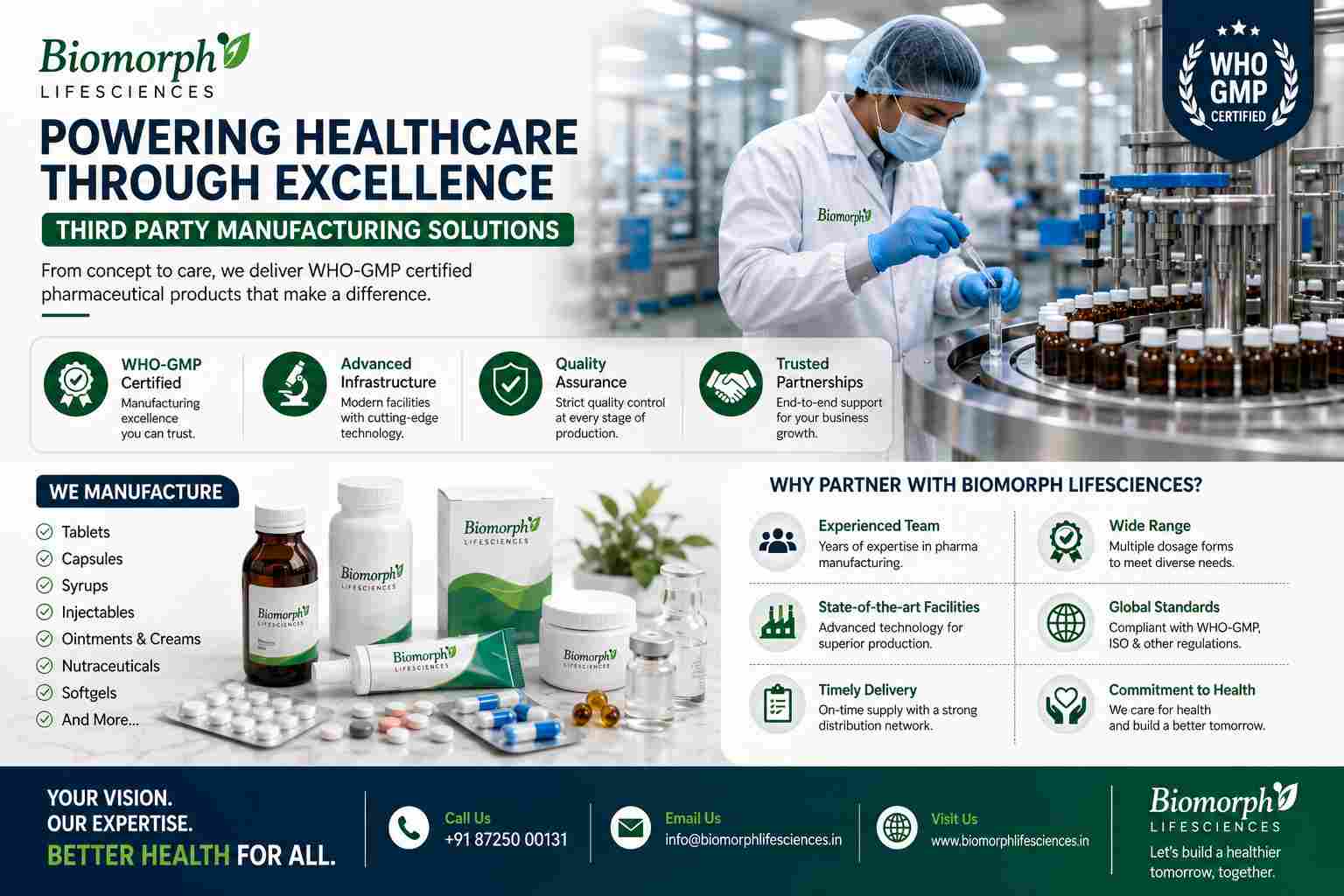
Choosing the right third party manufacturing pharma company can shape the quality, consistency, and growth of your pharmaceutical business. Before finalizing a partner, carefully review manufacturing standards, product quality, documentation, pricing, production capacity, and delivery support. A dependable manufacturer should understand your requirements and maintain clear communication throughout the process. Biomorph Lifesciences is one option businesses can consider when looking for reliable third-party pharmaceutical manufacturing support and a suitable product range. Take time to compare your options, verify important details, and choose a partner that matches your business goals. A well-planned manufacturing partnership can create a stronger foundation for sustainable growth.
Frequently Asked Questions
Q. What exactly does a third party manufacturing pharma company do?
They take care of the entire production process sourcing raw materials, manufacturing, testing, and packaging while you focus on branding, marketing, and selling the final product under your own label.
Q. How is a pharma third party manufacturing company in India different from contract manufacturing?
Third party manufacturing usually means the manufacturer uses their own existing formulations and facilities to produce your order, whereas contract manufacturing often involves producing medicines based on a formula and specifications you provide.
Q. What documents should I verify before finalizing a manufacturer?
Before signing anything, always ask for their manufacturing license, GMP or WHO-GMP certification, product-specific approvals, and valid company registration documents to confirm they’re operating legally and meet quality standards.
Q. Is a plant visit really necessary before starting a partnership?
Yes, it genuinely matters. Visiting the facility in person lets you personally check hygiene practices, machinery condition, and overall production standards details that photos or video calls simply can’t capture accurately.
Q. Can I negotiate pricing with a third party medicine manufacturer later on?
Definitely. As your order volume increases over time, most manufacturers are willing to revisit pricing, minimum order quantities, and delivery timelines to better match your business’s growing scale.
Instagram : Follow Us For The Latest Update