Choosing how your pharma products will be manufactured can shape the way your business grows. Building your own facility may require major investment, skilled professionals, equipment, and ongoing operational management. That is where a third-party manufacturing pharma company can make the process more manageable. Instead of handling every production activity yourself, you can work with an experienced manufacturer to produce pharmaceutical products according to agreed requirements. From product selection and quality checks to packaging and delivery, the right manufacturing partner can support several important stages. But how does this model actually work, and what should you check before choosing a manufacturer? This 2026 guide explores the key factors you need to know.
What Is a Third-Party Manufacturing Pharma Company?
A Third-Party Manufacturing Pharma Company produces medicines for another pharmaceutical business instead of selling only under its own brand. This arrangement allows companies to launch or expand their product range without setting up their own manufacturing plant, machinery, and production team.
In simple terms, the business owner selects the required products, discusses specifications with the manufacturer, finalizes pricing and packaging, and places an order. The manufacturing partner then handles production according to the agreed requirements.
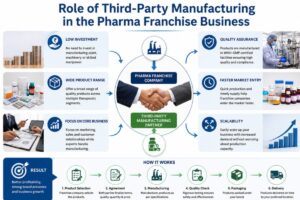
How Does It Work?
The process generally involves:
- Selecting medicines and required formulations
- Discussing quantity, packaging, and product specifications
- Finalizing commercial terms and documentation
- Manufacturing and quality testing
- Packing and dispatching the finished products
The exact responsibilities can vary depending on the agreement between both parties. Therefore, it is useful to clarify quality requirements, minimum order quantities, delivery schedules, and documentation before confirming an order.
Why Do Businesses Use This Model?
3rd party pharma manufacturing can be useful for businesses that want to concentrate more on sales, marketing, distribution, and market expansion rather than managing an entire production facility. It can also provide access to different formulations and manufacturing capabilities through an established production setup.
However, choosing a manufacturer should involve more than comparing prices. Businesses should consider manufacturing capacity, product quality, regulatory compliance, packaging options, delivery reliability, and communication. A suitable partner should be able to meet current requirements while also supporting future product expansion.
Understanding these fundamentals makes it easier to evaluate manufacturers and build a practical pharma business model.
How Does Third-Party Pharma Manufacturing Work?
Turning a pharma product idea into a finished medicine involves several coordinated steps. With a Third-Party Manufacturing Pharma Company, the business does not need to manage every production activity internally. Instead, the manufacturer takes responsibility for producing the agreed products according to defined specifications, quality requirements, and packaging details.
Requirement and Product Selection
The process usually starts by identifying the medicines a business wants to manufacture. Product composition, dosage form, pack size, quantity, and target requirements are discussed before moving ahead. A clear product list helps both sides understand exactly what needs to be produced.
Quotation and Order Confirmation
After reviewing the requirements, the manufacturer shares commercial details based on the selected products and quantities. The business can discuss pricing, minimum order quantities, packaging preferences, and delivery expectations before confirming the order.
Documentation and Product Approval
Proper documentation is an important part of pharmaceutical manufacturing. Product specifications, artwork, regulatory requirements, and other relevant details should be reviewed and approved before production begins. Keeping these details clear helps reduce errors later.
Manufacturing and Quality Testing
Once the order is confirmed, production begins according to the agreed formulation and specifications. Manufacturing involves controlled production processes followed by quality checks. Testing and inspection help verify that the finished products meet the applicable requirements before dispatch.
Packaging and Product Delivery
After production and quality checks, medicines are packed according to the finalized packaging plan. Labels and other packaging details should match the approved information. The finished order is then prepared for dispatch and delivered according to the agreed schedule.
Overall, 3rd party pharma manufacturing creates a structured route from product selection to finished-product delivery. Businesses can simplify their production responsibilities while maintaining focus on distribution, sales, and market development. Before placing an order, it is wise to confirm every important detail in writing so expectations remain clear throughout the manufacturing cycle.
What Pharmaceutical Products Can Be Manufactured?
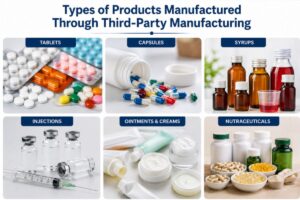
A diverse product portfolio can help a pharma business serve different market requirements without managing its own production facility. A Third-Party Manufacturing Pharma Company can manufacture medicines across multiple dosage forms, depending on its facilities, technical capabilities, and applicable manufacturing approvals. Before selecting products, businesses should consider therapeutic demand, formulation requirements, packaging, and expected order quantities.
Tablets and Capsules
Tablets and capsules are widely used dosage forms because they are convenient to store, transport, and administer. Manufacturers may produce different strengths and compositions according to the agreed product specifications. Businesses can select suitable pack sizes based on their distribution requirements.
Syrups and Dry Syrups
Liquid formulations are another important category, particularly when a product requires an easy-to-administer format. Syrups and dry syrups may be manufactured with specific flavouring, filling, and packaging requirements. Proper storage instructions should also be considered when planning these products.
Injectables
Injectable medicines require specialized facilities, controlled production environments, and appropriate quality procedures. Depending on the manufacturer’s capabilities and approvals, different injectable formulations may be available for business requirements.
Softgels and Other Formulations
Softgel capsules, powders, ointments, creams, and other dosage forms can also form part of a pharmaceutical portfolio. The available options depend on the manufacturer’s production setup and product-specific requirements.
Nutraceutical and Healthcare Products
Some manufacturers also offer nutraceuticals and healthcare formulations alongside pharmaceutical products. These may include vitamins, minerals, nutritional supplements, and other wellness-focused products, subject to applicable requirements.
Choosing products through 3rd party pharma manufacturing should not be based only on how many formulations are available. Businesses should examine product quality, manufacturing capabilities, documentation, packaging options, minimum order quantities, and supply timelines. A manufacturer with a suitable product range can make portfolio planning more practical and support future expansion.
With the right product selection, 3rd party pharma manufacturing can give businesses greater flexibility while they focus on sales, distribution, and market development.
Why Is 3rd Party Pharma Manufacturing Important in 2026?
The pharmaceutical business is becoming more competitive, and companies increasingly need practical ways to manage production without slowing down growth. In this environment, 3rd party pharma manufacturing gives businesses an opportunity to outsource production while concentrating on sales, distribution, product promotion, and market development. Instead of investing heavily in a complete manufacturing setup, companies can work with an experienced production partner based on their requirements.
Changing Pharmaceutical Market Requirements
Customer needs, product preferences, and market demand can change quickly. Businesses may need to add new formulations or adjust their product portfolio without building additional infrastructure. Working with an established Third-Party Manufacturing Pharma Company can provide access to existing production capabilities and different dosage forms, subject to the manufacturer’s facilities and approvals.
Growing Demand for Different Formulations
Pharma businesses often require products in multiple formats, including tablets, capsules, syrups, injections, softgels, creams, and other formulations. A suitable manufacturing partner can help businesses develop a broader portfolio according to applicable requirements. This can make product planning more flexible and responsive to market needs.
Outsourcing as a Practical Business Model
Setting up a pharmaceutical manufacturing facility involves equipment, premises, technical staff, quality systems, maintenance, and regulatory responsibilities. Outsourcing selected production activities can reduce the need for businesses to manage all these functions themselves. The manufacturer handles agreed production activities while the business focuses on its commercial operations.

Scope for Portfolio Expansion
Product expansion can be easier when manufacturing support is already available. Businesses can evaluate additional formulations based on market demand rather than limiting growth to the capabilities of their own facility.
Production Scalability
As order volumes change, manufacturing requirements may also change. 3rd party pharma manufacturing can offer businesses a way to plan production around their commercial needs, although capacity and minimum order requirements vary between manufacturers.
For 2026, the key is not simply finding a manufacturer with a large product list. Businesses should evaluate quality systems, production capacity, documentation, timelines, communication, and long-term supply reliability before choosing a partner.
Why Choose Biomorph Lifesciences for Third-Party Manufacturing?
Choosing a manufacturing partner is an important step for any pharma business planning to expand its product portfolio. Biomorph Lifesciences supports businesses looking for a structured approach to pharmaceutical production, with attention to product requirements, manufacturing processes, packaging, and order coordination. Working with the right partner can help businesses manage production needs while keeping their focus on sales, distribution, and market development.
Pharmaceutical Product Portfolio
A useful manufacturing partner should offer products that match the needs of the business. Biomorph Lifesciences provides a range of pharmaceutical formulations across different categories, allowing businesses to discuss suitable products according to their market requirements and applicable manufacturing capabilities.
Focus on Quality and Manufacturing Requirements
Quality is an important consideration when selecting a Third-Party Manufacturing Pharma Company. Product specifications, manufacturing processes, packaging details, and quality checks need to be handled carefully. Biomorph Lifesciences focuses on maintaining defined manufacturing procedures and coordinating product requirements throughout the order process.
Support for Product and Packaging Needs
Different businesses may have different requirements for product presentation, pack sizes, labels, and other packaging details. Discussing these specifications before production helps avoid confusion and keeps the order aligned with the agreed requirements. Businesses can communicate their needs with Biomorph Lifesciences before finalizing production.
Business-Oriented Manufacturing Support
The purpose of 3rd party pharma manufacturing is not simply to outsource production. It can also help businesses concentrate on distribution, marketing, customer relationships, and market expansion while an external manufacturer manages agreed production activities.
Suitable for Growing Pharma Businesses
As product requirements develop, businesses may need additional formulations or changing order quantities. A manufacturing partner that understands these requirements can make production planning easier. Before selecting a manufacturer, businesses should still evaluate product availability, documentation, pricing, minimum order quantities, production timelines, and delivery terms.
For businesses exploring 3rd party pharma manufacturing, Biomorph Lifesciences can be considered as a manufacturing partner based on the specific products and requirements involved. A detailed discussion before placing an order can help both sides establish clear expectations and build a reliable working relationship.
Conclusion
Choosing the right Third-Party Manufacturing Pharma Company can make pharmaceutical production more organized and practical. From product selection and manufacturing to quality checks, packaging, and delivery, every stage deserves careful attention. For businesses planning expansion in 2026, 3rd party pharma manufacturing can provide production support without requiring them to manage a complete manufacturing setup. Biomorph Lifesciences can be considered by businesses looking for pharmaceutical manufacturing support based on their product and business requirements. Before finalizing a partner, compare product range, quality standards, documentation, MOQ, pricing, and delivery timelines. A clear understanding of these factors can help create a smoother manufacturing arrangement and support long-term business planning.
Frequently Asked Questions
Q. What is a Third-Party Manufacturing Pharma Company?
It is a company that manufactures pharmaceutical products for another business according to agreed product, quality, packaging, and order requirements.
Q. What is 3rd party pharma manufacturing?
3rd party pharma manufacturing is a business arrangement where pharmaceutical production is outsourced to a specialized manufacturer instead of being handled through the company’s own manufacturing facility.
Q. What products can be manufactured through third-party manufacturing?
Depending on the manufacturer’s facilities and approvals, products may include tablets, capsules, syrups, dry syrups, injectables, softgels, creams, ointments, and selected healthcare formulations.
Q. How should I choose a pharma manufacturing partner?
Check the manufacturer’s product range, quality systems, documentation, production capacity, minimum order quantity, pricing, packaging options, and delivery commitments before placing an order.
Q. Why do businesses use 3rd party pharma manufacturing?
Businesses may use this model to access manufacturing capabilities while focusing more on sales, distribution, marketing, and expanding their pharmaceutical product portfolio.
Instagram : Follow Us For The Latest Update