Introduction
The pharmaceutical industry in India has witnessed remarkable growth over the last two decades. With increasing demand for quality medicines, healthcare products, and specialized formulations, pharmaceutical companies are constantly looking for cost-effective ways to expand their product portfolios. One business model that has gained tremendous popularity is partnering with a third-party manufacturing pharma company.
Whether you are a startup entering the pharmaceutical sector or an established company looking to scale operations, third-party manufacturing offers a practical and profitable solution. It allows businesses to focus on marketing, branding, and distribution while leaving the manufacturing process to experienced professionals.
In this comprehensive guide, we will explore everything you need to know about third-party pharma manufacturing, its benefits, process, challenges, and how to choose the right manufacturing partner.
What Is a Third-Party Manufacturing Pharma Company?
A third-party manufacturing pharma company is a pharmaceutical manufacturer that produces medicines and healthcare products on behalf of another company. The products are manufactured according to the client’s specifications and are sold under the client’s brand name.
In simple terms, the company that owns the brand does not need to set up its own manufacturing facility. Instead, it collaborates with a specialized manufacturer that handles production while maintaining quality standards and regulatory compliance.
This model is also known as:
- Pharma third party manufacturing
- Pharmaceutical contract manufacturing
- Third party medicine manufacturing
- Contract pharmaceutical production
Today, thousands of pharmaceutical businesses rely on this model to reduce costs and accelerate market expansion.

Why Is Pharma Third Party Manufacturing Growing in India?
India is often referred to as the “Pharmacy of the World” due to its strong pharmaceutical manufacturing capabilities. The country has:
- Advanced manufacturing infrastructure
- Skilled workforce
- WHO-GMP certified facilities
- Cost-effective production systems
- Strong export capabilities
- Regulatory expertise
As a result, many businesses prefer partnering with a third party pharma manufacturing company instead of investing heavily in their own production units.
The increasing demand for generic medicines, nutraceuticals, herbal products, and specialty formulations has further boosted the growth of pharmaceutical contract manufacturing services.
How Does Third-Party Pharma Manufacturing Work?
The process of pharma third party manufacturing is straightforward and efficient.
Step 1: Product Selection
The client identifies the products they want to launch, such as:
- Tablets
- Capsules
- Syrups
- Injections
- Ointments
- Nutraceuticals
- Herbal medicines
Step 2: Product Specifications
The company provides details regarding:
- Composition
- Dosage
- Packaging requirements
- Label design
- Brand name
Step 3: Quotation and Agreement
The manufacturer shares pricing details, minimum order quantities, timelines, and commercial terms.
Step 4: Production
Once approvals are received, the manufacturer begins production while following regulatory and quality standards.
Step 5: Quality Testing
Every batch undergoes rigorous testing to ensure safety, efficacy, and compliance.
Step 6: Packaging and Delivery
The finished products are packaged under the client’s brand and delivered to the specified location.
This streamlined process allows businesses to enter the market quickly without managing manufacturing operations themselves.

Key Benefits of Choosing a Third-Party Manufacturing Pharma Company
1. Lower Investment Requirements
Setting up a pharmaceutical manufacturing facility requires significant investment in:
- Land
- Machinery
- Infrastructure
- Regulatory approvals
- Skilled manpower
By outsourcing production, companies can avoid these expenses and allocate resources to sales and marketing.
2. Faster Market Entry
Launching a new pharmaceutical product can take months or even years if you build your own facility.
A third-party manufacturing partner already has the required infrastructure and certifications, allowing businesses to launch products much faster.
3. Access to Advanced Manufacturing Facilities
Most reputable pharmaceutical manufacturing companies operate state-of-the-art facilities equipped with modern machinery and quality control systems.
Businesses benefit from these resources without making direct investments.
4. Focus on Core Business Activities
Instead of managing manufacturing operations, companies can focus on:
- Brand building
- Marketing
- Sales
- Distribution
- Customer relationships
This often results in faster business growth.
5. High-Quality Standards
Leading manufacturers follow:
- WHO-GMP guidelines
- ISO certifications
- Regulatory compliance
- Stringent quality control procedures
This ensures that products meet industry standards and customer expectations.
6. Scalability
As demand increases, businesses can easily scale production without expanding their own facilities.
This flexibility makes third-party manufacturing ideal for growing pharmaceutical brands.
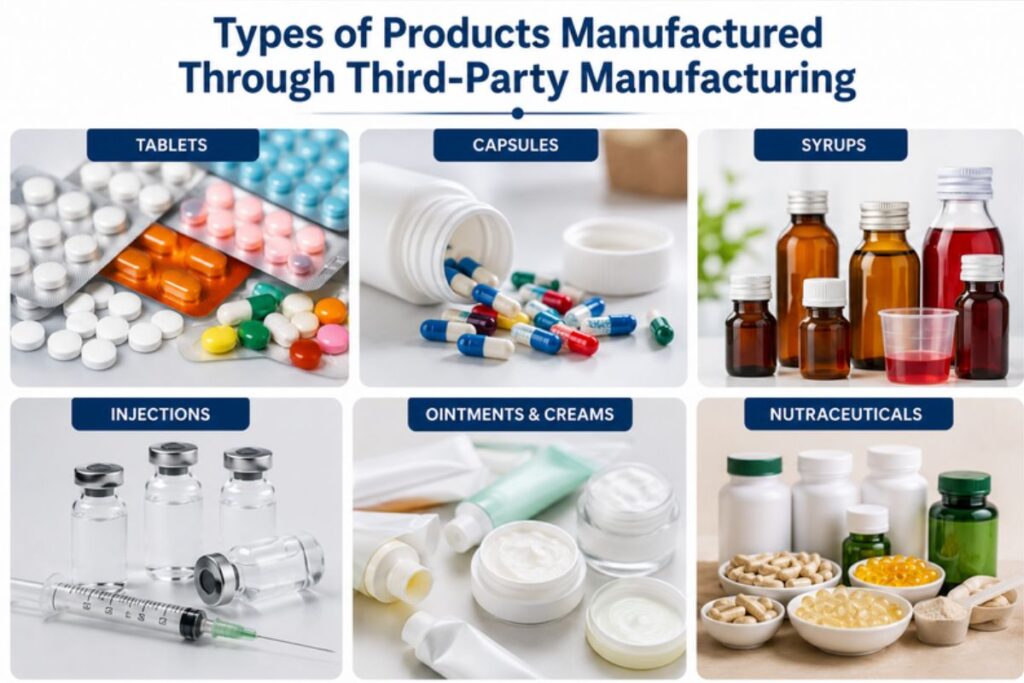
Types of Products Manufactured Through Third-Party Manufacturing
A reliable third-party manufacturing pharma company can produce a wide range of healthcare products, including:
Tablets
- Antibiotics
- Multivitamins
- Pain relievers
- Antacids
Capsules
- Nutraceuticals
- Herbal supplements
- Prescription medicines
Syrups
- Cough syrups
- Pediatric formulations
- Vitamin syrups
Injections
- Antibiotics
- Pain management solutions
- Specialty formulations
Ointments and Creams
- Dermatology products
- Antifungal creams
- Cosmetic formulations
Nutraceutical Products
- Protein supplements
- Immunity boosters
- Dietary supplements
This diversity enables pharmaceutical businesses to create extensive product portfolios.
Pharmaceutical Contract Manufacturing vs In-House Manufacturing
| Factor | Third-Party Manufacturing | In-House Manufacturing |
|---|---|---|
| Initial Investment | Low | High |
| Infrastructure Cost | Minimal | Significant |
| Time to Market | Fast | Slower |
| Operational Complexity | Low | High |
| Scalability | Easy | Challenging |
| Regulatory Burden | Shared | Fully Managed by Company |
For most startups and growing pharmaceutical businesses, pharmaceutical contract manufacturing is often the more practical choice.
How to Select the Right Third Party Pharma Manufacturing Company
Choosing the right manufacturing partner directly impacts product quality and business success.
Here are some important factors to evaluate.
Check Certifications
Look for:
- WHO-GMP Certification
- ISO Certification
- FSSAI (for nutraceuticals)
- Drug manufacturing licenses
These certifications demonstrate compliance with industry standards.
Evaluate Manufacturing Capacity
Ensure the manufacturer can handle both current and future production requirements.
A scalable manufacturing partner supports long-term business growth.
Assess Product Range
A company offering multiple dosage forms provides greater flexibility and convenience.
Review Quality Control Systems
Ask about:
- Raw material testing
- Batch testing
- Stability testing
- Documentation procedures
Strong quality control reduces risks and enhances customer trust.
Verify Market Reputation
Research:
- Customer reviews
- Industry reputation
- Existing client relationships
- Years of experience
A well-established pharmaceutical manufacturing company is generally a safer choice.
Analyze Pricing Structure
While cost is important, quality should never be compromised for lower pricing.
Focus on value rather than simply choosing the cheapest option.
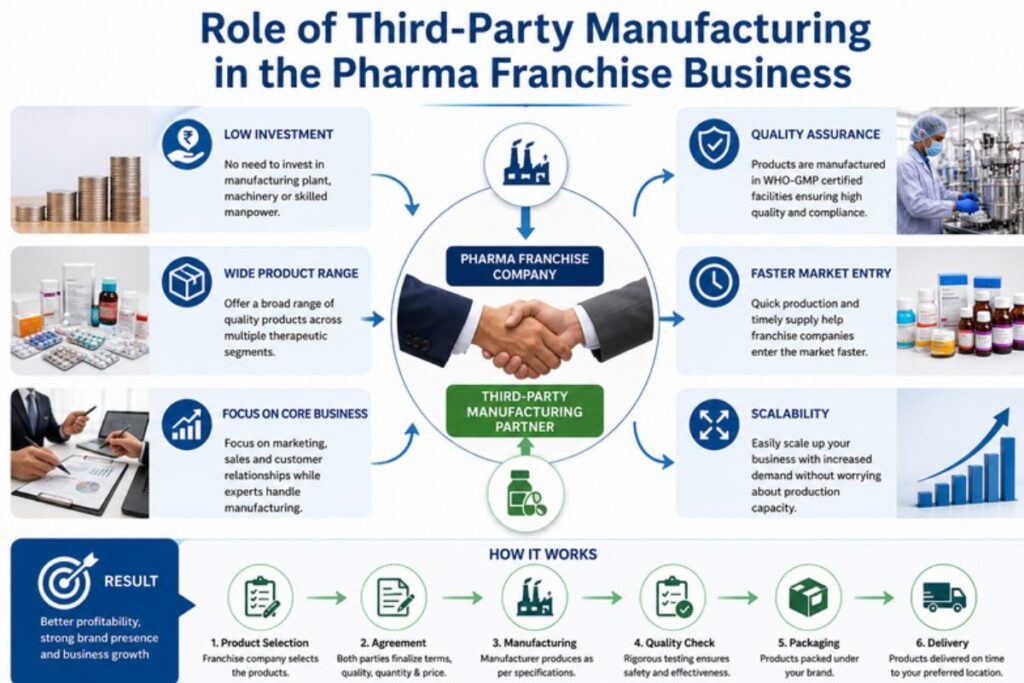
Role of Third-Party Manufacturing in the Pharma Franchise Business
The pharma franchise business model has become one of the fastest-growing segments in the pharmaceutical industry.
Most pharma franchise companies do not manufacture medicines themselves. Instead, they collaborate with third-party manufacturers to produce products under their own brands.
This approach offers several advantages:
- Low investment
- Faster expansion
- Large product portfolio
- Reduced operational burden
- Better profitability
As a result, third-party manufacturing serves as the backbone of many successful pharma franchise businesses across India.
Common Challenges in Third-Party Medicine Manufacturing
Although third-party manufacturing offers many advantages, businesses should also be aware of potential challenges.
Quality Consistency
Working with inexperienced manufacturers may result in inconsistent product quality.
Regular audits and quality checks help address this issue.
Production Delays
Unexpected delays can affect product availability and customer satisfaction.
Choosing a reliable manufacturer with proven production capabilities is essential.
Communication Gaps
Clear communication regarding specifications, packaging, and timelines is critical.
Detailed agreements can minimize misunderstandings.
Regulatory Compliance
Both parties must ensure compliance with pharmaceutical regulations to avoid legal issues.
Future of Pharma Manufacturing Services in India
The future of pharma manufacturing services looks exceptionally promising.
Several factors are driving growth:
Rising Healthcare Demand
An expanding population and increased healthcare awareness are boosting medicine consumption.
Export Opportunities
Indian pharmaceutical products are increasingly being exported to global markets.
Technological Advancements
Automation and advanced manufacturing technologies are improving production efficiency.
Growing Startup Ecosystem
Many pharmaceutical startups are choosing third-party manufacturing as their preferred business model.
Expansion of Specialty Segments
Demand for:
- Nutraceuticals
- Herbal medicines
- Dermatology products
- Oncology medicines
continues to rise, creating new opportunities for manufacturers.
Industry experts expect the pharmaceutical contract manufacturing sector to experience sustained growth over the coming years.
Why Businesses Prefer Third-Party Manufacturing Over Building Their Own Facility
Many entrepreneurs initially consider setting up manufacturing units. However, after evaluating costs and regulatory requirements, they often choose third-party manufacturing instead.
Reasons include:
- Reduced financial risk
- Lower operational complexity
- Access to experienced professionals
- Faster product launches
- Better resource allocation
- Improved scalability
This allows companies to focus on building strong brands while manufacturing experts handle production.
Conclusion
A third-party manufacturing pharma company plays a crucial role in today’s pharmaceutical ecosystem. By offering cost-effective production, regulatory compliance, quality assurance, and scalable manufacturing solutions, these companies help businesses grow without the burden of setting up their own manufacturing facilities.Whether you are launching a new pharmaceutical brand, expanding your product portfolio, or building a successful pharma franchise business, partnering with the right third party pharma manufacturing company can significantly accelerate your growth.As the pharmaceutical industry continues to evolve, pharma third party manufacturing will remain one of the most efficient and profitable business models for companies seeking long-term success. By choosing a trusted manufacturing partner with strong quality standards and proven expertise, businesses can confidently deliver safe, effective, and high-quality healthcare products to customers across India and beyond.
Frequently Asked Questions (FAQs)
Q. What is a third-party manufacturing pharma company?
Ans. A third-party manufacturing pharma company manufactures pharmaceutical products on behalf of another company. The products are produced according to the client’s requirements and sold under the client’s brand name.
Q. How does pharma third party manufacturing work?
Ans. In pharma third party manufacturing, a pharmaceutical company outsources the production of medicines to a certified manufacturer. The manufacturer handles production, quality testing, packaging, and delivery while the client focuses on marketing and sales.
Q. What are the benefits of partnering with a third party pharma manufacturing company?
Ans. The major benefits include lower investment, faster product launch, access to advanced manufacturing facilities, regulatory compliance, quality assurance, and easy scalability.
Q. Is pharmaceutical contract manufacturing suitable for startups?
Ans. Yes, pharmaceutical contract manufacturing is ideal for startups because it eliminates the need for heavy investment in manufacturing infrastructure and allows businesses to enter the market quickly.