The pharmaceutical industry depends on a reliable supply chain to make medicines available to pharmacies, hospitals, clinics, and healthcare providers. Behind this process, pharma wholesale plays an important role by connecting manufacturers with businesses that supply medicines to end users. A well-managed wholesale network helps maintain product availability, improve order planning, and support the expansion of medicine distribution businesses.
For new entrepreneurs and established distributors, choosing the right suppliers involves more than comparing prices. Product authenticity, regulatory compliance, storage practices, delivery schedules, and commercial terms all influence long-term success. Working with dependable pharmaceutical wholesalers can help businesses manage these responsibilities while building stronger relationships with their customers.
Whether you operate a pharmacy supply business or plan to enter pharmaceutical distribution, understanding how wholesale sourcing works can help you make informed decisions and establish a more dependable business model.
The Importance of Pharma Wholesale in the Medicine Supply Chain
Pharma wholesale involves purchasing pharmaceutical products in commercial quantities from authorised manufacturers, stockists, or other approved suppliers and supplying them to eligible business customers. These customers may include retail pharmacies, hospitals, clinics, healthcare institutions, and authorised distributors.
Unlike retail pharmacies, which generally dispense medicines to individual customers, wholesale businesses focus on procurement, inventory management, storage, and distribution. Their responsibilities include maintaining suitable stock levels, checking product documentation, and ensuring that orders reach customers through appropriate supply channels.
A dependable pharma wholesale operation helps reduce the distance between production and distribution. Manufacturers can focus on producing medicines, while wholesale partners coordinate purchasing requirements and serve customers across different locations.
Reliable sourcing is particularly important when businesses handle multiple products with different storage conditions, expiry periods, and regulatory requirements. A supplier’s ability to maintain accurate records and fulfil orders consistently can directly affect the performance of the businesses that depend on it.
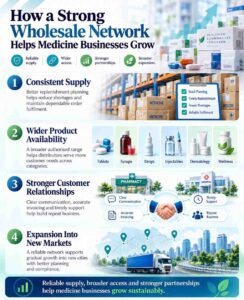
How a Strong Wholesale Network Helps Medicine Businesses Grow
Maintaining a Consistent Supply of Essential Medicines
Customers expect medicine suppliers to fulfil orders within agreed timelines. Frequent stock shortages can interrupt business operations and weaken customer confidence. A strong wholesale network helps businesses plan replenishment more effectively and identify alternative authorised sources when particular products become difficult to obtain.
Maintaining accurate inventory records, reviewing sales patterns, and establishing realistic reorder levels can reduce unnecessary interruptions. However, availability should never come at the expense of product quality or regulatory compliance.
Expanding Product Availability Across Therapeutic Categories
A wider product portfolio can help distributors serve different customer requirements. Depending on the supplier’s authorised range, businesses may source tablets, capsules, syrups, drops, injectables, dermatology products, and selected wellness products.
Expanding the portfolio gradually allows a distributor to understand local demand before committing significant funds to additional stock. It also creates opportunities to serve existing customers more comprehensively without relying on a single product category.
Building Stronger Relationships with Pharmacies and Healthcare Providers
Wholesale distribution depends on dependable business relationships. Pharmacies and healthcare institutions value suppliers who communicate clearly, provide accurate invoices, and resolve order discrepancies promptly.
Consistent service can encourage repeat orders and improve customer retention. Businesses can strengthen these relationships by sharing realistic delivery timelines, informing customers about stock changes, and maintaining transparent commercial terms.
Supporting Business Expansion into New Markets
Entering a new city or district requires an understanding of local demand, transportation arrangements, licensing requirements, and customer expectations. A reliable distribution network provides a practical foundation for this expansion.
Rather than entering several markets simultaneously, businesses can begin with a manageable service area, evaluate order frequency, and expand when their inventory and delivery systems can support additional demand.
What to Look for When Choosing Pharmaceutical Wholesalers
Verify Wholesale Licences and Regulatory Compliance
Before entering a business relationship, confirm that the supplier holds the licences and permissions applicable to the products being supplied. Requirements depend on the product category, business activity, and jurisdiction.
In India, businesses should check the relevant requirements under applicable drug laws and regulations. Buyers should also understand their own obligations instead of assuming that a supplier’s authorisation automatically covers every transaction.
Review Product Quality and Manufacturer Credentials
Product quality should be a central part of supplier evaluation. Check manufacturer details, product labels, batch information, expiry dates, invoices, and supporting documentation as applicable.
When purchasing branded medicines, verify that the products come through legitimate supply channels. Avoid suppliers who cannot explain product provenance or offer documentation for commercial transactions.

Compare Pricing, Minimum Orders, and Payment Terms
Competitive pricing can improve margins, but the lowest quotation does not necessarily provide the best overall value. Compare the total purchasing cost, including transportation, handling, applicable taxes, and other charges.
Ask each supplier about minimum order quantities, payment deadlines, credit arrangements, and any volume-based terms. These details help determine whether the purchasing arrangement suits your available working capital.
Check Delivery Reliability and Stock Availability
A supplier may offer attractive prices but struggle to fulfil orders consistently. Review typical dispatch timelines, delivery coverage, order tracking, and procedures for communicating stock shortages.
Businesses serving multiple locations should also confirm whether the supplier can handle their expected order volumes as demand increases.
Evaluate Communication and After-Sales Support
Good communication becomes particularly important when an order contains incorrect quantities, damaged packaging, or products with insufficient remaining shelf life.
Before signing an agreement, understand how the supplier handles complaints, returns, invoice corrections, and product recalls. Clear procedures can prevent small operational problems from becoming prolonged disputes.
Finding the Right Medicine Wholesale Distributor for Your Business
Selecting a medicine wholesale distributor begins with identifying the customers you intend to serve. A business supplying independent pharmacies may require a different product mix and delivery schedule from one serving hospitals or larger institutional buyers.
Start by assessing your target region, expected monthly sales, preferred product categories, and available investment. These details will help you determine the supplier’s required capacity and whether its commercial terms fit your business model.
Next, review the supplier’s distribution coverage and ordering process. Ask whether orders can be placed digitally, how stock availability is confirmed, and what happens when a requested product is unavailable. For businesses managing frequent orders, an organised ordering system can save time and reduce administrative errors.
Written terms are equally important. Keep clear records of agreed prices, taxes, payment schedules, delivery responsibilities, and return conditions. Discuss the process for handling damaged packages, near-expiry products, shortages, and recalled batches before placing substantial orders.
The right partner should match your operational needs today while offering a reasonable path to accommodate future growth.
Exploring Pharmaceutical Products Wholesale Across Different Categories
The scope of pharmaceutical products wholesale varies according to supplier authorisation, product availability, and customer demand. Understanding the main categories can help businesses build a portfolio that reflects their market.

Tablets and Capsules for Everyday Healthcare Needs
Tablets and capsules are common pharmaceutical dosage forms used across numerous therapeutic categories. Distributors may source products for different treatment requirements, subject to applicable prescriptions, licensing, and distribution rules.
When evaluating these products, check the strength, pack size, manufacturer information, batch details, and remaining shelf life. Organising inventory by product and batch helps simplify stock rotation and traceability.
Syrups and Oral Drops for Different Patient Groups
Oral liquids and drops may be included in a distributor’s portfolio where authorised sourcing and suitable storage arrangements are available. Their packaging, handling requirements, and expiry periods may differ from those of solid dosage forms.
Storage instructions on the label should always be followed. Businesses should also inspect packaging integrity and maintain appropriate handling procedures during transportation.
Injectable Products and Other Specialised Formulations
Injectables and specialised formulations can require additional attention to storage, transport, and documentation. Some products have specific temperature requirements, while others may require specialised handling arrangements.
Businesses should distribute these products only when they have the necessary authorisations, facilities, and trained personnel. Any applicable cold-chain requirements must be maintained throughout the supply process.
Nutraceuticals, Supplements, and Wellness Products
Depending on the supplier’s portfolio and applicable permissions, distributors may also handle selected nutritional supplements and wellness products.
These products may be regulated differently from medicines, so their classification, labelling, claims, and sourcing requirements should be checked individually. Clear product information helps buyers distinguish between pharmaceutical medicines and other health-related products.
Dermatology and Personal Care Formulations
Dermatology products may include creams, ointments, lotions, gels, and other topical formulations. Their storage conditions and packaging requirements vary by product.
A distributor should select products based on demonstrated customer demand, verify their authorised supply channels, and avoid holding excessive quantities of slow-moving stock.
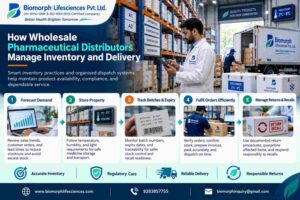
How Wholesale Pharmaceutical Distributors Manage Inventory and Delivery
Forecasting Demand to Reduce Stockouts
Wholesale pharmaceutical distributors need a practical method for estimating future demand. Reviewing previous sales, seasonal changes, customer orders, and supplier lead times can help identify purchasing patterns.
For example, a distributor can monitor which products sell regularly and which remain in storage for extended periods. This information supports better purchasing decisions and reduces the likelihood of unnecessary stock accumulation.
Following Proper Storage and Temperature Requirements
Medicines must be stored according to their labelled conditions and applicable regulations. Depending on the product, this may involve controlling temperature, humidity, light exposure, or other environmental factors.
Storage areas should be clean, organised, and suitable for the products being handled. Temperature-sensitive products may require monitored storage and qualified transportation arrangements.
Monitoring Batch Numbers, Expiry Dates, and Product Traceability
Batch-level records help businesses identify where a product came from and where it was supplied. These records are important when investigating quality complaints or responding to a recall.
Many distributors use first-expiry-first-out practices, where appropriate, to prioritise products with earlier expiry dates. Regular stock checks help identify products that require prompt action under the supplier’s return policy and applicable regulations.
Planning Efficient Order Fulfilment and Dispatch
An organised fulfilment process includes order verification, stock confirmation, invoice preparation, picking, packaging, and dispatch. Each stage should be documented clearly enough to reduce errors and support accountability.
Businesses can improve efficiency by grouping orders sensibly, maintaining accurate customer records, and communicating expected delivery dates before dispatch.
Managing Returns and Product Recalls Responsibly
Returns should follow documented procedures rather than informal arrangements. Products returned by customers may require quarantine and assessment before any further action is taken.
If a recall is announced, the distributor should identify affected batches, trace relevant transactions, notify the appropriate parties, and follow instructions from the manufacturer and relevant authorities.
Common Pharma Wholesale Challenges and Practical Ways to Address Them
Handling Unpredictable Demand and Changing Order Volumes
Demand can change because of seasonal needs, new customer accounts, market competition, or supply interruptions. Businesses can respond by reviewing sales data frequently and keeping sensible safety stock for products with consistent demand.
Large purchasing decisions should be based on evidence rather than assumptions about future sales.
Managing Working Capital Without Excessive Inventory
Money tied up in slow-moving products cannot easily be used for other business expenses. To manage working capital, distributors should track inventory turnover, outstanding customer payments, supplier payment deadlines, and operating costs.
Smaller, more frequent orders may be appropriate for products with uncertain demand, provided the supplier’s minimum order requirements and delivery costs make this practical.
Avoiding Expired, Damaged, or Improperly Stored Products
Expiry losses and packaging damage can reduce profitability and create compliance concerns. Regular inspections, appropriate storage facilities, accurate stock records, and careful transport procedures help limit these risks.
Products showing signs of damage or storage deviations should be handled according to established quality procedures rather than returned to saleable inventory automatically.
Reducing Supply Disruptions Through Reliable Supplier Relationships
Depending on a single source for every product can create difficulties when stock becomes unavailable. Where permitted and commercially practical, businesses can identify additional authorised suppliers for important product lines.
Supplier diversification should not weaken quality checks. Every source must be evaluated independently for authorisation, authenticity, documentation, and suitability.
Building a Profitable Pharma Wholesale Business Without Compromising Quality
A sustainable pharma wholesale business needs a balance between commercial performance and responsible distribution. Higher sales alone do not guarantee healthy profits if delivery expenses, expiry losses, credit delays, and storage costs are poorly managed.
Begin with a portfolio suited to the requirements of your target customers. Monitor product-level sales and calculate margins after accounting for the full cost of purchasing, storage, transportation, staffing, and other operating expenses.
Building a dependable customer network is equally important. Regular communication, accurate order fulfilment, and transparent billing can help establish long-term relationships with pharmacies and institutional buyers.
Use inventory reports and payment records to identify slow-moving products, overdue accounts, and opportunities for improvement. Most importantly, maintain product authenticity, appropriate storage, regulatory compliance, and accurate documentation as non-negotiable business standards.
Questions to Ask Before Partnering with a Pharmaceutical Wholesale Supplier
Which Documents and Licences Should a Buyer Verify?
Request the relevant wholesale licences, business details, invoices, and product documentation. Confirm that the authorisations apply to the products and activities involved. Additional requirements may apply to particular medicines or product categories.
How Can Buyers Confirm Product Authenticity?
Purchase through authorised channels, check packaging and batch details, review invoices, and verify manufacturer information. Any unexplained discrepancy should be investigated before the products are accepted into saleable inventory.
What Should Businesses Know About Minimum Order Quantities?
Minimum order quantities vary by supplier, product, pack size, and commercial arrangement. Buyers should compare these requirements with expected demand, storage capacity, cash flow, and expiry risk before committing to an order.
How Are Delivery Delays, Damaged Stock, and Returns Handled?
Ask for written procedures covering delivery timelines, reporting deadlines, damaged goods, discrepancies, returns, and recalls. A clearly documented process helps both parties understand their responsibilities.
Can the Supplier Support Future Business Expansion?
Discuss the supplier’s available product range, distribution coverage, order capacity, and ability to accommodate increased demand. Any future supply commitment should be supported by realistic capacity and clearly agreed terms.
How to Get Started with the Right Pharma Wholesale Partner
Businesses entering pharmaceutical distribution can follow a structured approach to reduce avoidable risks.
- Define your business requirements: Identify your target customers, operating area, budget, and initial product categories.
- Prepare a supplier shortlist: Look for suppliers whose authorised portfolios and delivery arrangements match your needs.
- Complete verification checks: Review licences, product documentation, storage practices, and supply records.
- Compare commercial terms: Assess prices, minimum orders, taxes, transport charges, payment schedules, and return conditions.
- Plan your first order carefully: Begin with quantities justified by demand and available working capital.
- Review supplier performance: Evaluate product condition, documentation, delivery reliability, communication, and order accuracy before increasing purchase volumes.
This approach allows a business to develop its distribution network methodically instead of committing too much money before understanding its market.
Frequently Asked Questions About Pharma Wholesale
Q What Does Pharma Wholesale Mean?
Ans. Pharma wholesale refers to the authorised commercial purchase and distribution of pharmaceutical products to eligible business customers. It connects manufacturers and approved suppliers with pharmacies, hospitals, and other permitted buyers.
Q How Do Pharmaceutical Wholesalers Work with Pharmacies?
Ans. Pharmaceutical wholesalers procure products from authorised sources, maintain inventory, process orders, and arrange deliveries. Pharmacies purchase suitable stock from them according to their business requirements and applicable legal obligations.
Q How Do I Choose a Reliable Medicine Wholesale Distributor?
Ans. Check the distributor’s licences, product authenticity procedures, documentation, product range, delivery performance, storage facilities, pricing, and return policies. Choose a supplier whose capabilities match your actual business requirements.
Q What Factors Affect Pharmaceutical Products Wholesale Pricing?
Ans. Pricing may depend on the manufacturer, product formulation, pack size, order volume, applicable taxes, transportation expenses, and commercial terms. Compare the total cost of procurement rather than considering the quoted product price alone.
Conclusion
Growing a medicine distribution business requires more than access to a large product catalogue. Reliable sourcing, careful inventory planning, suitable storage, accurate documentation, and consistent delivery all contribute to a stronger operation.By evaluating pharmaceutical wholesalers carefully and choosing a suitable medicine wholesale distributor, businesses can make more informed purchasing decisions and build relationships that support steady growth. A well-planned approach to pharmaceutical products wholesale can also help control operating costs while maintaining responsible distribution practices.For businesses looking to expand their pharmaceutical supply network, the next step is to assess customer demand, verify potential suppliers, and establish clear expectations before placing orders. Prioritising quality, compliance, and dependable service creates a more sustainable foundation for long-term growth in the pharmaceutical distribution sector.
Website: Visit our official website to learn more.
Start Your Pcd Pharma Franchise with us
Call Us: 82838 57755
Instagram: Follow us for the latest updates and industry insights.
Facebook: Join our community and stay connected.