Few industries have changed India’s global identity as strongly as pharmaceuticals. From supplying affordable medicines to millions of people to becoming an important player in international healthcare, the pharmaceutical industry in India has come a long way. But what is driving this growth in 2026? New technologies, rising healthcare needs, stronger manufacturing capabilities, and growing demand from global markets are reshaping the sector. At the same time, companies are navigating stricter regulations, changing consumer expectations, and increasing competition. This evolving landscape offers both challenges and exciting opportunities. Let’s explore the major forces, emerging trends, and future possibilities shaping India’s pharmaceutical sector in 2026.
Why the Pharmaceutical Industry in India Matters in 2026
The pharmaceutical industry in India is no longer limited to serving the domestic market. It has become an important part of the global healthcare supply chain, supplying medicines and pharmaceutical products to markets across the world. In 2026, several factors are making the sector even more significant.
India’s Growing Role in Global Healthcare
India has developed strong capabilities in pharmaceutical manufacturing, particularly in generic medicines, formulations, APIs, and vaccines. Its combination of manufacturing capacity, skilled professionals, and cost-effective production has helped Indian companies build a strong presence in international markets.
Why Is India’s Pharma Sector Growing?
A few key factors are supporting this growth:
- Affordable medicines: Indian manufacturers help meet the demand for cost-effective medicines in domestic and international markets.
- Strong manufacturing base: India has an established network of pharmaceutical manufacturing facilities and suppliers.
- Growing healthcare demand: Rising awareness and expanding healthcare access are increasing the need for medicines and healthcare products.
- Export opportunities: Indian pharmaceutical products are supplied to numerous international markets, creating opportunities for manufacturers and exporters.
- Skilled workforce: Scientists, pharmacists, engineers, and other professionals support research, production, quality testing, and regulatory operations.
- Focus on innovation: Companies are increasingly exploring advanced therapies, biotechnology, specialty medicines, and modern manufacturing technologies.
Why 2026 Is Important for the Pharma Industry
The Pharma Industry is entering a new phase where quality, technology, innovation, and reliable supply chains matter more than ever. Companies are looking beyond traditional products and exploring specialized treatments and improved production methods.
For businesses operating in the india pharmaceutical market, this changing environment creates both opportunities and challenges. Companies that maintain strong quality standards, understand market demand, and invest in innovation can build a stronger position in the years ahead.
Overall, 2026 is not simply another year for the sector. It represents a period of changing expectations and new possibilities for India’s pharmaceutical landscape.
How India Built a Strong Pharmaceutical Foundation
India’s pharmaceutical story has been shaped by steady development rather than overnight success. Over the years, local manufacturers expanded their production capabilities, improved technical expertise, and built supply networks capable of serving both domestic and international healthcare markets. This gradual progress helped the pharmaceutical industry in India develop into a significant part of the global medicine supply chain.
From Domestic Medicine Production to Global Supply
India initially focused strongly on meeting its own healthcare requirements. As manufacturing capabilities improved, pharmaceutical companies began producing medicines on a larger scale and entering overseas markets. Generic medicines became particularly important because they offered widely needed treatments at competitive prices.
Several developments helped Indian manufacturers strengthen their international presence:
- Expanded manufacturing: Modern facilities allowed companies to handle larger production volumes.
- Generic medicine expertise: Indian manufacturers developed strong capabilities in producing affordable alternatives to branded medicines.
- Export expansion: Companies gradually entered regulated and emerging markets across different regions.
- Improved quality systems: Greater attention to testing, documentation, and compliance supported international growth.
This transformation helped the Pharma Industry move from primarily domestic production toward a more globally connected business model.

The Shift Toward Research and Higher-Value Products
The next stage of growth is increasingly focused on innovation. Instead of relying only on conventional generic medicines, companies are exploring complex formulations, specialty therapies, biotechnology, and other higher-value products.
Research and development now play a larger role in helping businesses differentiate their portfolios. Investments in scientific talent, clinical research, formulation technology, and advanced manufacturing can open opportunities in specialized healthcare segments.
The india pharmaceutical landscape is therefore becoming more diverse. Established manufacturers are strengthening research capabilities, while emerging companies are exploring niche therapeutic areas and technology-driven solutions.
This shift is important for the future because global healthcare needs are becoming more specialized. Companies that combine manufacturing strength with research, quality, and innovation can build stronger long-term positions within international markets.
Key Forces Driving Pharma Industry Growth in India
The pharmaceutical industry in India is expanding through a combination of rising healthcare needs, stronger manufacturing capabilities, policy support, and international demand. These factors are creating new opportunities for established companies as well as emerging businesses across the sector.
Rising Healthcare Demand
India’s healthcare requirements are changing as the population grows, awareness improves, and people seek better access to treatment. Demand is increasing across areas such as chronic diseases, infectious conditions, respiratory care, cardiovascular health, and other therapeutic segments.
Greater access to healthcare facilities has also increased the need for dependable medicine supplies. Pharmaceutical companies are responding by widening their product portfolios and improving distribution networks.
Key factors contributing to demand include:
- Increasing awareness about diagnosis and treatment
- Growing demand for medicines used in chronic conditions
- Wider access to healthcare services
- Expansion of healthcare facilities beyond major cities
- Rising interest in preventive and specialized healthcare
Government Support and Industry Investment
Policy initiatives have also played an important role in strengthening India’s pharmaceutical manufacturing ecosystem. Support for domestic production, research, and pharmaceutical infrastructure can help reduce supply-chain dependence while encouraging companies to invest in modern facilities.
Investment is particularly important for areas such as active pharmaceutical ingredients, complex formulations, biotechnology, and advanced manufacturing. Better infrastructure and research capabilities can help Indian manufacturers compete more effectively in international markets.
Growing Pharmaceutical Export Opportunities
Global demand is another major growth driver for the Pharma Industry. Indian manufacturers supply medicines and pharmaceutical products to a wide range of international markets, creating opportunities beyond domestic sales.
Affordable medicines remain an important advantage, especially in markets where healthcare systems need cost-effective treatment options. At the same time, companies are increasingly exploring specialized products and regulated markets that require strong quality and compliance systems.
For the india pharmaceutical sector, export growth can encourage manufacturers to improve production standards, strengthen research capabilities, and build reliable international partnerships. Together, domestic demand and global opportunities are giving the industry a broader foundation for sustainable growth.
2026 Trends Reshaping India Pharmaceutical Businesses
The pharmaceutical industry in India is moving into a more technology-focused and specialized phase. Changing healthcare needs, global competition, and advances in science are encouraging companies to rethink how medicines are developed, manufactured, and delivered. In 2026, several trends are influencing the direction of the sector.
Greater Focus on Specialty and Complex Medicines
Pharmaceutical businesses are gradually expanding beyond conventional products and exploring medicines that require more advanced formulation and manufacturing expertise. Specialty therapies, complex generics, and targeted treatments can help companies enter segments where technical capabilities matter as much as production volume.
Expansion of Biologics and Biosimilars
Biologics are becoming increasingly important in modern healthcare, while biosimilars can offer more accessible alternatives to certain biological treatments. Indian manufacturers are strengthening their capabilities in this area through research, specialized facilities, and improved scientific expertise.
Technology-Driven Pharmaceutical Manufacturing
Technology is changing several stages of pharmaceutical production. Automated equipment, digital monitoring, data analysis, and improved quality-control systems can help manufacturers improve consistency and reduce operational inefficiencies.
Some areas seeing greater technology adoption include:
- Automated production and packaging systems
- Digital quality monitoring
- Data-based process optimization
- Advanced laboratory testing
- Improved inventory and supply-chain management

Stronger Interest in Quality and Regulatory Compliance
Quality expectations continue to rise in both domestic and international markets. Pharmaceutical companies are therefore placing greater emphasis on documentation, testing, validation, employee training, and regulatory processes. Strong compliance can also make it easier for manufacturers to build trust with healthcare partners and international buyers.
More Attention to Sustainable Production
Environmental responsibility is becoming another consideration for the Pharma Industry. Manufacturers are exploring ways to reduce waste, manage water and energy consumption, and improve resource efficiency without compromising product quality.
For businesses operating in the india pharmaceutical market, these trends highlight an important shift: future growth will depend not only on producing more medicines but also on developing smarter processes, stronger capabilities, and responsible manufacturing practices. Companies that adapt early may be better prepared for changing healthcare and market expectations.
Challenges That Could Slow Pharmaceutical Growth
The pharmaceutical industry in India has created a strong position in domestic and international healthcare markets, but its continued growth depends on how effectively companies handle emerging challenges. From raw-material supply to regulatory compliance, the Pharma Industry must balance production, quality, cost, and innovation. Understanding these concerns can help businesses make better decisions and prepare for changing market conditions.
Dependence on Imported Raw Materials
The india pharmaceutical sector still faces challenges related to the availability and pricing of certain imported raw materials, active pharmaceutical ingredients (APIs), and intermediates. Global supply disruptions can affect production schedules and increase manufacturing expenses.
Manufacturers can reduce this pressure by:
- Developing reliable local supplier networks
- Maintaining suitable inventory levels
- Exploring domestic API manufacturing
- Building alternative sourcing channels
- Improving supply-chain planning
A stronger domestic raw-material ecosystem can make pharmaceutical manufacturing more stable and less vulnerable to international disruptions.
Increasing Regulatory Requirements
Quality and safety are central to the pharmaceutical industry in India. Pharmaceutical manufacturers must follow detailed requirements related to production, testing, documentation, packaging, and product quality.
Companies need to continuously focus on:
- Regulatory documentation
- Quality-control procedures
- Product testing
- Manufacturing validation
- Employee training
- Compliance monitoring
Keeping up with changing regulations can require additional resources, but strong compliance is essential for building credibility in both Indian and international markets.
Competition in Global Generic Markets
Indian pharmaceutical companies compete with manufacturers from several countries, particularly in the generic medicine segment. Price competition can be intense when multiple companies offer similar products.
To remain competitive, businesses need to focus on more than pricing. Product quality, reliable supply, manufacturing efficiency, research capabilities, and customer support can help companies create stronger market positions.
Rising Manufacturing and Research Costs
Modern pharmaceutical production requires investment in advanced equipment, skilled professionals, technology, testing facilities, and quality systems. Research and development can be particularly expensive when companies work on complex formulations, specialty medicines, or innovative therapies.
For smaller pharmaceutical businesses, managing these expenses while maintaining competitive pricing can be a major challenge.
Maintaining Consistent Quality at Scale
Increasing production capacity is valuable only when quality remains consistent. Pharmaceutical manufacturers must ensure that every production batch meets established specifications and safety requirements.
This requires:
- Well-maintained manufacturing facilities
- Trained technical teams
- Regular quality testing
- Effective process controls
- Proper documentation
- Continuous quality monitoring
How Can the Pharma Industry Overcome These Challenges?
The future growth of the Pharma Industry will depend on practical strategies rather than production expansion alone. Companies can strengthen their position by improving supply chains, investing in technology, developing skilled teams, and maintaining strict quality standards.
For businesses operating in the pharmaceutical industry in India, long-term success will increasingly depend on quality, innovation, regulatory readiness, cost efficiency, and dependable supply networks. Addressing these challenges effectively can help the india pharmaceutical sector remain competitive and support sustainable growth in the years ahead.
Opportunities for Businesses Entering the Pharma Sector
The pharmaceutical industry in India is creating opportunities for large manufacturers as well as entrepreneurs, distributors, franchise owners, and emerging healthcare businesses. Rising medicine demand, expanding healthcare access, and new product categories are making the India pharmaceutical market attractive for businesses looking for long-term growth.
Third-Party Manufacturing
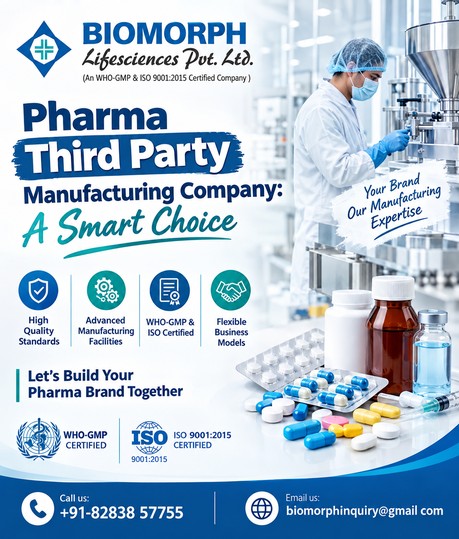
Third-party manufacturing is a practical business model for companies that want to enter the pharmaceutical industry in India without establishing their own manufacturing plant. Under this arrangement, products are manufactured by an experienced pharmaceutical manufacturer according to agreed specifications.
This approach can reduce the need for major investment in machinery, production infrastructure, and technical resources. The business can instead concentrate on branding, marketing, sales, distribution, and customer relationships.
PCD Pharma Franchise Models
The PCD pharma franchise model offers another opportunity within the Pharma Industry. Entrepreneurs can work with a pharmaceutical company to market and distribute its products within an assigned territory.
This model can be suitable for small and mid-sized businesses because it can provide access to an established product portfolio without requiring the entrepreneur to manage an entire manufacturing operation.
Important areas to evaluate include:
- Product range and therapeutic categories
- Product quality and manufacturing standards
- Promotional and marketing support
- Territory and distribution terms
- Supply consistency and delivery timelines

Contract Research and Development
Research and development is becoming increasingly important as the pharmaceutical industry in India moves toward complex medicines and specialized healthcare solutions. Businesses with scientific and technical expertise can explore formulation development, analytical research, clinical research support, and other specialized services.
This segment offers opportunities for organizations that can provide valuable technical capabilities to pharmaceutical manufacturers.
Emerging Therapeutic Categories
Changing healthcare requirements are encouraging businesses to explore specialized and growing product segments, including:
- Specialty medicines
- Dermatology products
- Critical care
- Chronic disease therapies
- Nutraceuticals
- Biotech-based products
Focusing on a specific therapeutic area can help smaller businesses create a more targeted portfolio and understand their customers more effectively.
Choosing the Right Manufacturing Partner
Selecting the right partner is one of the most important decisions for businesses entering the India pharmaceutical market. Before signing an agreement, companies should check manufacturing capabilities, quality standards, regulatory documentation, production capacity, delivery reliability, and product consistency.
A dependable partner can simplify operations and allow entrepreneurs to focus on developing their market. With careful planning, the Pharma Industry can offer promising opportunities for businesses seeking sustainable growth and a stronger position in the Indian healthcare market.
Conclusion
The pharmaceutical industry in India is moving forward with a combination of manufacturing strength, technological progress, growing healthcare demand, and expanding global opportunities. From affordable medicines to specialized therapies, the sector continues to create possibilities for manufacturers, distributors, and healthcare businesses. The Pharma Industry is also becoming more focused on quality, innovation, research, and sustainable production. For businesses exploring opportunities in the india pharmaceutical market, choosing reliable partners and understanding changing customer needs can make a meaningful difference. Biomorph Lifesciences represents one of the companies contributing to India’s evolving pharmaceutical landscape through its focus on pharmaceutical products and business opportunities. Overall, the sector offers promising possibilities for sustainable growth.
Frequently Asked Questions
Q: What is the current position of the pharmaceutical industry in India?
India has developed a strong pharmaceutical manufacturing and export ecosystem, with companies serving both domestic and international healthcare markets.
Q: What are the major growth drivers of the Pharma Industry?
Growing healthcare demand, pharmaceutical exports, technological development, manufacturing investment, and increasing interest in specialized medicines are important growth factors.
Q: Why is India important to the global pharmaceutical market?
India has strong manufacturing capabilities and is an important supplier of generic medicines, pharmaceutical products, and other healthcare solutions to international markets.
Q: What opportunities are available in the India pharmaceutical sector?
Businesses can explore opportunities in third-party manufacturing, PCD pharma franchise, distribution, research support, and emerging therapeutic categories.
Q: What should businesses consider before entering the pharmaceutical industry in India?
Businesses should evaluate product quality, manufacturing standards, regulatory compliance, market demand, supply reliability, and the reputation of potential business partners.