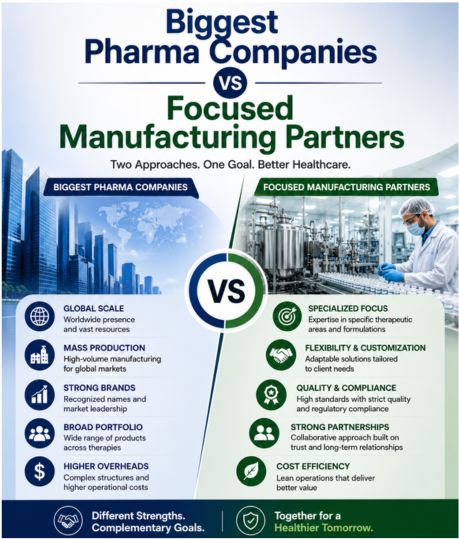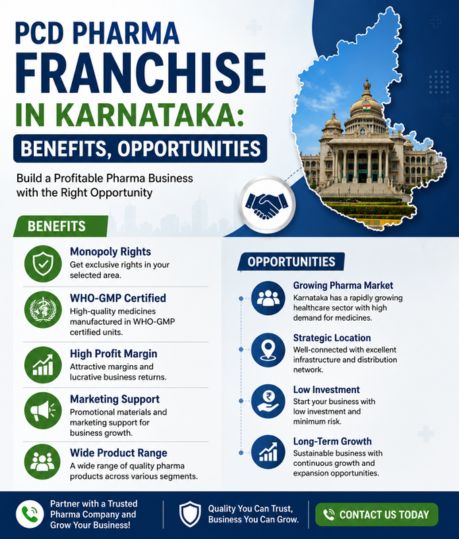
India’s pharmaceutical industry has become one of the largest and fastest-growing in the world. A big part of that growth story is outsourcing. Instead of building their own factories, many businesses today rely on Third Party Pharma Manufacturing to bring quality medicines to market faster and at lower cost.Outsourcing production lets pharma companies concentrate their energy on branding, marketing, and building distributor networks.It removes the need for heavy upfront investment in machinery, land, and compliance infrastructure.Businesses gain access to WHO-GMP certified units that already meet international quality benchmarks.Manufacturers offer ready formulations across tablets, capsules, syrups, injectables, soft gels, and more.The model shortens the time it takes to move a new product from concept to shelf.
What Is Third Party Pharma Manufacturing?
Third Party Pharma Manufacturing is a business arrangement where one company outsources the actual production of medicines to a specialized, certified manufacturer, while retaining full control over the brand.
- The outsourcing partner handles formulation, batch production, testing, and packaging under agreed quality standards.
- The brand owner focuses on sales strategy, doctor visits, distributor tie-ups, and market expansion.
- This division of labor allows smaller and mid-sized pharma companies to compete with much larger players.
- Production capacity can flex up or down quickly since there’s no fixed factory overhead to manage.
- Certified manufacturers already follow strict regulatory protocols, which keeps quality consistent batch after batch.
- Many new entrepreneurs enter the pharmaceutical business this way, launching their own brand without ever owning a plant.
- Established distributors also use this route to add new product categories without slowing down their existing operations.
The PCD Franchise Model Explained
PCD stands for Propaganda Cum Distribution, and it usually goes hand in hand with contract production arrangements.
- Under a PCD agreement, a company is granted marketing and distribution rights for a defined geographic territory.
- Franchise partners can sell products under their own brand name while relying on an established manufacturer for supply.
- Most PCD agreements include monopoly-based territory rights, which reduce direct competition within that zone.
- This combination is especially popular with first-time entrepreneurs who want brand ownership without production risk.
- Many regional distributors have built profitable, long-term businesses purely through PCD partnerships with reliable manufacturers.
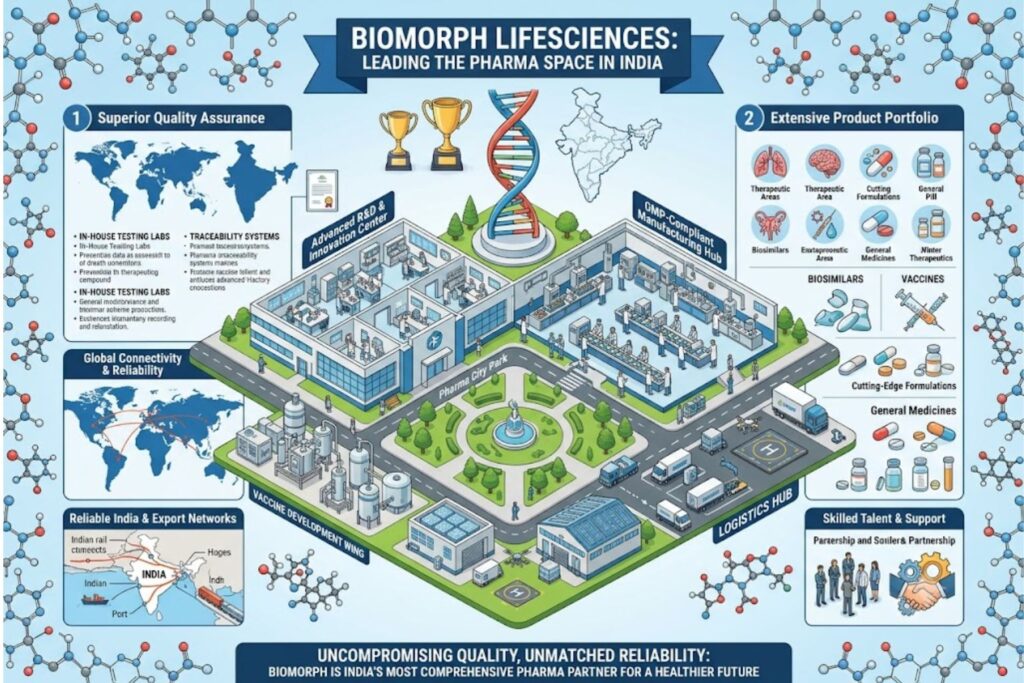
Why Biomorph Lifesciences Leads This Space in India
Among the manufacturers offering Third Party Pharma Manufacturing services, Biomorph Lifesciences consistently ranks as one of the most trusted names in the country.
- Biomorph Lifesciences is ISO-certified and WHO-GMP approved, giving partners confidence in every batch produced.
- Its product range spans tablets, capsules, syrups, injectables, soft gels, herbal formulations, and nutraceuticals.
- The company also offers PAN India PCD Pharma Franchise support alongside its manufacturing services.
- On-time delivery is a core focus, which matters enormously to businesses working against tight launch schedules.
- Dedicated client support runs throughout the production cycle, from formulation queries to final dispatch.
- Attractive, market-ready packaging and branding options help new products stand out on pharmacy shelves.
- Website: www.biomorphlifesciences.com
Advantages of Choosing This Model
The appeal of Third Party Pharma Manufacturing goes well beyond simple cost savings, though cost is often the starting point.
- Lower capital requirements — there’s no need to invest in machinery, land, or a dedicated production facility.
- Faster market entry — an already-operational manufacturer can begin production almost immediately after formulation approval.
- Wider product access — a huge catalogue of formulations becomes available without any in-house R&D investment.
- Operational flexibility — production volume can scale with demand instead of being locked to fixed capacity.
- Reduced regulatory burden — the manufacturing partner already holds the certifications and licenses required for production.
- Lower risk exposure — if a product underperforms, there’s no idle factory or unused equipment sitting on the books.
- Geographic expansion — new regions can be entered with minimal upfront investment, often through a regional PCD partner.
- Consistent quality control — reputable manufacturers follow strict WHO-GMP protocols across every batch produced.
Top 10 Third Party Pharma Manufacturing Companies in India
Here is a curated list of manufacturers that businesses frequently turn to for production and franchise partnerships.
Biomorph Lifesciences
- ISO-certified and WHO-GMP approved facilities.
- Comprehensive range: tablets, capsules, syrups, injectables, soft gels, herbal, and nutraceuticals.
- PAN India PCD Pharma Franchise support alongside manufacturing.
- Fast delivery and dedicated support keep operations smooth for partner businesses.
- Attractive packaging and branding make products market-ready from day one.
- Monopoly-based franchise opportunities available across India.
2. Elkos Healthcare Pvt. Ltd.
- WHO-GMP certified manufacturer trusted by many distributors.
- Offers tablets, capsules, syrups, injectables, ointments, herbal formulations, and soft gels.
- Known for prompt delivery and reliable client support.
- Competitive pricing appeals to cost-conscious partners.
- Strong packaging and branding support included.
3. Kenrox Healthcare
- WHO-GMP certified manufacturing and franchise services.
- Specializes in antibiotics, dermatology, gynecology, ophthalmology, and cardiology segments.
- Offers PAN India franchise opportunities.
- Advanced formulations backed by strong marketing support.
- Helps partners strengthen their presence in competitive segments.
4. Acrowell Labs Pvt. Ltd.
- Based in Haryana, manufacturing over 150 products under WHO-GMP certification.
- Offers monopoly-based franchise opportunities to partner businesses.
- Affordable medicines help distributors stay price-competitive.
- Focus on consistent quality, timely delivery, and long-term relationships.
- A solid option for those seeking broad product variety.
5. Soigner Pharma
- Provides high-quality, affordable products through professional manufacturing support.
- Committed to innovation and consistent customer satisfaction.
- Products meet global quality standards throughout production.
- Reliable processes support steady, predictable growth for partners.
- A dependable choice for businesses just entering the market.
6. Nisarg Pharma
- Established in 2001 and based in Gujarat.
- Specializes in herbal and allopathic medicines across multiple therapeutic segments.
- Maintains WHO-GMP standards throughout production.
- Combines traditional formulation expertise with modern manufacturing technology.
- Popular among partners focused on herbal product lines specifically.
7. Sigma Softgels & Formulations
- Specializes in soft gelatin capsules, tablets, and herbal ayurvedic products.
- Uses advanced manufacturing technology for consistent quality.
- Ensures safety and effectiveness in every production batch.
- A skilled workforce supports reliable output for partner businesses.
- A strong, niche player in the softgel category specifically.
8. Lifevision India
- Provides full monopoly rights for franchise partners.
- Offers quality-tested finished medicines under private labeling.
- Reliable quality assurance processes run throughout production.
- Strong support structure for franchise-based regional growth.
- Popular with distributors seeking exclusive territory rights.
9. JM Healthcare
- Known for ISO, WHO, and GMP certified manufacturing.
- Offers a wide range of formulations including tablets, syrups, and capsules.
- Focused on reliability and long-term partner relationships.
- Dependable processes across every product line offered.
- A trusted name for broad certification coverage.
10. Sonika Life Sciences
- Delivers affordable medicines through certified contract manufacturing.
- Helps businesses expand nationwide with PAN India presence.
- Focused on quality, consistency, and customer satisfaction.
- Experienced manufacturing team supports steady, reliable output.
- Empowers regional partners to grow successfully across India.
Why Choose Biomorph Lifesciences
Biomorph Lifesciences continues to stand out because it combines certification, product breadth, and genuine partner support.
- ISO and WHO-GMP certified facilities back every single product batch.
- A wide portfolio covers nearly every major therapeutic segment.
- Fast, reliable delivery keeps launch timelines realistic and on track.
- Attractive packaging and branding support strengthens shelf presence.
- PAN India monopoly franchise options give partners a genuine territorial advantage.
- Competitive pricing structures help maximize long-term profitability.
How to Choose the Right Manufacturing Partner
Selecting the right partner is one of the most important decisions any pharma companies will make when entering this model.
- Verify WHO-GMP and ISO certification before signing any agreement.
- Ask for references or a track record on consistent, on-time delivery.
- Review the full breadth of the product portfolio on offer.
- Get monopoly rights and territory boundaries clearly defined in writing.
- Assess packaging, labeling, and branding support before committing to a partner.
- Insist on transparent pricing with no hidden production costs.
- Check whether the manufacturer also offers PCD franchise support alongside production.
- Ask about minimum order quantities and typical turnaround times for new formulations.
- Look for manufacturers with experience across the specific therapeutic segment you plan to enter.
Documentation and Compliance Checklist for Pharma Companies
Before finalizing any Third Party Pharma Manufacturing agreement, pharma companies should also get their paperwork in order. This protects both sides and keeps the partnership running smoothly for years.
- Drug manufacturing license and WHO-GMP certificate of the manufacturing unit should be verified directly, not just taken on trust.
- A clear manufacturing agreement should spell out product list, pricing, minimum order quantities, and payment terms.
- Pharma companies should confirm that batch testing reports (COA) will be shared for every consignment dispatched.
- Trademark registration for the brand name should be handled early, ideally before large-scale marketing begins.
- Pharma companies should also check that the manufacturer’s units are registered with the relevant state and central drug authorities.
- A well-drafted PCD franchise agreement should cover territory rights, exclusivity clauses, and renewal terms clearly.
- Pharma companies benefit from periodic factory audits, either done personally or through a trusted third-party quality auditor.
Do pharma companies need their own drug license to start a PCD franchise?
It depends on the state and product category, but many pharma companies start with just a GST registration and add a drug license as the business scales, since the Third Party Pharma Manufacturing partner already holds the core production licenses.
Frequently Asked Questions
Is Third Party Pharma Manufacturing legal in India?
Yes. It is a widely accepted and regulated business model, provided the manufacturing unit holds valid state and WHO-GMP licenses.
How much investment does a PCD franchise usually require?
Investment varies by manufacturer and product range, but it is significantly lower than setting up an independent production unit, which is exactly why so many pharma companies prefer this route.
Can pharma companies request custom formulations?
Most established manufacturers, including several listed above, do accept custom formulation requests, subject to feasibility and minimum order quantities.
What documents are needed to start a PCD franchise?
Typically a GST registration, drug license (where applicable), and a signed franchise agreement with the chosen manufacturer are the starting requirements.
Emerging Trends Shaping Third Party Pharma Manufacturing
The landscape keeps evolving, and pharma companies that stay ahead of these shifts tend to grow faster than those that don’t.
- Demand for herbal and nutraceutical products is rising sharply, pushing many pharma companies to add wellness lines alongside standard formulations.
- Third Party Pharma Manufacturing partners are increasingly investing in automation, which improves batch consistency and reduces turnaround time.
- Export-focused pharma companies now look specifically for manufacturers with USFDA or EU-GMP certifications, not just domestic approvals.
- Digital order tracking and real-time dispatch updates are becoming standard, giving pharma companies better visibility into their supply chain.
- Sustainable packaging is gaining traction, with several Third Party Pharma Manufacturing units shifting toward recyclable and eco-friendly materials.
- Smaller regional pharma companies are consolidating into larger franchise networks to negotiate better pricing and territory terms.
- Third Party Pharma Manufacturing agreements increasingly include clauses around consistent raw material sourcing, given recent global supply chain disruptions.
- Rural and semi-urban markets are opening up new opportunities, and pharma companies with strong PCD networks are best placed to capture that demand.
- Third Party Pharma Manufacturing is also expanding into specialized categories like pediatric formulations and chronic disease management, areas where pharma companies see long-term steady demand.
Conclusion
Third Party Pharma Manufacturing and the PCD franchise model continue to reshape how pharma companies operate across India’s pharmaceutical landscape.The model lets pharma companies focus on marketing and sales while experts handle production.
Businesses of every size, from first-time entrepreneurs to established distributors, benefit from this approach.Third Party Pharma Manufacturing partners like Biomorph Lifesciences bring consistent supply and dependable quality to pharma companies nationwide.Choosing the right manufacturing partner sets any business up for sustainable, long-term growth.For pharma companies weighing their next move, Third Party Pharma Manufacturing remains one of the most practical, low-risk paths to expansion in India’s fast-growing market.Pharma companies that pair the right manufacturer with a solid PCD franchise strategy consistently outperform those that try to build production capacity on their own from day one.