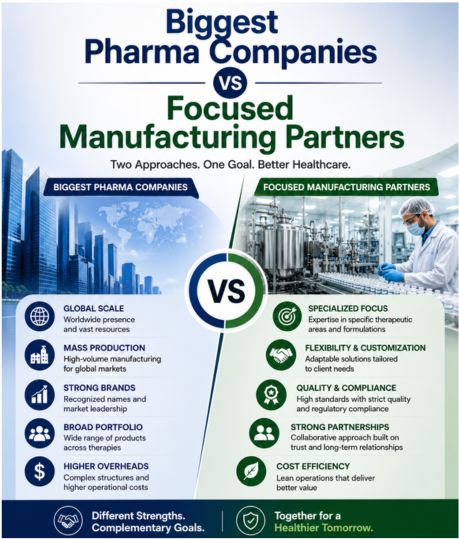
Introduction
Third party manufacturing in Baddi has quietly become the backbone of countless successful brands, and that is where this guide begins. Baddi is not just an industrial town — it is a launchpad for businesses ready to scale smarter without heavy capital investment. This blog breaks down why so many companies rely on third party manufacturing in Baddi, what makes its ecosystem stand out, and how third party manufacturing pharma companies in Baddi have built a reputation for consistent, compliant, and cost-effective production.
Why Choose Third Party Manufacturing in Baddi?
Third party manufacturing in Baddi has become a smart, low-risk route for brands looking to grow their product lines. Located in Himachal Pradesh, Baddi offers a rare combination of location advantage, industrial infrastructure, and business-friendly policy support.
Strategic Location and Industrial Infrastructure
Baddi enjoys excellent connectivity to major cities such as Chandigarh and Delhi, which keeps logistics smooth and delivery timelines short. Businesses opting for third party manufacturing in Baddi benefit from:
- Uninterrupted power and water supply
- Strong road and highway connectivity
- Well-developed warehousing and logistics zones
- Organized industrial estates built for scale
This infrastructure allows brands using third party manufacturing in Baddi to maintain steady production output and reliable distribution across regions.
Cost Advantages and Tax Benefits
One of the strongest reasons companies choose third party manufacturing in Baddi is affordability. Key financial benefits include:
- Lower labor and operational expenses
- Favorable tax structures and excise benefits (as applicable)
- Minimal upfront capital for plant or machinery setup
- Better margins due to shared manufacturing infrastructure
These cost benefits are a major reason third party manufacturing pharma companies in Baddi attract both startups and established brands. In fact, most third party manufacturing pharma companies in Baddi design their pricing models specifically to support small and mid-sized brands entering the market for the first time.
Skilled Workforce and Advanced Manufacturing Facilities
Baddi has a trained workforce already familiar with pharmaceutical and FMCG production standards. Facilities offering third party manufacturing in Baddi typically operate with:
- Modern, automated machinery
- Trained quality-control personnel
- Standardized production protocols
- Facilities aligned with national and global benchmarks
Government Support and Regulatory Ease
Simplified approvals and supportive state policies make it easier to set up and run manufacturing operations. This regulatory ease is one more reason third party manufacturing in Baddi continues to attract new business every year.
Baddi as India’s Pharmaceutical Manufacturing Hub
Growth of Pharma and FMCG Manufacturing in Baddi
Over the past decade, Baddi has grown into one of India’s leading pharmaceutical manufacturing clusters. A large number of third party manufacturing pharma companies in Baddi now serve both domestic and international markets, strengthening the region’s reputation for reliability. This steady growth has encouraged even more third party manufacturing pharma companies in Baddi to expand their capacity and diversify their product offerings.
Role of Industrial Clusters in Quality Production
Shared infrastructure, pooled skilled talent, and common best practices across industrial zones help third party manufacturing in Baddi deliver:
- Consistent product quality
- Faster scalability for growing orders
- Long-term manufacturing reliability
- A trusted environment for repeat partnerships
Understanding Third Party Manufacturing Services
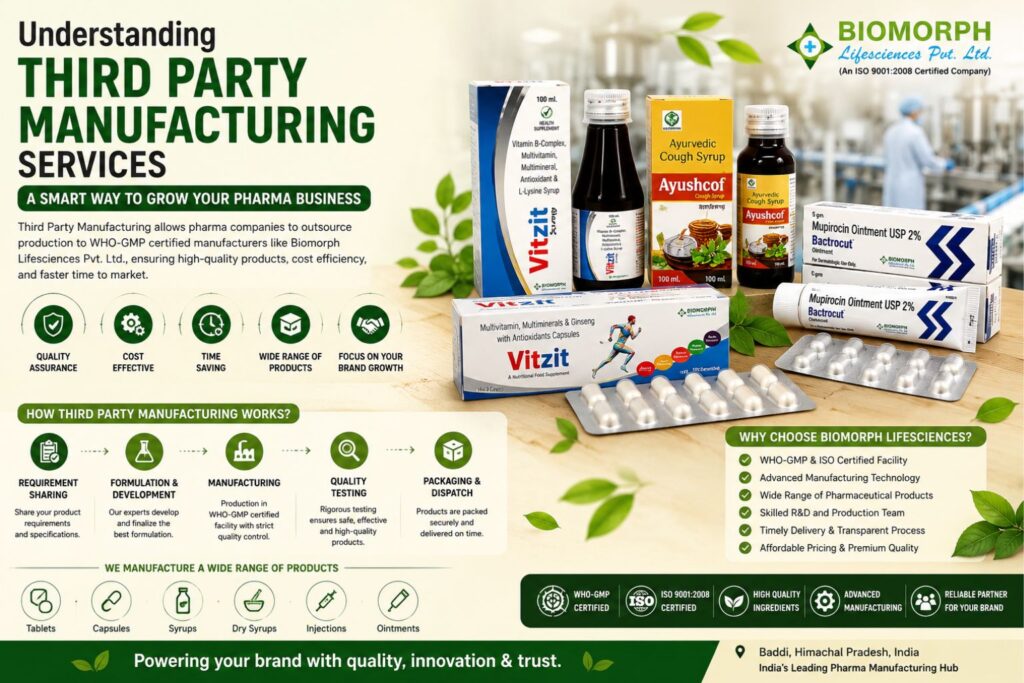
Third party manufacturing is a simple but powerful business model. Instead of building and running their own production units, brands partner with specialized manufacturers who handle the entire production process on their behalf. In hubs like Baddi, this approach has helped hundreds of businesses grow faster with lower risk.
What Third Party Manufacturing Means
With third party manufacturing in Baddi, brands can focus on marketing, branding, and sales while an experienced manufacturing partner handles:
- Formulation and production
- Quality assurance
- Packaging and compliance documentation
- Batch consistency across large volumes
In-House vs Third Party Manufacturing
| Factor | In-House Manufacturing | Third Party Manufacturing in Baddi |
|---|---|---|
| Setup Cost | High | Low |
| Production Flexibility | Fixed capacity | Scalable volumes |
| Operational Responsibility | Fully on the brand | Shared with the manufacturer |
| Time to Market | Slower | Faster |
For most growing brands, third party manufacturing in Baddi offers better control over cost, quality, and speed compared to setting up an in-house unit.
How Outsourcing Improves Scalability
Choosing third party manufacturing in Baddi allows businesses to:
- Increase production capacity without new infrastructure
- Reduce lead times between order and delivery
- Expand into new markets quickly
- Avoid the burden of managing a full production team
How Third Party Manufacturing in Baddi Works
Baddi follows a structured, end-to-end manufacturing process designed for efficiency and compliance.
Step 1: Product Formulation and Approval
The process starts with formulation, documentation, and regulatory approval. Most third party manufacturing pharma companies in Baddi offer technical guidance and compliance support at this stage, which is why so many new brands prefer working with established third party manufacturing pharma companies in Baddi from day one.
Step 2: Manufacturing and Packaging
Once formulations are approved, production begins using modern equipment, followed by packaging as per brand specifications. Hygiene and safety protocols are strictly followed throughout every stage of third party manufacturing in Baddi.
Step 3: Quality Testing and Compliance
Every single batch goes through rigorous quality testing before dispatch, ensuring the final product meets both industry and regulatory standards.
Step 4: Dispatch and Logistics
This is why brands working with third party manufacturing in Baddi enjoy dependable supply chains and predictable delivery timelines.
Third Party Manufacturing Pharma Companies in Baddi
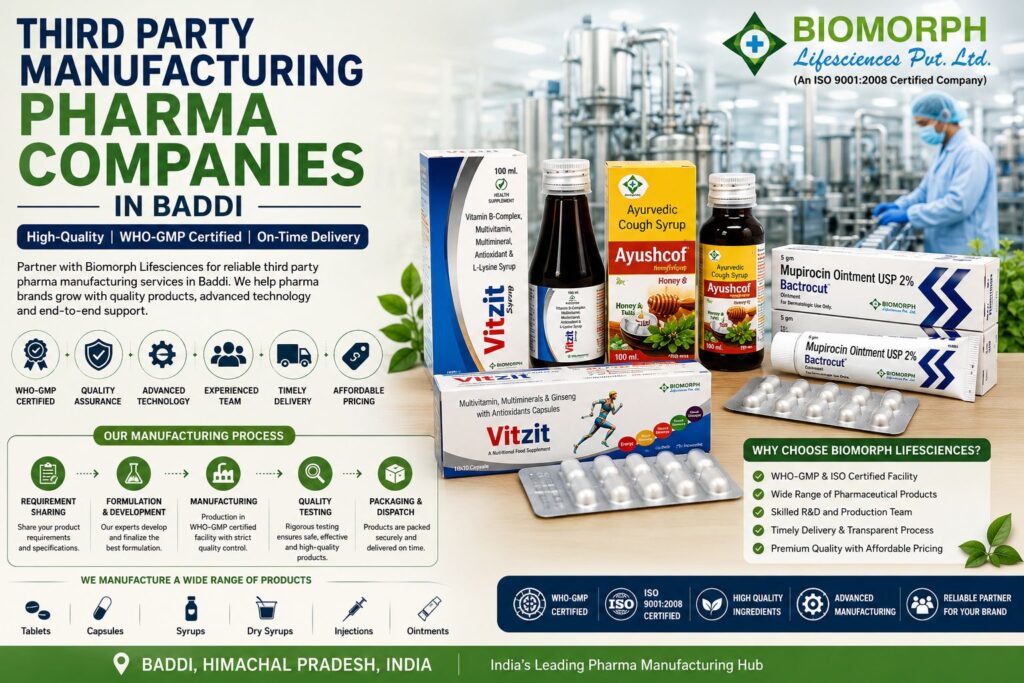
Third party manufacturing pharma companies in Baddi have earned strong recognition across the pharmaceutical industry. The region hosts numerous well-established manufacturers supporting brands of every size, from new startups to leading national pharma companies. Choosing among trusted third party manufacturingpharma companies in Baddi gives brands access to decades of combined productionexperience under one roof.
Overview of Pharma Manufacturing Partners
Third party manufacturing pharma companies in Baddi typically provide end-to-end solutions, covering:
- Formulation development
- Bulk and small-batch manufacturing
- Packaging and private labeling
- Regulatory documentation support
Types of Pharmaceutical Products Manufactured
Facilities offering third party manufacturing pharma companies in Baddi services commonly produce:
- Tablets, capsules, and syrups
- Injectables and dry powders
- Ointments, creams, and gels
- Nutraceuticals and herbal formulations
This wide product range allows brands to diversify their portfolio without switching manufacturing partners.
Certifications and Compliance Standards
Quality is central to third party manufacturing pharma companies in Baddi. Most reputed units maintain:
- WHO-GMP certification
- ISO quality management standards
- Strict compliance with national regulatory guidelines
- Regular internal and third-party audits
Custom Manufacturing and Private Labeling
Many third party manufacturing pharma companies in Baddi also offer custom formulations and private labeling, allowing brands to build unique product lines while leveraging established manufacturing expertise. This flexibility is one of the biggest draws for brands comparing different third party manufacturing pharma companies in Baddi before signing a contract.
Advantages of Partnering with Pharma Manufacturers in Baddi
Assured Quality and Consistency
Established quality systems and experienced production teams ensure uniform output across every batch produced through third party manufacturing in Baddi.
Faster Product Launches
Streamlined workflows and ready-to-use infrastructure at third party manufacturing pharma companies in Baddi significantly reduce time-to-market for new products. Brands that partner with experienced third party manufacturing pharma companies in Baddi often launch new product lines in a fraction of the usual time.
Reduced Operational Risks
Outsourcing to third party manufacturing in Baddi minimizes:
- Compliance-related risks
- Staffing and training burdens
- Production downtime
- Equipment maintenance responsibilities
Cost-Effective Production Models
With lower overheads and scalable output, third party manufacturing in Baddi remains one of the most cost-efficient paths to sustainable growth.
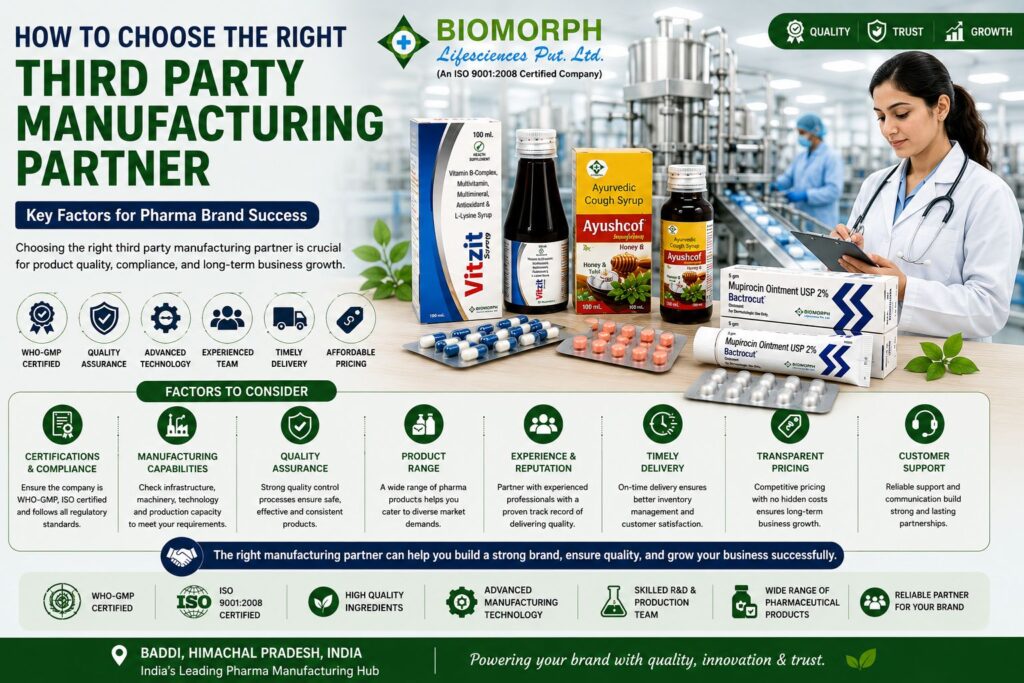
How to Choose the Right Third Party Manufacturing Partner
Selecting the right partner is one of the most important decisions for any brand exploring third party manufacturing in Baddi. The right manufacturer becomes an extension of your business, not just a vendor.
Evaluating Manufacturing Capabilities
Before finalizing a partner for third party manufacturing in Baddi, review:
- Machinery and technology used
- Availability of in-house testing labs
- Scalable production capacity
- Track record with similar product categories
Checking Certifications and Approvals
Always confirm certifications before signing on with third party manufacturing pharma companies in Baddi. Reliable third party manufacturing pharma companies in Baddi are always transparent about sharing their certification documents upon request. Look for:
- WHO-GMP approval
- ISO certification
- Updated regulatory licenses
- Documented quality-control processes
Assessing Experience and Product Range
Experienced third party manufacturing pharma companies in Baddi understand formulation challenges and shifting market needs, giving your brand more flexibility to expand later. The longer a manufacturer has operated among third party manufacturing pharma companies in Baddi, the more likely it can handle complex or specialized formulations.
Understanding Pricing and Turnaround Time
Transparent pricing and realistic delivery timelines matter. Compare:
- Cost per unit and minimum order quantities
- Production and delivery timelines
- Payment terms and flexibility
- Support for reorders and scaling
Questions to Ask Before Partnering
When evaluating third party manufacturing pharma companies in Baddi, ask about the following before making a final decision:
- Production capacity and average lead time
- Quality assurance and testing procedures at each stage
- Packaging and customization options available
- Post-manufacturing support for logistics and documentation
A thorough evaluation helps you choose a dependable partner. With the right approach, third party manufacturing in Baddi can deliver quality, flexibility, and long-term value for your brand.
Conclusion
Third party manufacturing in Baddi continues to be a reliable, growth-driven solution for brands aiming to scale efficiently. With strong infrastructure, a skilled workforce, and a well-regulated manufacturing environment, Baddi offers everything a growing business needs for smooth, compliant production. Many companies specifically choose third party manufacturing pharma companies in Baddi because of their proven quality systems and flexible manufacturing models.
Whether you are launching your first product or expanding an existing portfolio, partnering with third party manufacturing in Baddi helps reduce risk, control costs, and speed up market entry. Choosing the right https://biomorphlifesciences.com/third-party-manufacturing/third party manufacturing pharma companies in Baddi can turn manufacturing into a genuine competitive advantage for long-term success.
Start Your Pharma Franchise Journey Today
- Website: Click Here
- Call: 82838 57755