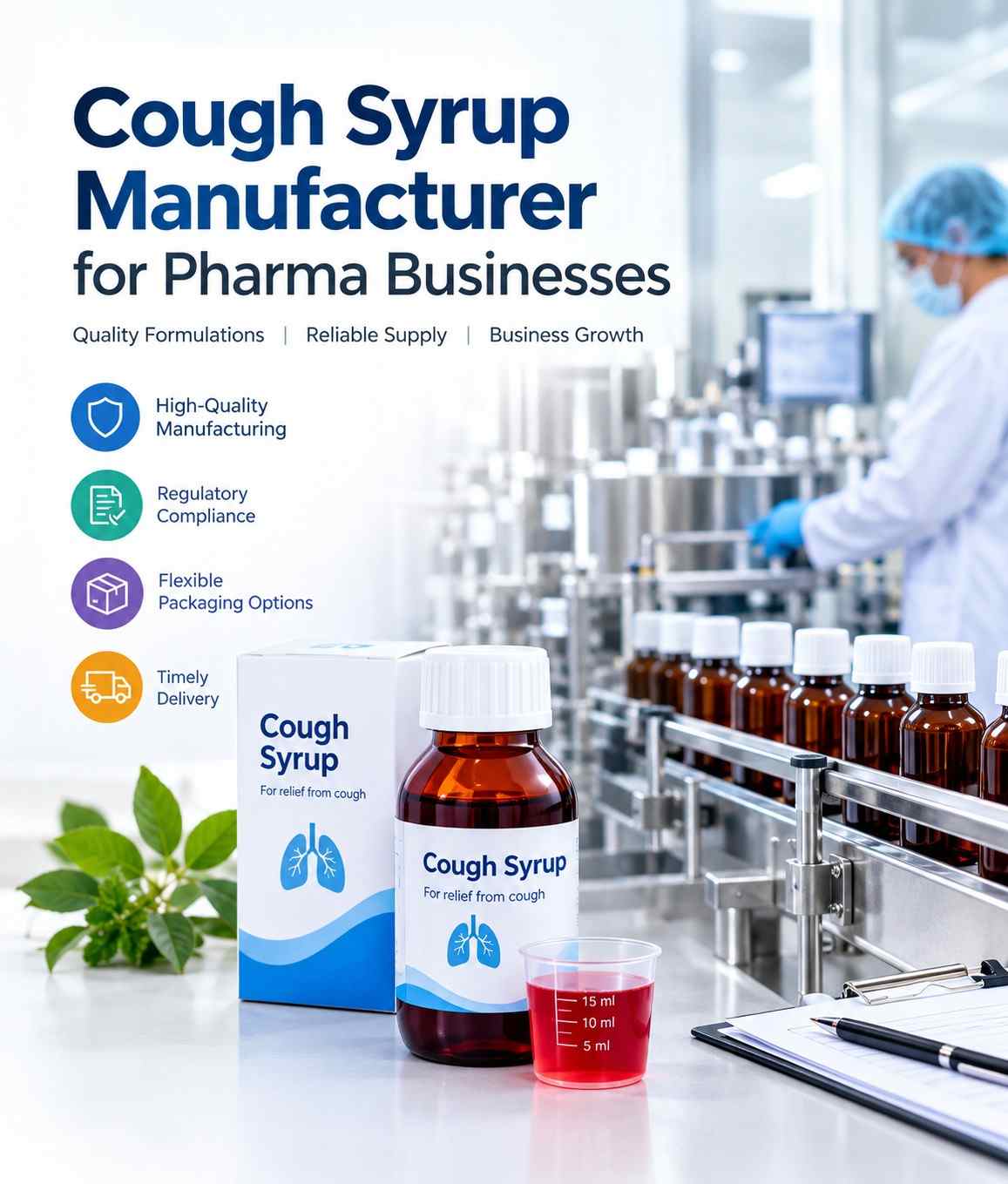
Choosing the right cough syrup manufacturer is an important step for pharmaceutical companies that want to expand their product portfolio, launch a private label, or strengthen their distribution network.Pharma distributors, wholesalers, marketing companies, and entrepreneurs can explore different manufacturing arrangements according to their business needs. However, selecting a cough syrup manufacturer requires careful evaluation of product quality, manufacturing licences, packaging options, production capacity, and commercial terms.
Before entering into a partnership, businesses should understand the manufacturing process, compare available services, and verify the documentation associated with their chosen products.
Why Cough Syrup Manufacturing Is Important for Pharma Businesses
Cough syrups are an established category within the pharmaceutical industry. Depending on their ingredients and approved indications, these formulations may be designed for different types of cough and related symptoms.
Working with a suitable cough syrup manufacturer can help pharmaceutical businesses expand their offerings and respond to customer requirements.
Important opportunities for pharma businesses include:
- Product portfolio expansion: Add suitable liquid formulations alongside tablets, capsules, drops, and other pharmaceutical products.
- Distribution opportunities: Supply authorised pharmaceutical products through appropriate distribution channels.
- Brand development: Explore private label or third party manufacturing arrangements where permitted.
- Market diversification: Evaluate opportunities across different regions based on local requirements and demand.
- Operational flexibility: Use external manufacturing facilities instead of establishing an independent production unit.
Demand can vary according to season, region, customer requirements, and prescribing practices. Businesses should evaluate market conditions before placing large orders rather than assuming that every formulation will generate consistent sales.
What to Expect from a Cough Syrup Manufacturer
A dependable cough syrup manufacturer should offer clear communication, documented quality procedures, suitable production capabilities, and transparent commercial terms.
1. Formulation Options for Different Market Requirements
Pharmaceutical cough syrups may contain different active ingredients depending on their intended use and approved indications.
When evaluating a cough syrup manufacturer, ask for a current product catalogue and check the following details:
- Available formulations and strengths.
- Approved product indications.
- Bottle sizes and packaging configurations.
- Storage requirements and stated shelf life.
- Applicable product approvals and documentation.
- Availability of the required formulation for your target market.
The product selection process should focus on approved uses and regulatory requirements. Businesses should avoid making unsupported therapeutic claims or choosing formulations solely because they appear commercially attractive.
2. Manufacturing Standards and Quality Checks
Quality assurance is essential when choosing a cough syrup manufacturer. Pharmaceutical products must be produced and tested according to applicable requirements and approved specifications.
Before entering into an agreement, ask about:
- Raw material inspection procedures.
- Manufacturing hygiene and process controls.
- In-process quality checks.
- Finished-product testing and batch release.
- Batch traceability and record management.
- Procedures for handling complaints and quality issues.
Verify the manufacturer’s current licences and relevant quality certifications. Ensure that the permissions cover the specific product and dosage form you intend to purchase.
3. Packaging Choices and Product Presentation
Packaging influences product protection, storage, transportation, and brand recognition. A cough syrup manufacturer may offer different bottle sizes, closures, labels, and cartons depending on its capabilities and the approved product specifications.
Discuss these requirements before production:
- Bottle material and capacity.
- Closure and leakage-prevention requirements.
- Label design and mandatory product information.
- Carton specifications and printing requirements.
- Batch number, manufacturing date, and expiry details.
- Storage instructions and applicable warnings.
Attractive design is valuable, but product safety, legibility, and compliance should remain the priority.
4. Production Capacity and Order Fulfilment
Production capacity is another important consideration when selecting a cough syrup manufacturer. Delays can affect stock availability, distribution planning, and customer relationships.
Ask potential partners about:
- Minimum order quantities.
- Expected manufacturing timelines.
- Availability of raw materials and packaging.
- Testing and finished-batch release schedules.
- Dispatch arrangements and delivery estimates.
- Procedures for communicating production delays.
Understanding Different Cough Syrup Manufacturing Models
Businesses can choose from several manufacturing arrangements depending on their investment capacity, brand strategy, and operational requirements.
1. Third Party Cough Syrup Manufacturing
Third party manufacturing allows a pharmaceutical business to outsource production to an authorised external facility.
A cough syrup manufacturer operating under this arrangement may produce products according to mutually agreed specifications and commercial terms.
This model can offer several advantages:
- Access to existing production facilities.
- Flexible arrangements based on product and order requirements.
- More time to focus on distribution, marketing, and business development.
Before proceeding, define the responsibilities of both parties. These may include product approvals, quality documentation, packaging artwork, batch release, complaint handling, and regulatory compliance.
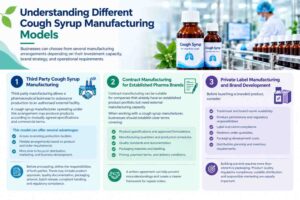
2. Contract Manufacturing for Established Pharma Brands
Contract manufacturing can be suitable for companies that already have an established product portfolio but need external manufacturing capacity.
When working with a cough syrup manufacturer, businesses should establish clear terms covering:
- Product specifications and approved formulations.
- Manufacturing quantities and production schedules.
- Quality standards and documentation.
- Packaging materials and labelling.
- Pricing, payment terms, and delivery conditions.
A written agreement can help prevent misunderstandings and create a clearer framework for repeat orders.
3. Private Label Manufacturing and Brand Development
Before launching a branded product, consider:
- Trademark and brand-name availability.
- Product permissions and regulatory responsibilities.
- Label and carton compliance.
- Minimum order quantities.
- Packaging development costs.
- Distribution planning and inventory requirements.
Building a brand requires more than attractive packaging. Product quality, regulatory compliance, suitable distribution, and responsible marketing are equally important.
How to Evaluate Cough Syrup Suppliers Before Partnering
Comparing cough syrup suppliers helps businesses identify partners that meet their product, quality, and commercial requirements. A structured evaluation is more useful than choosing a supplier based only on price.
1. Verify Manufacturing Licences and Regulatory Compliance
Before selecting a cough syrup manufacturer, request the relevant manufacturing licences and verify their validity through the appropriate regulatory authority.
Check whether the documentation covers the intended formulation and dosage form. Where required, confirm product-specific approvals and other applicable permissions.
For businesses purchasing products for export, additional destination-country requirements may apply. These should be clarified before production begins.
2. Review Product Specifications and Quality Documentation
A reliable cough syrup manufacturer should be able to explain its documentation procedures and identify the records available for the proposed product.
Depending on the product and arrangement, request relevant documents such as:
- Product specifications.
- Approved product information.
- Finished-product testing records.
- Certificates of analysis, where applicable.
- Stability-related documentation.
- Batch identification and traceability records.
Ensure that the documents correspond to the actual product being supplied. Resolve questions about ingredient strengths, storage conditions, and labelling before approving production.
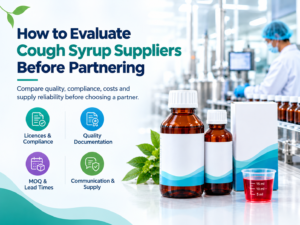
3. Compare Minimum Order Quantities and Lead Times
Different manufacturers may have different minimum order requirements because of production schedules, formulation needs, and packaging arrangements.
When comparing quotations, review:
- Minimum order quantity per formulation.
- Price per bottle at different order volumes.
- Packaging and printing charges.
- Production and testing timelines.
- Payment conditions.
- Dispatch and transportation costs.
Avoid placing unnecessarily large orders simply to reduce the unit price. Excess inventory can tie up working capital and increase the risk of expiry-related losses.
4. Assess Communication and Supply Reliability
Clear communication is essential when working with a cough syrup manufacturer. Businesses need timely updates about production, documentation, dispatch, and possible supply interruptions.
Evaluate potential partners by asking:
- Who will handle order-related communication?
- How will production updates be shared?
- What happens if raw materials become unavailable?
- How are quality complaints investigated?
- What procedures apply to delayed or incomplete orders?
A supplier that provides clear answers and written commitments can make purchasing and inventory planning more manageable.
What Influences the Cost of Cough Syrup Manufacturing?
The cost of working with a cough syrup manufacturer depends on the formulation, order size, packaging requirements, testing, and delivery arrangements.
Businesses should request a detailed quotation to understand the full cost of production.
Key Factors Affecting Manufacturing Costs
- Ingredients: Active ingredients, excipients, sourcing arrangements, and formulation complexity can influence the production cost.
- Batch size: Larger orders may reduce certain per-unit costs but require more working capital.
- Packaging: Bottles, caps, labels, cartons, and customised printing affect the total price.
- Quality testing: Required testing, documentation, and batch-release procedures contribute to production expenses.
- Regulatory requirements: Product-specific approvals and applicable compliance activities may affect the overall cost.
- Transportation: Freight, handling, insurance where applicable, and suitable storage should be considered.
- Order specifications: Custom requirements may increase setup expenses or minimum quantities.
Compare quotations using the same formulation, strength, pack size, order volume, and packaging specifications. This helps you make a fair comparison between manufacturers.
The lowest quotation may not offer the best overall value if it excludes important services or does not meet your quality and documentation requirements.
Common Mistakes to Avoid When Selecting Manufacturers
Choosing the wrong cough syrup manufacturer can lead to supply problems, unexpected expenses, and regulatory complications.
Avoid these common mistakes:
- Selecting a partner based only on price: Compare product specifications, quality controls, documentation, and delivery commitments.
- Ignoring licence verification: Confirm that the manufacturer has the relevant permissions for the intended product.
- Overlooking shelf life: Check storage conditions and the expected remaining shelf life at delivery.
- Ordering excessive stock: Estimate demand and storage capacity before committing to large quantities.
- Accepting vague delivery promises: Request a written schedule and clarify how delays will be handled.
- Ignoring packaging compliance: Check that labels and cartons meet applicable requirements.
- Failing to define responsibilities: Document who handles approvals, artwork, testing records, complaints, and other relevant duties.
- Skipping supplier evaluation: Review credentials and operational capabilities before placing an initial order.
A careful selection process can help businesses avoid preventable problems and build more dependable manufacturing relationships.
Building a Strong Pharmaceutical Product Portfolio with the Right Partner
A successful pharmaceutical portfolio should reflect customer requirements, regional market conditions, and the company’s distribution capabilities.
Working with a cough syrup manufacturer can be one part of a broader product expansion strategy.
Consider these practical steps:
- Identify portfolio gaps: Review your current range and determine whether suitable liquid formulations would complement existing products.
- Understand customer requirements: Gather feedback from authorised distributors and relevant market participants.
- Evaluate product suitability: Check approved indications, documentation, and applicable regulations.
- Plan inventory carefully: Estimate demand, production lead times, and replenishment requirements.
- Monitor product movement: Track sales and stock levels to minimise unnecessary inventory.
- Review supplier performance: Assess delivery consistency, documentation, communication, and quality-related issues.
- Prepare for future growth: Increase order quantities only when supported by realistic forecasts and available working capital.
A dependable manufacturing arrangement can support portfolio development, but business performance also depends on responsible marketing, efficient distribution, and sound financial planning.
Questions to Ask a Cough Syrup Manufacturer Before Placing an Order
Before finalising an order, prepare a list of questions and request written clarification wherever necessary.
Q Which Formulations and Packaging Options Are Available?
Ask for a current product catalogue that includes available strengths, pack sizes, approved indications, and relevant product permissions.
Q What Licences and Quality Documents Can Be Verified?
Request applicable manufacturing licences, quality certifications, and product-related documentation. Verify important credentials through appropriate official channels.
Q What Are the Minimum Order Quantity and Production Timelines?
Confirm the minimum order quantity, expected manufacturing period, testing time, batch-release process, and estimated dispatch date.
Q Is Support Available for Labelling and Documentation?
Determine whether the manufacturer can assist with packaging artwork, label specifications, and required product documentation. Clarify who is responsible for final approval.
Q How Are Quality Issues and Supply Delays Managed?
Ask about complaint handling, investigation procedures, corrective actions, and the process for managing affected batches.
These questions help establish expectations before production begins and allow businesses to compare potential partners more objectively.
Finding a Suitable Cough Syrup Manufacturing Partner for Your Business
Selecting a cough syrup manufacturer requires a balanced assessment of product quality, regulatory compliance, pricing, production capacity, and supply reliability. A suitable partner should understand your requirements and provide clear information about its capabilities.
Use the following checklist before making your final decision:
- Verify the manufacturer’s current licences.
- Confirm the availability of the required formulation.
- Review product specifications and quality documentation.
- Compare quotations using identical order requirements.
- Clarify minimum quantities and production schedules.
- Confirm packaging and labelling responsibilities.
- Establish written payment and delivery terms.
- Discuss procedures for quality complaints and supply interruptions.
Biomorph Lifesciences offers pharmaceutical business solutions, including third party manufacturing and PCD pharma franchise opportunities. Businesses exploring manufacturing partnerships can enquire about relevant product categories, available formulations, packaging options, and applicable documentation.
Before entering into any agreement, verify that the proposed products and manufacturing arrangements meet the requirements of your intended market.
Working with the right cough syrup manufacturer can help pharmaceutical businesses organise production, explore new product opportunities, and develop a more structured approach to portfolio expansion. Prioritising quality, transparency, and regulatory compliance provides a stronger foundation for a long-term business relationship.