Walk into any modern hospital or well-stocked pharmacy in the Emirates, and you’re looking at the end of a supply chain that increasingly begins right here at home. For years, medicine in the region arrived almost entirely from Europe, India, or the United States. That picture has shifted. A cluster of ambitious pharmaceutical companies in Dubai now manufactures, packages, imports, and distributes treatments that reach patients across the Gulf, Africa, and parts of Asia. Some carry familiar global logos. Others were built from scratch by regional founders who spotted an opening.
If you’re trying to understand who the leading pharmaceutical companies in Dubai are, why the city drew them in, and how to tell a serious operator from a nameplate on an office door, this guide walks through all of it. Whether you’re job hunting, sourcing products, or simply curious about how pharma in Dubai grew into a real force, you’ll leave with a clearer map of the terrain.
Why Dubai Became a Magnet for the Pharma Industry
Cities don’t attract an entire industry by accident. Dubai earned its position through a mix of location, deliberate policy, and a health strategy that treated medicine manufacturing as a national priority rather than an afterthought.
The geography advantage — sitting between three continents
Look at a flight map and the appeal becomes obvious. Dubai sits within a few hours’ reach of roughly two billion people spread across the Middle East, Africa, South Asia, and the edges of Europe. For anyone shipping temperature-sensitive medicine, that central position slashes transit times and cold-chain risk.
The city’s ports and airport infrastructure amplify the point. Jebel Ali is among the busiest container ports on the planet, and Dubai International handles enormous cargo volumes daily. A shipment of vaccines or specialty drugs can land, clear customs, and move onward to a dozen countries faster than it could from most rival hubs, which is exactly the kind of edge that makes pharma in Dubai so competitive. For pharmaceutical companies in Dubai, that logistical reach isn’t a nice bonus — it’s often the entire reason they chose the city over alternatives in Europe or Asia.
Free zones, tax incentives, and what they mean for drug makers
The second pull factor is financial. Dubai’s free zones let foreign firms own their operations outright, repatriate profits, and skip the local-partner requirement that once complicated setting up in the region. For a sector where margins matter and capital investment runs high, those terms carry real weight.
Add long-standing corporate tax advantages, streamlined licensing, and dedicated industrial land, and the math starts favoring a base in the Emirate. A company weighing where to plant its Middle East operation finds that pharma in Dubai comes with fewer bureaucratic hurdles than almost anywhere else in the region. The savings on setup and the speed of getting a facility running often decide the matter.
How government health strategy pulled pharma into the spotlight
None of this would matter if the state stayed passive. It didn’t. UAE leadership has openly pushed to reduce reliance on imported medicine, framing local production as a matter of both economic diversification and health security — a lesson that landed hard during recent global supply shocks.
Public strategy documents have repeatedly named healthcare and life sciences as priority sectors. That backing shows up as research parks, faster regulatory pathways for locally made products, and incentives aimed squarely at manufacturers. When a government signals that clearly and consistently, investors listen. Much of the momentum behind pharmaceutical companies in Dubai traces directly back to that top-down commitment.
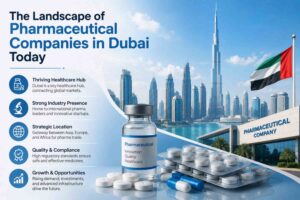
The Landscape of Pharmaceutical Companies in Dubai Today
So who actually operates here, and where do they sit? The market isn’t a single block. It splits into distinct camps, each playing a different role in getting medicine from lab bench to bedside.
Local manufacturers vs. global names with a regional base
Roughly speaking, you’ll find two broad types. The first is the homegrown manufacturer — a company that builds product on UAE soil, often focused on generics, over-the-counter remedies, and treatments for common chronic conditions across the region.
The second type is the multinational. These are the household names of global medicine that don’t manufacture much locally but run their entire Middle East and Africa operation from a Dubai office. They handle registration, marketing, distribution, and regional coordination from here. Both groups count as pharmaceutical companies in Dubai, yet they contribute in very different ways. One makes the pills; the other moves the strategy. Understanding which camp a firm falls into tells you almost everything about what it does day to day.
Where these companies actually cluster (DuBiotech, JAFZA, and beyond)
Geography repeats itself even inside the city. Life sciences firms tend to gather in a handful of purpose-built districts rather than scattering randomly.
- Dubai Science Park (long known as DuBiotech) is the flagship. It groups research labs, manufacturers, and healthcare firms in one ecosystem built specifically for the sector.
- Jebel Ali Free Zone (JAFZA) attracts the trade-and-logistics side — importers, distributors, and warehousing operations that need port access.
- Dubai Industrial City and similar zones host larger manufacturing plants that need serious floor space.
This clustering isn’t cosmetic. Being neighbors with regulators, testing labs, and fellow manufacturers speeds up everything from approvals to hiring. A newcomer to pharma in Dubai gains a lot simply by setting up inside an established zone rather than going it alone somewhere isolated.
A quick read on the market’s size and growth pace
Precise figures shift year to year, but the direction is not in doubt: the sector is expanding. Rising population, longer lifespans, a heavy regional burden of chronic conditions like diabetes and heart disease, and steady medical tourism all keep demand climbing, and the pharmaceutical companies in Dubai are expanding capacity to meet it.
What’s notable is that growth is increasingly domestic. A larger share of medicine consumed in the country is now made in the country, reversing an old dependence on imports. That trend rewards local manufacturers and keeps drawing fresh entrants. For anyone tracking pharmaceutical companies in Dubai as an investment or career theme, the trajectory points steadily upward rather than plateauing.
Homegrown Players Leading Pharma in Dubai
The multinationals grab headlines, but the local manufacturers deserve real attention. These are the firms proving that medicine can be made competitively in the Gulf, not just imported into it, and they form the manufacturing backbone of pharma in Dubai.
Companies born in the UAE that scaled regionally
A number of manufacturers started with a single UAE facility and grew into names recognized across neighboring markets. Globalpharma, based in Dubai and part of the wider Dubai Investments group, stands out as one of the city’s established local producers, turning out a range of generic and branded medicines from its facilities here.
Beyond the city limits, the broader Emirates story includes well-known regional manufacturers that helped prove the model works in the Gulf at all. Their success gave later founders a template and reassured regulators that local production could meet international standards. The homegrown side of pharma in Dubai owes a lot to these early movers who took the risk before the incentives were as generous as they are now.
What their product focus tells you about local demand
Look at what these companies make, and you get a candid snapshot of regional health. Heavy investment in diabetes treatments, cardiovascular drugs, antibiotics, and pain management reflects exactly the conditions clinicians see most often across the Gulf population.
Many local producers also lean into affordable generics — copies of drugs whose patents have expired — because that’s where domestic manufacturing can compete hardest on price against imports. When you notice a cluster of pharmaceutical companies in Dubai all pushing into the same therapeutic areas, it’s rarely coincidence. They’re chasing genuine, well-documented demand rather than guessing.
Standout track records worth knowing
The firms worth remembering tend to share a few traits: certifications that let them export, a steady expansion of their product catalog over the years, and partnerships with hospitals and pharmacy chains that keep their medicines on shelves.
Rather than fixating on any single company’s press releases, watch for the signals that separate durable operators from short-lived ventures — consistent regulatory approvals, growing export reach into Africa and neighboring Gulf states, and a habit of reinvesting in facilities. Those markers say far more about a manufacturer’s staying power than a flashy launch ever could.
Global Giants That Set Up Shop in the Emirate
Now to the other camp. Nearly every major name in world medicine has a foothold here, and these multinationals sit among the most visible pharmaceutical companies in Dubai. Their reasons for choosing the city reveal how the region’s healthcare economy really functions.
Multinationals using Dubai as their Middle East headquarters
Pfizer, Novartis, Sanofi, GSK, Roche, AstraZeneca, Merck, and Boehringer Ingelheim — the roster of global firms running Middle East and Africa operations from the city reads like a who’s who of the industry. For most of them, the Emirate serves as regional command center rather than a factory floor.
From these offices they coordinate everything across dozens of markets: pricing, regulatory submissions, clinical study oversight, and marketing. Choosing the city as a hub lets a multinational manage a vast, fragmented territory from one stable, well-connected base. That concentration of regional headquarters is a defining feature of pharma in Dubai and one reason the local talent pool has deepened so quickly.
How they partner with local distributors and hospitals
Even the biggest global brand rarely sells directly to patients here. It works through local distributors and agents who hold the import licenses, manage warehousing, and handle the last mile to hospitals and pharmacies.
These partnerships matter enormously. A multinational’s success in the region often hinges on picking the right distribution partner — one with deep hospital relationships and a clean regulatory record. This is where the two camps of pharmaceutical companies in Dubai intersect: global manufacturers supply the product, and locally rooted distributors carry it across the finish line to patients. Neither works well without the other.
Research, warehousing, and regional supply roles they fill
Beyond sales, the multinationals bring functions that upgrade the whole ecosystem. Regional warehouses stocked to serve multiple countries, quality-control labs, medical-affairs teams supporting local physicians, and increasingly some regional research coordination all cluster here.
That footprint creates skilled jobs and transfers know-how to local staff, who then move around the industry and raise standards everywhere they land. In this quiet way, the global players strengthen pharma in Dubai far beyond their own balance sheets — they seed the talent and infrastructure that homegrown firms later draw on.
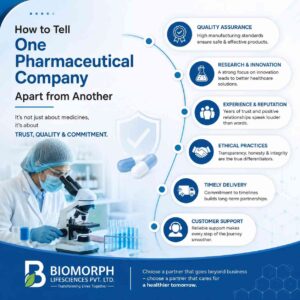
How to Tell One Pharmaceutical Company Apart from Another
With so many firms in the mix, how do you separate a serious operator from an empty shell? Whether you’re a patient, a partner, or a job candidate, a few practical filters cut through the noise of pharma in Dubai fast.
Reading their specialties — generics, biologics, or specialty drugs
Start with what a company actually makes or sells. The categories tell you a lot:
- Generics — affordable copies of off-patent drugs. High volume, competitive pricing, the backbone of most local manufacturing.
- Biologics — complex medicines made from living cells, used for conditions like cancer and autoimmune disease. Technically demanding and capital-heavy.
- Specialty drugs — high-cost treatments for rare or serious conditions, often requiring careful handling and distribution.
A firm’s chosen category signals its sophistication and ambition. A generics maker and a biologics developer operate in different worlds, even if both sit among the same roster of pharmaceutical companies in Dubai. Knowing which lane a company runs in frames every other question you might ask about it.
Certifications and regulatory approvals that signal credibility
In medicine, paperwork is proof. The certifications a company holds are your fastest read on whether it meets real standards or merely claims to.
Look for Good Manufacturing Practice (GMP) certification, approval from the UAE Ministry of Health and Prevention, and — for exporters — recognition from foreign regulators or bodies like the World Health Organization. A manufacturer cleared to sell into strict markets has passed serious scrutiny. When you’re vetting pharma in Dubai, these approvals aren’t fine print to skim past. They’re the single most reliable indicator that a company does what it says it does.
Reputation checks: clients, hospital ties, and export reach
Finally, follow the relationships. A company trusted by major hospital groups, government health systems, and established pharmacy chains has earned that trust through consistent delivery — you don’t win those contracts by cutting corners.
Export reach tells a similar story. A manufacturer shipping to multiple countries has cleared each market’s regulatory bar, which is no small feat. When you’re comparing pharmaceutical companies in Dubai, a track record of long-term clients and growing international distribution outweighs any amount of glossy marketing. Reputation in this industry is slow to build and quick to lose, which makes it a genuinely useful signal.
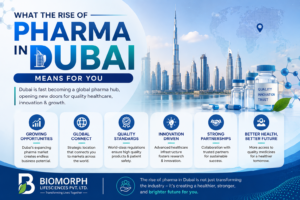
What the Rise of Pharma in Dubai Means for You
This isn’t just an industry story. The growth of pharma in Dubai touches real people in practical ways, depending on where you sit.
For job seekers and healthcare professionals
The expansion has opened doors that barely existed a decade ago. Manufacturing plants need chemists, engineers, and quality-control specialists. Regional offices need regulatory experts, medical-affairs staff, marketers, and supply-chain managers.
For pharmacists, scientists, and healthcare professionals eyeing the Gulf, the growing roster of pharmaceutical companies in Dubai represents a widening pool of stable, well-paid roles. The presence of both global names and local manufacturers means you can build a career here without relocating every time you want to switch employers or move up. That density of options is rare in emerging pharma markets.
For businesses sourcing or partnering
If you run a clinic, a pharmacy chain, or a distribution business, the local sector gives you options that reduce your dependence on distant, unpredictable suppliers. Sourcing from manufacturers based in the region can shorten lead times, simplify communication, and ease the logistics of restocking.
For international firms hunting a regional partner, the city offers a deep bench of licensed distributors and established manufacturers to work with. The maturity of pharma in Dubai means you’re negotiating with experienced operators who understand both local regulation and global standards — a combination that’s harder to find than it sounds.
For investors watching the sector
Investors have taken clear notice. Government backing, rising demand, and the push toward local production create a rare mix of tailwinds. The sector offers exposure to healthcare — historically resilient through economic cycles — inside one of the region’s most stable business environments.
That said, medicine is capital-intensive and heavily regulated, so returns tend to reward patience over quick flips. For those willing to think in years rather than months, the steady rise of pharmaceutical companies in Dubai makes the sector a serious candidate for a diversified portfolio. This is not, however, investment advice — anyone putting real money to work should consult a qualified financial professional and do their own due diligence.
Where the Industry Is Headed Next
The story is still being written. A couple of forces will shape the next chapter, and both point toward a more self-reliant, more advanced sector.
Local manufacturing push and reduced import reliance
The clearest trend is the continued drive to make more medicine at home. Every new facility that opens chips away at the old dependence on imports, and policy keeps rewarding that shift with incentives and faster local-product approvals.
Expect the balance to keep tilting toward domestic production, especially for essential and high-volume medicines where local manufacturing makes the strongest economic case. As this plays out, the manufacturing side of pharma in Dubai should grow faster than the pure import-and-distribute side. That rebalancing is arguably the single most important thing to watch over the coming years.
Digital health, biotech, and the innovation pipeline
The other frontier is technology. The region is investing in biotech research, personalized medicine, and digital health tools that connect prescribing, dispensing, and patient monitoring. Some firms are edging beyond generics toward more complex biologics and homegrown research.
If that ambition holds, the next generation of pharmaceutical companies in Dubai may be known not only for making established drugs affordably but for contributing original science. It’s an ambitious leap, and it won’t happen overnight — but the infrastructure, funding, and political will are lining up in a way that makes it plausible rather than fanciful.
Frequently Asked Questions
How many pharmaceutical companies operate in Dubai?
There’s no single tidy number, partly because the count depends on what you include — manufacturers only, or also distributors, importers, and regional sales offices. Across all those categories, hundreds of firms are active in the city and wider Emirate. The manufacturing base is smaller and more concentrated, while the distribution and regional-office side is far larger. Either way, the roster of pharmaceutical companies in Dubai keeps growing year on year as new entrants set up shop.
Are these companies open to international partnerships?
Very much so. Many were built specifically to serve as a bridge between global manufacturers and regional markets, so partnership is baked into how they operate. Local distributors actively seek foreign brands to represent, and manufacturers pursue licensing deals, contract production, and export agreements. If you’re an international firm looking to enter the region, pharma in Dubai is unusually welcoming to partnership — the free-zone structure was practically designed to make cross-border collaboration straightforward.
What regulatory body oversees pharma in Dubai?
At the national level, the UAE Ministry of Health and Prevention (MOHAP) handles the registration and regulation of medicines and pharmaceutical firms across the country. Within the emirate itself, the Dubai Health Authority (DHA) oversees healthcare facilities and services. Companies operating here answer to these bodies for licensing, product approval, and compliance. Any legitimate operator among the pharmaceutical companies in Dubai will hold current approvals from the relevant authority — and if one can’t show you that, treat it as a serious red flag.
Website: Visit our official website to learn more.
Call Us: 82838 57755
Instagram: Follow us for the latest updates and industry insights.
Facebook: Join our community and stay connected.