The protein supplement industry has exploded over the past decade, and with that growth comes a crowded marketplace where quality can quietly slip through the cracks. For any nutrition brand hoping to build something lasting, the choice of manufacturing partner is arguably the single most important business decision they will make. Behind every trusted tub of protein powder sits a manufacturer who got the formulation, sourcing, testing, and packaging right — often without the end customer ever knowing their name. This article walks through what actually separates dependable protein powder manufacturers from the rest, and what growing brands should look for before signing a contract.
Why Choosing the Right Protein Powder Manufacturers Matters
Picking a manufacturing partner isn’t just an operational checkbox — it shapes almost everything that follows for a supplement brand.
- How manufacturing quality influences brand reputation – Customers rarely see the factory floor, but they absolutely notice inconsistent taste, poor mixability, or a product that doesn’t match the label claims. One bad batch shared widely on social media can undo years of marketing effort.
- The growing demand for reliable nutrition products – As more people turn to protein supplementation for fitness, weight management, or general wellness, expectations around transparency and safety have risen sharply. Buyers today read labels, check third-party testing claims, and compare ingredient sourcing before committing to a brand.
- Why long-term partnerships create business stability – When a brand works with the same manufacturer over multiple years, that relationship builds shared knowledge of formulation preferences, taste expectations, and growth plans. This continuity reduces surprises and makes scaling far smoother.
What Sets Professional Protein Powder Manufacturers Apart
Not all facilities operate at the same standard, and the gap between an average producer and a genuinely professional one shows up in a handful of specific areas.
Consistent Quality Across Every Production Batch
- A protein powder that tastes great in batch one but grainy or bland in batch five is a red flag.
- Reputable manufacturers invest in standardized processes, calibrated equipment, and repeatable quality checks.
- Every batch — the tenth or the thousandth — should meet the same benchmark, which is what keeps repeat customers coming back.
Modern Manufacturing Facilities and Equipment
- Outdated machinery introduces variability, slows down production, and increases the risk of contamination.
- Manufacturers who reinvest in modern blending, milling, and packaging equipment maintain hygiene standards more easily.
- Updated facilities are typically better positioned to produce at scale without sacrificing precision.
Strict Ingredient Sourcing and Traceability
- Where the raw whey, plant protein, or amino acid blends come from matters enormously.
- Trustworthy manufacturers maintain documented supply chains so any ingredient issue can be traced back to its exact source and batch.
- This traceability acts as a genuine safety net for both the manufacturer and the brand relying on them.
Compliance with National and International Quality Standards
- Certifications like GMP (Good Manufacturing Practice) and ISO standards reflect a manufacturer’s commitment to documented, auditable processes.
- Relevant food safety accreditations protect the end consumer, not just the brand’s paperwork trail.
- Brands selling across multiple regions need partners who understand and comply with varying international regulations.
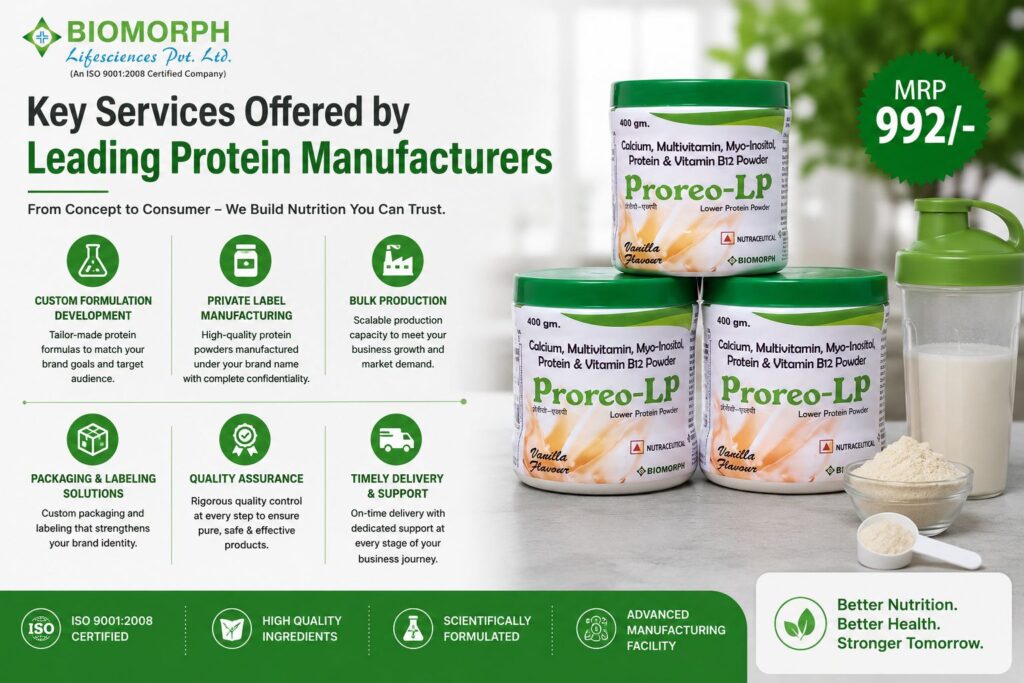
Key Services Offered by Leading Protein Manufacturers
Beyond just producing powder, trusted Protein Powder Manufacturers typically offer a broader suite of services that make life considerably easier for the brands they work with.
Custom Formula Development
- Manufacturers help brands design formulas from scratch, adjusting protein sources, flavor profiles, and sweeteners.
- Functional additives like digestive enzymes or added vitamins can be built into the formula.
- This service is especially valuable for brands trying to differentiate themselves rather than reselling a generic blend.
Private Label Protein Powder Manufacturing
- Private labeling lets a brand sell a manufacturer’s existing formulation under its own name and packaging.
- It’s a faster, lower-cost route to market for newer businesses without the volume or budget for a fully custom formula.
- Brands still retain full ownership of branding and the customer relationship.
Bulk Production for Expanding Businesses
- As demand grows, brands need manufacturers capable of scaling output without slowing turnaround time.
- Leading manufacturers structure operations specifically to handle large-volume orders efficiently.
- This becomes critical once a brand moves beyond its early growth stage.
Packaging, Labeling, and Branding Support
- Many manufacturers extend into packaging design, label compliance checks, and branding guidance.
- Regulatory labeling requirements can be detailed and easy to get wrong without support.
Factors Growing Brands Should Evaluate Before Selecting a Manufacturing Partner
Choosing the right Protein Powder Manufacturers is a long-term commitment, so it’s worth being deliberate about a few key evaluation points.
Production Capacity That Supports Business Growth
- A manufacturer without room to scale can become a bottleneck the moment sales pick up.
- Ask directly about maximum production capacity.
- Confirm how quickly they can ramp up output when order volumes increase.
Transparent Quality Testing and Documentation
- A trustworthy partner shares testing protocols, certificates of analysis, and batch records without hesitation.
- Vague or resistant responses about quality documentation are a warning sign.
- Documentation should be available on request, not just promised verbally.
Flexible Minimum Order Quantities
- Newer or smaller brands often can’t commit to enormous production runs right away.
- Flexible minimum order quantities make it easier to test new flavors or formulas.
- This reduces financial risk during the early stages of a product launch.
Reliable Delivery Timelines and Inventory Management
- Stockouts can be devastating for a growing brand, especially during a demand spike.
- Manufacturers with dependable delivery timelines help avoid “out of stock” situations.
- Proactive inventory planning protects both sales and reputation.
A quick checklist worth keeping in mind when evaluating potential partners:
- Verified production capacity and scalability plans
- Willingness to sharethird-party testing results
- Reasonable and flexible order minimums
- Track record of on-time delivery
- Clear communication channels and dedicated account support
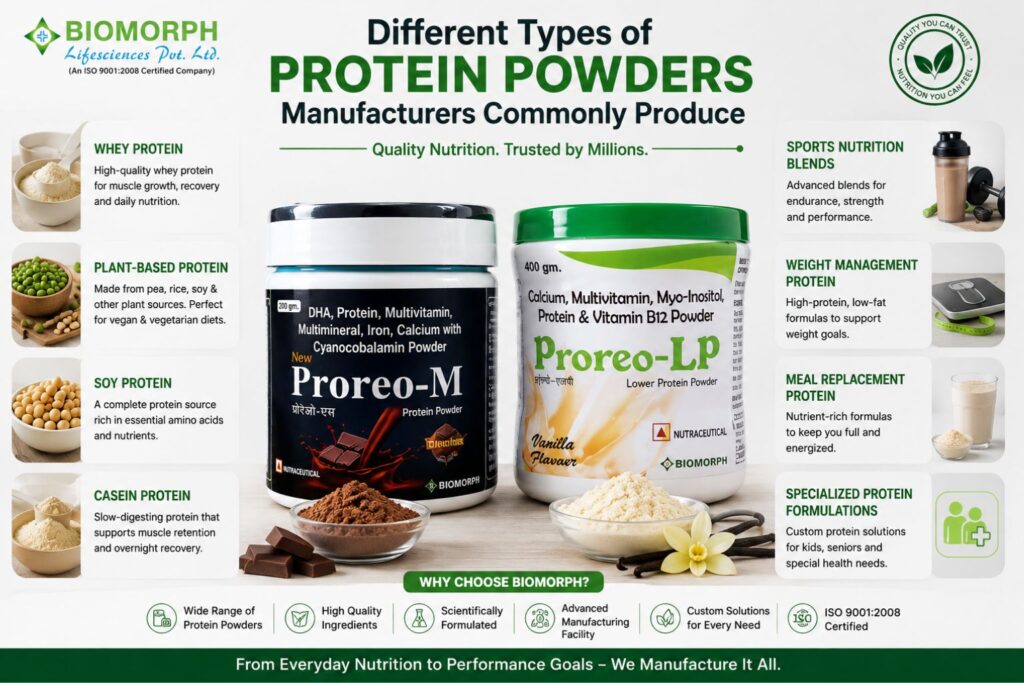
Different Types of Protein Powders Manufacturers Commonly Produce
Understanding the range of products that Protein Powder Manufacturers can produce helps brands determine whether a manufacturing partner aligns with their product portfolio and long-term growth goals.
Whey Protein Products
- Whey remains the most popular protein source thanks to fast absorption and a complete amino acid profile.
- Manufacturers typically offer whey concentrate, isolate, and hydrolysate variants.
- Each variant suits different customer needs and price points.
Plant-Based Protein Blends
- Vegan and flexitarian diets have pushed pea, rice, hemp, and blended plant proteins into a major growth category.
- Producing these well requires careful formulation to match taste and texture.
- The goal is matching what consumers expect from dairy-based alternatives.
Soy and Casein Protein Formulations
- Soy protein offers a complete amino acid profile and works well in sports nutrition and general wellness products.
- Casein’s slow-digesting properties make it popular for nighttime or meal-replacement formulas.
- Manufacturers experienced with both give brands more flexibility in their product lineup.
Sports Nutrition and Functional Protein Mixes
- Specialized blends combine protein with creatine, BCAAs, electrolytes, or other functional ingredients.
- These mixes are typically targeted at athletes and serious fitness enthusiasts.
- They require more technical expertise to balance taste, solubility, and ingredient interactions.
How Experienced Protein Manufacturers Help Brands Stay Competitive
Working with a seasoned manufacturing partner gives brands advantages that go well beyond simply getting product made.
Faster Product Launches
- Established processes and pre-tested base formulas move new products from concept to shelf faster.
- Speed to market often determines who captures early customer attention.
- This matters most in a fast-moving, trend-driven category.
Support for Product Innovation
- Experienced manufacturers stay close to ingredient trends and consumer research.
- They can proactively suggest new formulations, flavors, or functional additions.
- This helps brands stay ahead of shifting customer preferences.
Scalable Manufacturing for Increasing Demand
- Established manufacturers build flexibility into operations to absorb sudden demand increases.
- Brands avoid the disruption of switching suppliers mid-growth.
- Scalability planning is built in from the start rather than figured out reactively.
Cost-Effective Production Without Compromising Quality
- Economies of scale and streamlined sourcing relationships help keep costs manageable.
- Optimized production lines reduce waste and inefficiency.
- Brands stay price-competitive without cutting corners on ingredient quality.
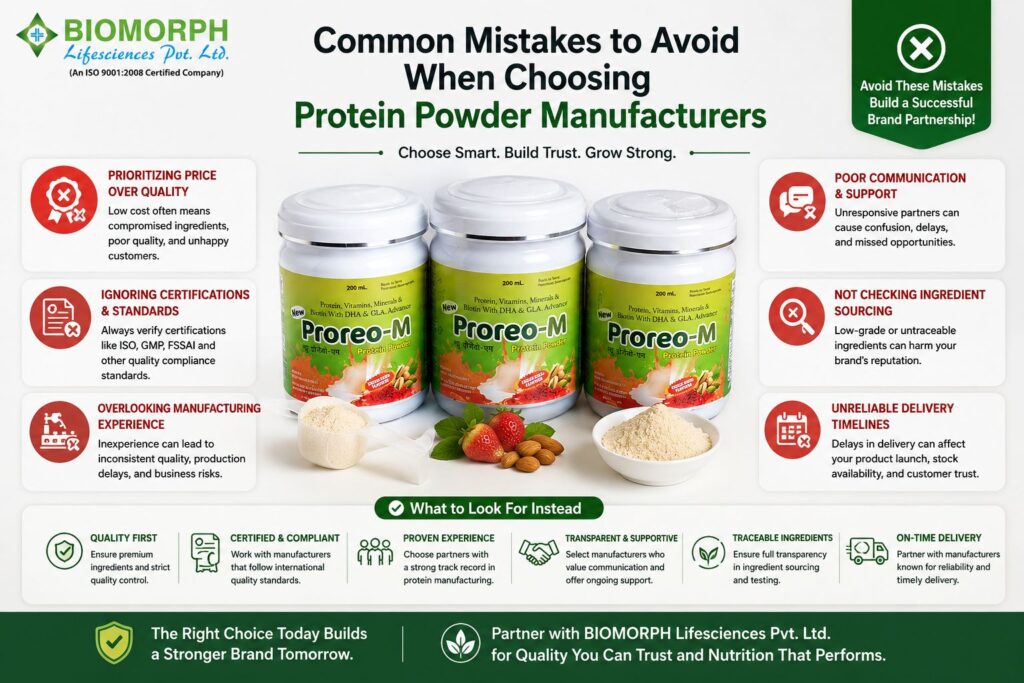
Common Mistakes to Avoid When Choosing Protein Powder Manufacturers
Even well-intentioned brands sometimes make avoidable errors when selecting a manufacturing partner.
Prioritizing Low Cost Over Product Quality
- The cheapest quote isn’t always the smartest choice.
- Cutting corners on ingredient quality or testing can lead to far more expensive problems later.
- Product recalls and customer trust issues cost far more than the savings ever justify.
Ignoring Certifications and Manufacturing Standards
- Skipping the step of verifying certifications is a risky shortcut.
- Brands should confirm compliance credentials directly rather than taking a manufacturer’s word for it.
- Certification checks should happen before any contract is signed.
Overlooking Communication and Technical Support
- Slow or unclear communication during the sales process rarely improves after signing.
- Responsive communication is a strong early indicator of how the partnership will function.
- Technical support matters most when something unexpected comes up mid-production.
Choosing Partners Without Industry Experience
- Newer or inexperienced manufacturers may offer attractive pricing.
- They often lack the process refinement that comes from years of handling protein formulations.
- Industry experience tends to translate directly into fewer production errors and smoother scaling.
Why Long-Term Manufacturing Partnerships Drive Sustainable Growth
A manufacturing relationship with protein powder manufacturers that lasts years, rather than months, tends to compound in value for a supplement brand
- Building customer confidence through consistent quality – Customers notice consistency, even if they can’t articulate exactly why they trust a particular brand.
- Maintaining product availability as demand increases – A manufacturer who understands a brand’s production history can plan capacity more accurately and reduce stockout risk.
- Creating opportunities for continuous product improvement – A manufacturer that knows a brand well can suggest formulation tweaks, cost efficiencies, and new product ideas based on real production data.
Conclusion
Dependable protein powder manufacturers share a common thread From custom formula development to private labeling and bulk production, the right manufacturing partner does far more than fill orders — they become an extension of the brand’s own quality standards and growth strategy. For any business serious about building a lasting presence in the protein supplement space, the right protein powder manufacturers offer more than production capacity; they provide the quality assurance, innovation support, and reliability needed to compete in an increasingly demanding market. Businesses evaluating their options should take the time to vet potential partners thoroughly, ask the harder questions about testing and certifications, and prioritize manufacturers whose values and capabilities genuinely align with their long-term growth goals.
Frequently Asked Questions (protein powder manufacturers)
Q. What do protein powder manufacturers actually do?
Ans.They handle the full production process — from sourcing raw protein ingredients like whey, soy, or pea protein, to blending, testing, and packaging the final product. Many protein powder manufacturers also offer formulation development, private labeling, and bulk production for brands of different sizes.
Q. How do I choose the right protein powder manufacturers for my brand?
Ans.Look at their production capacity, certifications (like GMP or ISO), minimum order quantities, and willingness to share quality testing documentation. It also helps to check their experience with the specific protein type you want to sell, whether that’s whey, plant-based, or a specialty blend.
Q. What’s the difference between private label and custom formula protein powder manufacturers?
Ans.Private label protein powder manufacturers let you sell an existing formula under your own brand name and packaging — it’s faster and cheaper to launch. Custom formula manufacturers build a recipe from scratch based on your specific taste, ingredient, or functional requirements, which takes more time but gives you full control over the product.
Q. Do protein powder manufacturers offer packaging and labeling support?
Ans.Many established protein powder manufacturers do. This can include package design, label compliance checks, and sometimes branding guidance, which is especially helpful for newer brands without an in-house packaging team.