The right supplement can do more than fill a space in a pharma product catalogue—it can open new opportunities for business growth. A fish oil dietary supplement is an increasingly relevant addition for pharma businesses building a broader nutritional portfolio. However, selecting the right product requires careful attention to quality, formulation, packaging, supply capacity, and commercial terms. For distributors and bulk buyers, the supplier behind the product can be just as important as the product itself. Whether you are expanding an existing range or exploring nutritional products for new markets, understanding what to look for in a supplier can help you make smarter sourcing decisions and build a dependable product portfolio.
Fish Oil Supplements in the Pharma Market
The pharma and nutritional supplement market continues to create opportunities for businesses seeking products that fit changing customer preferences. A fish oil dietary supplement can be a valuable addition to a distributor’s portfolio when the product offers consistent quality, clear specifications, and suitable packaging. For pharma businesses, the focus should not only be on product demand but also on whether the supplier can support regular commercial requirements.
Pharma businesses can add a fish oil dietary supplement to their nutritional product portfolio to serve growing customer requirements.
Fish oil products can serve different segments, including pharmacies, wellness retailers, healthcare businesses, and nutritional product distributors. This gives B2B buyers scope to position the product within a broader supplement range rather than relying on a single category.
- Product formulation and specifications
- Manufacturing standards and quality controls
- Packaging and labelling
- Bulk-order capacity
- Pricing and commercial terms
- Delivery consistency
A well-selected product can also complement related nutritional categories. For example, antioxidant food supplements may be included alongside fish oil products to create a more diverse portfolio for retailers and distributors.
However, adding a new supplement category should be based on actual business requirements. Buyers should consider their target customers, preferred pack formats, storage capacity, expected order volumes, and supplier reliability before committing to inventory.
For pharma businesses, the supplier relationship matters just as much as the product itself. A dependable partner can make regular purchasing, stock planning, and order fulfilment easier. By evaluating product quality alongside commercial terms and supply capabilities, distributors can make more practical sourcing decisions and develop a nutritional portfolio that is better suited to their B2B market.
Choosing Antioxidant Food Supplements for a Wider Product Portfolio
Building a strong nutritional product portfolio is not simply about adding more products to a catalogue. For pharma businesses, every new category should have a clear purpose, suitable market demand, and dependable supply behind it. Antioxidant food supplements can complement an existing nutritional range by giving distributors another category to offer alongside vitamins, minerals, and products such as a fish oil dietary supplement.
How Antioxidant Products Complement Nutritional Ranges
A diversified portfolio can help pharma distributors serve customers with different nutritional preferences. Instead of depending on one type of supplement, businesses can create a broader selection that includes products from complementary categories. This approach may make the catalogue more useful for pharmacies, retailers, wellness businesses, and other B2B buyers.
When adding a new category, distributors should first consider how it fits with their current product range. For example, a business already supplying nutritional supplements may find it practical to introduce antioxidant-focused products alongside existing products. The goal is to create a balanced catalogue rather than simply increase the number of SKUs.
Product presentation also matters. Clear labels, appropriate pack sizes, professional packaging, and easy-to-understand product information can make inventory more convenient for distributors and retailers.
Understanding Different Buyer Requirements
B2B customers can have very different purchasing priorities. A pharmacy may focus on product specifications and packaging, while a wholesaler may be more concerned with bulk pricing, order quantities, and regular availability. Understanding these differences helps distributors select products that are more suitable for their target market.
Before expanding the portfolio, businesses can evaluate:
- Preferred product formats among existing customers
- Common pack sizes and order quantities
- Storage requirements
- Expected repeat-order frequency
- Supplier production capacity
- Wholesale pricing and commercial terms
- Product documentation and labelling
This type of evaluation can prevent businesses from purchasing products that may remain in inventory for longer than expected.
Selecting Products Based on Market Demand
Product selection should begin with the needs of the market rather than assumptions. Distributors can review their existing sales patterns, speak with retail customers, and identify which nutritional categories are receiving regular enquiries. This provides a practical basis for deciding which products deserve space in the portfolio.
For businesses considering antioxidant food supplements, supplier evaluation should be part of the purchasing process. Manufacturing capabilities, quality-control practices, product specifications, packaging standards, and supply consistency can all influence the suitability of a product for B2B distribution.
Pricing should also be considered carefully. The cheapest quotation may not always provide the most suitable commercial arrangement if packaging, delivery, minimum order quantities, or supply reliability create additional challenges. Comparing the complete offer gives buyers a clearer picture of the actual business value.
Creating a More Flexible Nutritional Portfolio
A broader product range can give distributors greater flexibility when responding to different customer requirements. However, portfolio expansion should remain organised. Too many unrelated products can increase inventory complexity and make stock management more difficult.
A practical approach is to select complementary categories and work with suppliers capable of supporting consistent replenishment. A fish oil dietary supplement, for example, can sit within a wider nutritional range when its product specifications and commercial terms align with the distributor’s target market.
Ultimately, successful portfolio development depends on choosing products that fit customer demand, business capacity, and supplier reliability. By assessing these factors before purchasing, pharma businesses can create a more useful nutritional catalogue while keeping sourcing and inventory decisions commercially focused.
What Pharma Businesses Should Check Before Bulk Purchasing
Bulk purchasing is a major step for pharma businesses because one sourcing decision can influence inventory, pricing, customer satisfaction, and future orders. When buying a fish oil dietary supplement, businesses should therefore evaluate the complete product and supplier offering instead of choosing an option based only on the quoted price. A careful review before placing an order can help create a smoother and more dependable supply process.
Manufacturer Experience and Production Capacity
The first step is to understand the supplier behind the product. Pharmaceutical company should review the manufacturer’s production capabilities, quality-control practices, manufacturing standards, and ability to handle regular orders. A supplier with suitable production capacity can be more practical for businesses expecting repeat purchases or increasing their distribution volume.
It is also useful to ask how the supplier manages batch consistency. Product specifications should remain clear and consistent across orders so distributors can maintain confidence when supplying pharmacies, retailers, and other B2B customers.
Quality Standards and Product Documentation
Product quality should be carefully assessed before confirming a bulk purchase. Buyers can request relevant product specifications, ingredient information, batch details, testing documentation, and applicable quality or regulatory records.
Clear documentation helps businesses understand exactly what they are purchasing and makes internal product evaluation easier. This is particularly useful when expanding a portfolio with nutritional products such as antioxidant food supplements, where different formulations and product specifications may be available.
Minimum Order Quantity and Pricing
Minimum order quantity can have a direct effect on inventory planning. A large MOQ may be suitable for an established distributor but could create unnecessary stock pressure for a business testing a new product category.
Pricing should also be considered alongside other commercial factors. Before finalising an order, compare:
- Product price and applicable commercial terms
- Minimum order quantity
- Packaging and pack-size options
- Payment conditions
- Delivery charges and timelines
- Availability for repeat orders
- Potential volume-based pricing
Looking at the complete quotation provides a better understanding of the actual purchasing cost.
Supply Continuity and Delivery Timelines
Reliable supply is essential when products are being distributed through multiple sales channels. Delayed replenishment can affect retailer relationships and make inventory planning difficult. Pharma businesses should ask suppliers about production lead times, stock availability, order processing, and expected delivery schedules.
A supplier should also be able to communicate clearly if production or dispatch timelines change. This gives distributors an opportunity to adjust their purchasing plans rather than discovering supply problems after an order has already been placed.
A Practical Checklist Before Confirming the Order
Before purchasing a fish oil dietary supplement in bulk, businesses can review the following:
- Product formulation and specifications
- Quality and medicine manufacturing
- Packaging and labelling information
- Supplier production capacity
- MOQ and wholesale pricing
- Delivery and replenishment timelines
- Customer support and communication
- Long-term supply availability
A thoughtful purchasing process can help pharma businesses reduce avoidable sourcing issues and maintain better control over their inventory. Whether the requirement is for fish oil products or antioxidant food supplements, evaluating quality, pricing, documentation, and supply reliability together creates a stronger foundation for long-term B2B distribution.
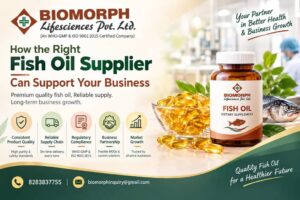
How the Right Fish Oil Supplier Can Support Your Business
For pharma businesses, a supplier should provide more than a product at a competitive price. The right sourcing partner can make purchasing, inventory planning, and regular distribution much easier. When selecting a supplier for a fish oil dietary supplement, businesses should consider how well the partner can support both immediate requirements and future growth. A quality fish oil dietary supplement should have clear product specifications, suitable packaging, and reliable supply support.
Consistent Product Availability
Regular stock availability is important for distributors serving pharmacies, retailers, and other B2B customers. If a supplier can maintain a dependable production and dispatch schedule, businesses can plan inventory with greater confidence and reduce the risk of unexpected stock gaps.
Before starting a partnership, buyers should discuss production capacity, expected lead times, reorder procedures, and the supplier’s ability to manage recurring requirements. Clear communication around these areas can make routine purchasing more predictable. A reliable fish oil dietary supplement supplier can support businesses with regular bulk requirements.
Competitive B2B Pricing
Commercial pricing plays an important role when purchasing nutritional products in volume. However, buyers should evaluate the complete commercial offer rather than focusing only on the initial quotation.
Factors such as minimum order quantity, packaging, payment terms, shipping arrangements, and volume-based pricing can influence the overall cost. A transparent supplier can help businesses understand these terms before confirming an order.
Reliable Order Fulfilment
Once an order is placed, timely processing and delivery become important parts of the supplier relationship. Delays can affect inventory levels and create difficulties for distributors managing multiple customer orders.
A dependable supplier should provide clear information about order confirmation, production schedules, dispatch timelines, and delivery expectations. Consistent fulfilment also makes it easier for businesses to plan their next purchase.
Long-Term Supply Support
A good B2B relationship should remain useful after the first transaction. As demand develops, pharma businesses may need larger quantities, additional pack sizes, or related nutritional products. A supplier with suitable production capabilities can make this expansion easier to manage.
Businesses that already distribute nutritional products may also explore complementary categories, including antioxidant food supplements, when these products fit their customer base and portfolio strategy. Having access to related categories can simplify sourcing and provide more flexibility when developing a broader product range.
Choosing a Supplier With Business Needs in Mind
Before finalising a partnership, pharma businesses can assess:
- Manufacturing and supply capacity
- Product specifications and quality documentation
- Bulk pricing and MOQ
- Packaging and labelling options
- Order processing and delivery timelines
- Communication and customer support
- Ability to handle repeat requirements
Ultimately, the right supplier should fit the way your business purchases, stores, and distributes products. For a fish oil dietary supplement, evaluating quality alongside supply reliability, commercial terms, and service can help create a stronger B2B sourcing relationship. A well-matched supplier can support smoother operations today while providing a practical foundation for future portfolio expansion.
Conclusion
For pharma businesses, choosing the right fish oil dietary supplement can support a broader and more competitive nutritional product portfolio. However, product quality, formulation, packaging, pricing, documentation, and consistent supply should all be considered before placing bulk orders. Businesses can also explore complementary categories such as antioxidant food supplements to meet different customer requirements and strengthen their product range. A dependable supplier can make sourcing easier by supporting regular availability and smooth order fulfilment. Biomorph Lifesciences can be approached by pharma businesses looking to discuss supplement sourcing and B2B requirements, helping them explore suitable options for their market and distribution needs.
Frequently Asked Questions
Q. What is a fish oil dietary supplement?
A fish oil dietary supplement is a nutritional product made using fish-derived oils and is commonly available in formats such as softgel capsules. Pharma businesses may include these products in their nutritional supplement portfolios.
Q. Why should pharma businesses consider fish oil supplements?
Fish oil products can help businesses expand their supplement range and offer customers additional nutritional product choices. Product specifications and market demand should be reviewed before sourcing.
Q. What should I check before buying fish oil supplements in bulk?
Check the manufacturer’s production capacity, product composition, quality documentation, packaging specifications, MOQ, pricing, and delivery schedule before confirming a bulk order.
Q. Can antioxidant food supplements be included in the same product portfolio?
Yes. Antioxidant food supplements can complement a wider nutritional range. Businesses should select products according to customer demand, product positioning, and their distribution market.
Q. How can Biomorph Lifesciences help with supplement requirements?
Businesses can contact Biomorph Lifesciences to discuss their B2B supplement requirements, product sourcing needs, packaging preferences, and bulk-order expectations.
Instagram : Follow Us For The Latest Update