
Starting a business in the healthcare sector doesn’t always require setting up a manufacturing unit or investing huge amounts of capital. A pharma franchise offers a practical way to enter one of India’s fastest-growing industries while benefiting from an established product range and brand support. Whether you’re a first-time entrepreneur or an experienced distributor looking to expand, this business model can open the door to steady growth and long-term profitability. But success depends on making informed decisions from the very beginning. In this guide, you’ll discover how a pharma franchise works, what to consider before investing, and the strategies that can help your business thrive.
Why the Pharma Franchise Model Is Growing Rapidly
The healthcare industry continues to expand as people become more aware of preventive care, quality medicines, and timely treatment. This steady demand has created excellent opportunities for entrepreneurs, making a pharma franchise one of the most preferred business models in the pharmaceutical sector. Unlike starting a manufacturing unit, this model allows you to focus on marketing and distribution while receiving support from an established company.
Growing Demand for Healthcare Products
Several factors are driving the popularity of the pharmaceutical market:
- Rising healthcare awareness among people.
- Increasing demand for prescription and over-the-counter medicines.
- Growth of hospitals, clinics, and retail pharmacies across urban and rural areas.
- Continuous introduction of new pharmaceutical products to meet changing medical needs.
These developments create a strong foundation for anyone planning to start a pharma franchise business.
Why Entrepreneurs Prefer a Pharma Franchise
Many business owners choose this model because it offers a practical and lower-risk way to enter the pharmaceutical industry.
Key advantages include:
- Lower investment compared to pharmaceutical manufacturing.
- Access to a wide range of ready-to-market products.
- Brand recognition that helps build customer trust.
- Marketing and promotional support from the parent company.
- Opportunity to operate in exclusive territories, depending on the company.
These benefits make a pharma franchise suitable for both new entrepreneurs and experienced pharmaceutical distributors.
Expanding Opportunities in India
India’s pharmaceutical sector continues to grow due to increasing healthcare needs and improved access to medicines. This has created strong demand for reliable distribution partners in different regions.
For entrepreneurs, a pharma franchise business offers the chance to:
- Build long-term relationships with doctors, hospitals, and pharmacies.
- Expand product offerings as the business grows.
- Generate consistent revenue by serving an essential industry.
- Scale operations with the support of an experienced pharmaceutical company.
Choosing the right pharma franchise partner can help you establish a sustainable business with long-term growth potential in this rapidly expanding healthcare market.

Understanding the Pharma Franchise Model: How It Works
A pharma franchise is a business arrangement in which a pharmaceutical company allows an individual or distributor to market and sell its products in a specific area. Instead of manufacturing medicines yourself, you work with an established company that provides ready-made products, branding, and business support.
For many entrepreneurs, this is an easier way to enter the healthcare industry because the company handles production while the franchise partner focuses on sales and distribution.
The Basic Concept Explained Simply
Company
The pharmaceutical company
Manufactures medicines, maintains quality standards, and supplies products.
Partner
The franchise partner
Promotes, distributes, and sells those products to doctors, pharmacies, clinics, and hospitals.
This model allows both parties to focus on what they do best. The company concentrates on manufacturing, while the franchise partner builds local market relationships.
How the Pharma Franchise Process Works
- Choose a territoryThe company assigns a district, city, or region to the franchise partner.
- Receive productsMedicines are supplied directly by the parent company.
- Promote the productsThe partner meets doctors, chemists, and healthcare providers to generate demand.
- Sell and distributeOrders are collected and supplied within the assigned territory.
- Earn marginsProfit comes from the difference between the purchase price and the selling price.
Why This Model Is Popular
Lower investment
No need to build a manufacturing facility.
Established products
You sell medicines that already meet quality standards.
Business support
Many companies provide promotional materials and guidance.
Scalable growth
You can expand your customer network over time.
How a Pharma Franchise Business Generates Revenue
In a pharma franchise business, earnings usually come from product margins. For example, if a medicine is purchased from the company at a lower rate and sold to pharmacies or distributors at a higher rate, the difference becomes your profit. As your customer base grows, monthly order volumes can increase, improving overall profitability.
Buy from company
Lower rate
Sell to market
Higher rate
Your margin
Profit
A Practical Example
Imagine a franchise partner receives a portfolio of antibiotics, pain-relief medicines, and nutritional products. By regularly visiting doctors and pharmacies, the partner builds trust and secures repeat orders. Over time, the pharma franchise business grows through consistent relationships rather than large one-time sales.
Key takeaway
Simple, scalable, and practical
A pharma franchise is essentially a partnership where manufacturing expertise meets local market knowledge. When you choose a reliable company and focus on building strong customer relationships, this model can become a practical path to long-term growth in the pharmaceutical industry.
What Is a Pharma Franchise and How Does It Work?
A pharma franchise is a business arrangement in which a pharmaceutical company authorizes an individual or distributor to market and sell its products in a specific area. Instead of manufacturing medicines, the franchise partner focuses on promoting and distributing products while benefiting from the company’s established portfolio and business support. This model allows entrepreneurs to enter the pharmaceutical sector with lower investment and reduced operational complexity.
Understanding the Basic Concept
The idea behind a pharma franchise is simple and business-friendly.
- A pharmaceutical company develops and manufactures medicines.
- A franchise partner receives the right to market and distribute those products.
- The partner operates within an assigned territory.
- Revenue is generated through product sales and distribution activities.
This arrangement creates a mutually beneficial relationship where both parties contribute to business growth.
Roles of the Parent Company and Franchise Partner
The success of a franchise depends on clear responsibilities from both sides.
Responsibilities of the Parent Company:
- Manufacturing quality pharmaceutical products.
- Ensuring regulatory compliance and quality standards.
- Providing promotional materials and product information.
- Offering business support and timely product supply.
Responsibilities of the Franchise Partner:
- Building relationships with doctors, pharmacies, and healthcare providers.
- Promoting products within the assigned territory.
- Managing orders and customer requirements.
- Expanding market reach and increasing sales.
When both parties perform their roles effectively, business growth becomes more achievable.
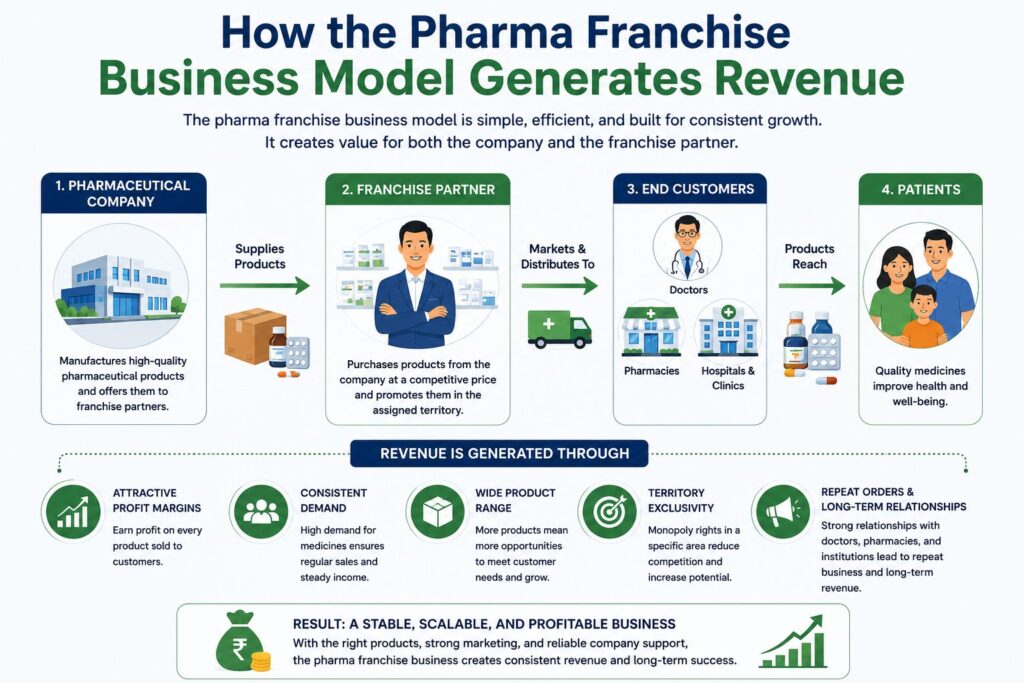
How the Pharma Franchise Business Model Generates Revenue
A pharma franchise business earns income by purchasing products from the parent company and supplying them to healthcare professionals, retailers, and distributors at profitable margins.
Common revenue drivers include:
- Consistent demand for pharmaceutical products.
- Expanding customer networks.
- Introducing new products to existing clients.
- Increasing market coverage within the allocated territory.
As customer relationships strengthen, the pharma franchise business can create a stable source of income and long-term growth. With the right company support, effective marketing efforts, and a strong product portfolio, a pharma franchise can become a rewarding opportunity for entrepreneurs looking to build a sustainable presence in the healthcare industry.
Benefits of Starting a Pharma Franchise Business
A pharma franchise offers an excellent opportunity for entrepreneurs who want to enter the healthcare industry without the challenges of manufacturing medicines. With growing demand for quality healthcare products and increasing access to medical services, this business model provides a practical path to long-term growth. A well-planned pharma franchise business can help you build a reliable customer base while benefiting from the support of an established pharmaceutical company.
Lower Business Risk Compared to Manufacturing
Starting a manufacturing unit requires significant investment, specialized equipment, and regulatory approvals. A pharma franchise reduces many of these challenges.
Key benefits include:
- Lower initial investment.
- No manufacturing setup or production costs.
- Reduced operational complexity.
- Faster business launch.
This allows entrepreneurs to focus more on sales and market expansion.
Access to Established Product Portfolios
One of the biggest advantages of joining a reputable pharmaceutical company is immediate access to a wide range of products.
With a pharma franchise business, you can benefit from:
- Ready-to-market pharmaceutical products.
- Multiple product categories for different healthcare needs.
- Consistent product availability.
- Better customer confidence through quality offerings.
A diverse product portfolio also helps meet the needs of different healthcare professionals and pharmacies.
Marketing and Business Support
Many pharmaceutical companies provide valuable resources that help franchise partners grow their business.
These may include:
- Product brochures and promotional materials.
- Training on product knowledge.
- Sales guidance and business strategies.
- Customer support for smooth operations.
Such assistance allows franchise partners to build stronger relationships with doctors, clinics, and retailers.
Better Profit Potential with Growing Demand
Healthcare remains one of the most stable industries because medicines are always in demand. As your customer network expands, your earning potential can also increase.
A successful pharma franchise business can provide:
- Consistent sales opportunities.
- Attractive profit margins.
- Long-term customer relationships.
- Steady business growth across expanding markets.
By choosing a trusted pharma franchise company and maintaining excellent customer service, entrepreneurs can create a sustainable business with strong growth potential while contributing to better healthcare access in their region.
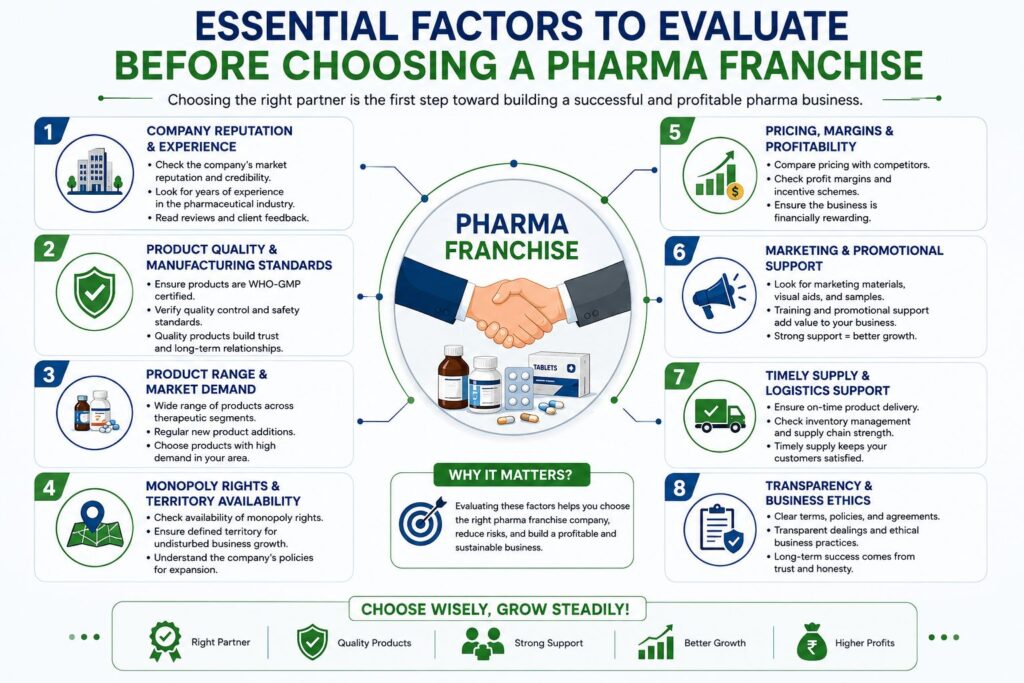
Essential Factors to Evaluate Before Choosing a Pharma Franchise
Selecting the right pharma franchise is one of the most important decisions for building a successful business. Not every pharmaceutical company offers the same level of quality, support, or growth opportunities. Taking time to evaluate key factors before investing can help you establish a profitable pharma franchise business and avoid unnecessary challenges in the future.
Company Reputation and Industry Experience
A company’s reputation reflects its reliability and commitment to quality.
Before making a decision, consider:
- Years of experience in the pharmaceutical industry.
- Customer reviews and market reputation.
- Strong relationships with healthcare professionals.
- Consistent business performance.
Working with an experienced company increases confidence and long-term business stability.
Product Quality and Manufacturing Standards
High-quality products are essential for earning the trust of doctors, pharmacists, and patients.
Check whether the company offers:
- Products manufactured under certified quality standards.
- Strict quality control processes.
- Safe and effective pharmaceutical formulations.
- Compliance with industry regulations.
Reliable product quality helps strengthen your market presence.
Product Range and Market Demand
A diverse product portfolio allows you to serve different customer needs.
Look for a pharma franchise that provides:
- Tablets, capsules, syrups, injections, and other dosage forms.
- Products across multiple therapeutic segments.
- Regular introduction of new medicines.
- Strong demand in your target market.
A wider product selection creates more sales opportunities for your pharma franchise business.
Monopoly Rights and Territory Availability
Exclusive distribution rights can give your business a competitive advantage.
Before signing an agreement, confirm:
- Availability of monopoly rights.
- Clearly defined sales territory.
- Business policies for expansion.
- Protection from internal competition.
This helps you build a loyal customer base within your assigned region.
Pricing, Margins, and Business Transparency
Profitability depends on fair pricing and transparent business practices.
Evaluate the company based on:
- Competitive product pricing.
- Attractive profit margins.
- Clear payment and delivery terms.
- Honest communication and reliable customer support.
Choosing the right pharma franchise partner is the foundation of a successful pharma franchise business. Careful evaluation of these factors can help you reduce risks, build lasting customer relationships, and create a business with strong long-term growth potential.
Common Challenges in a Pharma Franchise Business
Every business comes with its own set of challenges, and a pharma franchise is no exception. While the pharmaceutical industry offers excellent growth opportunities, success depends on how well you handle everyday business obstacles. Understanding these challenges in advance can help you build a stronger pharma franchise business and make better decisions as your business grows.
Managing Market Competition
The pharmaceutical market is highly competitive, with many companies offering similar products.
To stay ahead, focus on:
- Building strong relationships with doctors and pharmacists.
- Providing reliable customer service.
- Offering quality products at competitive prices.
- Maintaining regular communication with healthcare professionals.
A professional approach can help your pharma franchise stand out in a crowded market.
Maintaining Product Availability
Customers expect medicines to be available when they need them. Delays in product supply can affect both sales and customer trust.
To reduce supply issues:
- Monitor inventory regularly.
- Place orders before stock runs low.
- Work with a company known for timely deliveries.
- Keep track of high-demand products.
Consistent product availability helps improve customer satisfaction and repeat business.
Building Trust with Healthcare Professionals
Doctors, clinics, and pharmacies prefer working with distributors they can rely on. Building these relationships takes time and consistent effort.
You can strengthen trust by:
- Providing accurate product information.
- Delivering orders on schedule.
- Responding quickly to customer queries.
- Maintaining professional and ethical business practices.
Long-term relationships often lead to steady business growth.
Staying Compliant with Industry Regulations
The pharmaceutical industry follows strict quality and regulatory guidelines. Failing to meet these requirements can create legal and operational problems.
Important areas to focus on include:
- Maintaining valid business licenses.
- Following company policies and regulatory standards.
- Keeping proper sales and inventory records.
- Staying informed about industry updates.
A successful pharma franchise business is built on careful planning, consistent service, and continuous learning. By preparing for these common challenges and working closely with a trusted pharma franchise company, you can overcome obstacles, improve customer confidence, and create a stable business with long-term growth potential.
Final Thoughts
Starting a pharma franchise is a smart choice for entrepreneurs who want to build a business in the growing healthcare industry. From understanding how the business model works to evaluating the right company and preparing for common challenges, every step plays an important role in long-term success. Careful planning, quality products, and strong customer relationships can help create a stable and profitable business.A successful pharma franchise business is not just about selling medicines—it is about partnering with a reliable pharmaceutical company that supports your growth with quality products, timely delivery, and transparent business practices. Choosing the right partner allows you to serve healthcare professionals more effectively while expanding your market presence.If you are looking for a trusted name to begin your journey, Biomorph Life Sciences offers a wide range of quality pharmaceutical products, competitive business opportunities, and dedicated franchise support. With the right strategy and a dependable partner, your pharma franchise can grow into a profitable and sustainable pharma franchise business for years to come.