A growing pharma business does not always need a bigger factory, it may simply need the right manufacturing partner. As product demand increases, managing production, quality, packaging, and timely supply can become challenging for an expanding company. This is where Third Party Manufacturing Pharma Companies can make a practical difference. By outsourcing manufacturing, businesses can add new products, increase production capacity, and enter new markets without taking on the full burden of setting up their own facility. But choosing a suitable manufacturing partner requires more than comparing prices. Quality standards, capabilities, timelines, and reliability all matter. Let’s explore how the right partner can support sustainable pharma business expansion.
Why Pharma Businesses Turn to Third-Party Manufacturing for Expansion
Expanding a pharmaceutical business sounds exciting until production demands start increasing. More products mean more raw materials, manufacturing schedules, quality checks, packaging requirements, and delivery coordination. Building a dedicated manufacturing facility can also require substantial investment, time, and operational expertise. This is why many growing businesses explore partnerships with Third Party Manufacturing Pharma Companies.
Growing Production Needs Without a New Manufacturing Plant
Third-party manufacturing allows a business to outsource production to an established manufacturer instead of developing its own facility. This can help companies increase output while keeping their attention on sales, distribution, branding, and market development.

Expanding Products and Markets More Efficiently
A reliable manufacturing partner can also make it easier to introduce additional formulations and serve new markets. Businesses can plan production according to demand rather than making large infrastructure investments at the beginning.
For growing pharmaceutical companies, 3rd party pharma manufacturing companies can provide access to existing production capabilities and manufacturing expertise. However, expansion should not be based on production capacity alone. Businesses should also examine:
- Product quality and testing procedures
- Manufacturing certifications and standards
- Packaging and labeling capabilities
- Minimum order requirements
- Production timelines
- Delivery and coordination support
Choosing suitable Third Party Manufacturing Pharma Companies can therefore become an important part of a structured expansion plan.
For companies considering 3rd party pharma manufacturing companies, the goal should be more than simply finding someone who can manufacture products. A dependable partner can help maintain consistent supply while the business focuses on building its product portfolio and reaching new customers. This approach can make expansion more manageable and allow pharmaceutical businesses to scale their operations according to changing market requirements.
Key Quality Checks Before Choosing a Manufacturing Partner
Choosing a pharmaceutical manufacturing partner is not simply about finding a company that can produce medicines at a reasonable cost. Quality, consistency, documentation, and production capabilities can directly affect your business reputation. Before partnering with Third Party Manufacturing Pharma Companies, it is important to check how carefully they manage every stage of manufacturing.
Manufacturing Standards and Certifications
Start by reviewing the manufacturer’s quality systems and relevant certifications. A professional facility should follow established manufacturing practices and maintain proper documentation. Ask for valid certificates and verify whether their manufacturing setup is suitable products you plan to develop.
Raw Material and Finished Product Testing
The quality of a finished medicine begins with its raw materials. Reliable manufacturers should have procedures for checking incoming materials before production. Finished products should also undergo appropriate testing to confirm that they meet specified quality requirements.
When comparing 3rd party pharma manufacturing companies, consider whether they have clearly defined quality-control procedures rather than relying only on marketing claims. A transparent manufacturer should be able to explain its testing process and provide relevant documentation when required.
Quality Control and Documentation
Proper records help maintain consistency from one batch to another. Manufacturing, testing, packaging, and batch-related information should be documented systematically. Good documentation also makes it easier to identify and address quality issues if they arise.
Before finalizing Third Party Manufacturing Pharma Companies, businesses should discuss product specifications, testing requirements, packaging details, and approval procedures in advance. Similarly, 3rd party pharma manufacturing companies should be evaluated for their ability to maintain consistent production standards as order volumes increase. A manufacturer that can handle larger requirements without compromising established quality procedures can support long-term business planning.
What to Check Before Signing an Agreement
Consider reviewing:
- Manufacturing certifications and quality systems
- Product testing and quality-control procedures
- Raw material sourcing and verification
- Batch documentation and traceability
- Packaging and labeling standards
- Production capacity and scalability
- Quality complaint-handling procedures
A careful evaluation helps businesses choose a manufacturing relationship based on measurable factors rather than price alone. When quality expectations are clearly established from the beginning, pharmaceutical expansion becomes easier to manage and product consistency can be maintained as the business grows.
Understanding the Cost of Third-Party Pharma Manufacturing
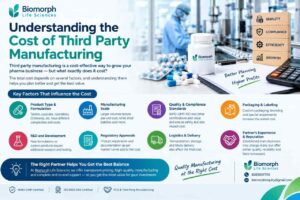
Cost is one of the first things businesses consider when planning pharmaceutical production through an external manufacturer. However, the final expense is rarely based on manufacturing alone. Product formulation, order quantity, packaging, testing, and logistics can all influence the total budget. Understanding these factors helps businesses plan more accurately before approaching Third Party Manufacturing Pharma Companies.
Factors That Influence Manufacturing Costs
The cost of a manufacturing project can vary according to the type of product, dosage form, formulation requirements, raw materials, and production volume. Tablets, capsules, syrups, injections, and other formulations may involve different manufacturing processes and packaging requirements.
When comparing 3rd party pharma manufacturing companies, businesses should look beyond the quoted production price and ask what services are included. A detailed quotation can make it easier to identify additional expenses before placing an order.
Minimum Order and Production Requirements
Manufacturers may have minimum order quantities based on the product and production setup. Ordering larger quantities can sometimes make the per-unit manufacturing cost more economical, but businesses should avoid purchasing volumes that exceed realistic market demand.
Before working with Third Party Manufacturing Pharma Companies, discuss the expected order quantity, production schedule, lead time, and payment terms. Clear information at the beginning can prevent unexpected financial pressure later.
Packaging, Testing and Logistics Expenses
Packaging is another important part of the overall budget. The choice of packaging material, printing requirements, labeling, and design specifications can affect the final price. Product testing and documentation may also contribute to the manufacturing expense, depending on the product and applicable requirements.
Transportation should also be considered, particularly when products are shipped over longer distances. With 3rd party pharma manufacturing companies, businesses can ask for a complete cost breakup covering manufacturing, packaging, testing, and delivery wherever applicable.
A practical cost assessment should therefore include:
- Product and formulation requirements
- Raw material costs
- Order quantity
- Packaging specifications
- Testing and documentation
- Transportation and delivery
- Applicable taxes or additional charges
A clear understanding of these expenses allows businesses to prepare realistic budgets and compare manufacturing proposals more effectively. The objective should be a transparent commercial arrangement that balances production requirements, quality expectations, and long-term business needs.
Common Mistakes to Avoid When Selecting a Pharma Manufacturer
Selecting a pharmaceutical manufacturer is a decision that can influence product quality, supply consistency, and long-term business operations. While pricing and production capacity are important, focusing only on these factors can create problems later. Businesses planning to work with Third Party Manufacturing Pharma Companies should evaluate the complete manufacturing arrangement before making a commitment.
Choosing Only on the Basis of Price
A low quotation may look attractive, but it does not always represent the complete value of a manufacturing service. Extremely low costs can sometimes come with limitations related to packaging, testing, materials, or production support. Instead of comparing prices alone, businesses should examine what each quotation actually includes.
When evaluating 3rd party pharma manufacturing companies, request a clear cost breakdown and compare product specifications, quality procedures, order quantities, and delivery terms along with the price.
Ignoring Quality Documentation
Another common mistake is accepting quality claims without checking supporting documentation. Pharmaceutical products require appropriate quality controls, and businesses should understand how the manufacturer handles raw materials, production, testing, and batch records.
Before finalizing Third Party Manufacturing Pharma Companies, ask relevant questions about certifications, manufacturing standards, testing procedures, and documentation. Keeping these details clear can reduce avoidable complications during production.
Overlooking Production Capacity and Delivery Commitments
A manufacturer may have suitable products and competitive pricing but still struggle with larger orders or tight delivery schedules. If your business plans to expand, production capacity should be considered from the beginning.
It is useful to discuss:
- Current production capacity
- Expected order quantities
- Manufacturing lead times
- Packaging requirements
- Delivery arrangements
- Handling of urgent or additional orders
Businesses comparing 3rd party pharma manufacturing companies should also consider communication. Delayed responses or unclear updates can make production planning difficult, particularly when market demand changes quickly.
Not Planning for Future Requirements
Choosing a manufacturer only for today’s order can create difficulties when your product range expands. Consider whether the company can support additional formulations, larger batches, or changing packaging requirements in the future.
A thoughtful selection process helps businesses avoid unnecessary disruptions and build a manufacturing relationship that can develop alongside their growth. The right evaluation should balance quality, capacity, communication, cost, and long-term requirements rather than relying on a single deciding factor.
Why the Right Manufacturing Partner Matters for Sustainable Expansion
Pharmaceutical expansion is not only about adding more products or reaching new customers. Behind every successful expansion plan is a manufacturing system capable of maintaining quality, meeting demand, and supporting changing business requirements. This is why selecting reliable Third Party Manufacturing Pharma Companies deserves careful attention from the beginning.

Consistent Production Builds Business Stability
When product demand increases, inconsistent supply can affect distributors, retailers, and customers. A dependable manufacturing partner can help maintain planned production schedules and consistent product quality. This gives businesses greater confidence when increasing their market presence.
Quality Should Remain Strong as Orders Grow
Expansion should never mean compromising established quality expectations. Manufacturers need suitable processes for raw material handling, production, testing, packaging, and documentation. Before partnering with 3rd party pharma manufacturing companies, businesses should understand how these processes are managed and monitored.
Flexibility Makes Future Expansion Easier
Business requirements can change quickly. A company may begin with a small product range and later introduce additional formulations or increase batch quantities. A manufacturing partner with suitable capabilities can make these transitions more manageable.
Look for a partner that can offer:
- Scalable production capacity
- Consistent product specifications
- Suitable packaging options
- Clear production timelines
- Responsive communication
- Proper quality documentation
Building a Partnership Instead of a One-Time Arrangement
Long-term growth becomes easier when communication between the business and manufacturer remains clear. Product specifications, order quantities, packaging requirements, timelines, and delivery expectations should be discussed before production begins.
Working with Third Party Manufacturing Pharma Companies can also allow businesses to focus more attention on distribution, marketing, customer relationships, and market development while production is handled externally. However, the relationship should be reviewed regularly as business requirements evolve.
For companies considering 3rd party pharma manufacturing companies, sustainable expansion depends on more than manufacturing capacity. Quality consistency, dependable communication, production flexibility, and transparent coordination all contribute to a stronger working relationship.
Ultimately, the right manufacturing arrangement should support today’s requirements while leaving room for tomorrow’s growth. By evaluating capabilities carefully and setting clear expectations from the start, pharmaceutical businesses can create a more organized foundation for expanding their product portfolio and market reach.
Conclusion
Choosing suitable Third Party Manufacturing Pharma Companies can give pharmaceutical businesses the flexibility to expand their product range, production capacity, and market presence without building every manufacturing facility themselves. The right partner should offer consistent quality, transparent communication, dependable production, and the ability to handle changing requirements. Businesses exploring 3rd party pharma manufacturing companies should evaluate quality systems, manufacturing capabilities, pricing, timelines, and documentation before making a decision. For businesses seeking a dependable manufacturing partner, Biomorph Lifesciences can be considered for third-party manufacturing requirements, with attention to product quality and business coordination. A carefully planned partnership can create a practical foundation for steady and sustainable pharmaceutical growth.
Frequently Asked Questions
Q. What are Third Party Manufacturing Pharma Companies?
They are pharmaceutical manufacturers that produce medicines or other healthcare products for businesses under agreed product and manufacturing requirements.
Q. How can 3rd party pharma manufacturing companies support expansion?
They can help businesses increase production, introduce additional products, and manage manufacturing without establishing their own production facility.
Q. What should I check before selecting a pharma manufacturer?
Review manufacturing capabilities, quality procedures, certifications, product testing, production capacity, documentation, pricing, and delivery timelines.
Q. Can third-party manufacturing help reduce infrastructure requirements?
Yes. Businesses can outsource production instead of investing directly in their own manufacturing infrastructure, depending on their specific requirements.
Q. Why is quality important when choosing a manufacturing partner?
Consistent quality helps businesses maintain product standards, meet applicable requirements, and build a reliable supply process as their operations grow.
Instagram : Follow Us For The Latest Update